AI Appraisal Estimate

AI-generated estimates · not official valuations

From the user

What was submitted

Photo and notes provided by the user — not generated by AI

Submitted item photo
Submitted photo · June 8, 2026

User's notes

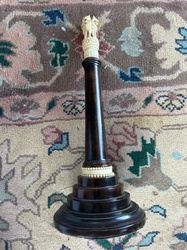
Vintage wooden toothpick holder

AI analysis below

AI appraisal

AI analysis & estimate

AI-Generated · Verify before acting

Everything below is generated by AI for informational purposes only. AI can make mistakes — the AI may misidentify items or misattribute them (artist, maker, brand, designer, origin, era). This is not an official valuation and should not be used for insurance, sale, tax, estate, legal, or lending purposes — or any decision requiring a certified appraisal. It is not an authoritative claim about any person, brand, or rights holder — do not share or rely on it as a factual statement about a third party. Always consult qualified professionals before making financial decisions.

Note

This analysis also relies on unverified notes provided by the user, which may be incomplete or inaccurate and could affect the result.

Read the full disclaimer

AI Identification

·Not independently authenticated·Verify before acting

Vintage Hexagonal Vietnamese Inlay Lacquerware Toothpick Holder

Decorative Arts & Collectibles

AI Estimated Value

·Not an official valuation·Verify before acting

$45–$75

As of June 8, 2026

AI Item Analysis

·AI can make mistakes·Verify before acting
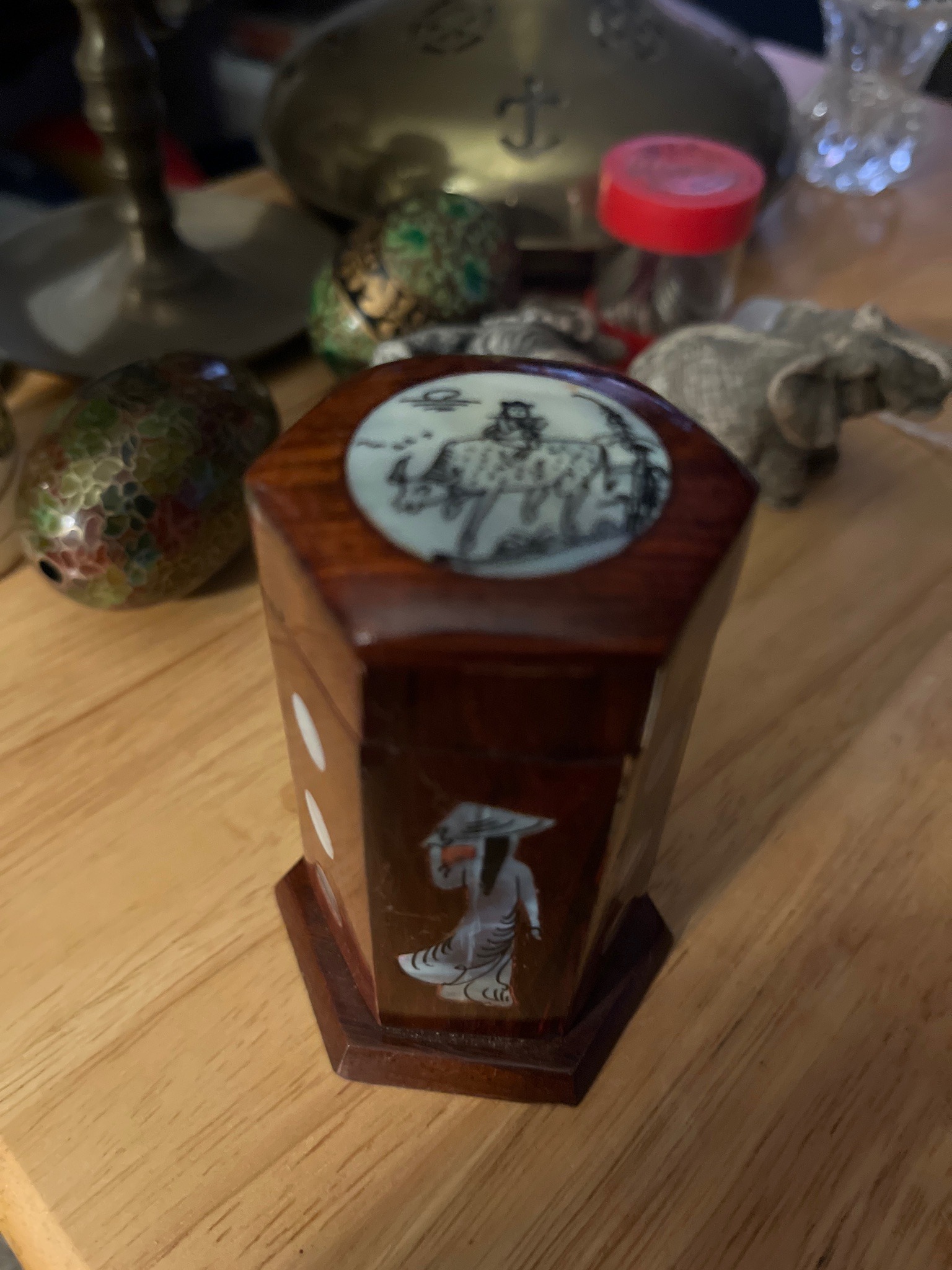
This is a vintage, hand-crafted hexagonal toothpick holder featuring a high-gloss polished wood or deep amber lacquer finish. The object is approximately 3 to 4 inches tall and is constructed from a dark reddish-brown wood, likely rosewood or a similar tropical hardwood common in Southeast Asian decorative arts. Its primary distinguishing feature is the white shell or bone inlay work. The circular top inlay depicts a traditional pastoral scene of a figure riding a water buffalo, rendered in black ink against a white ground. The frontal panel displays an elegant 'Non La' (conical hat) wearing figure, characteristic of Vietnamese artistic motifs. Additional circular white inlays decorate the side facets. The craftsmanship suggests a mid-to-late 20th-century origin, likely produced for the souvenir or export market. The piece features a tiered, flared base for stability. In terms of condition, the lacquer maintains a strong reflective luster, though minor age-appropriate surface abrasions and fine hairline cracks in the shell inlay are visible upon close inspection. The geometric construction remains tight, and the joinery shows careful hand-finishing. This item serves as a functional example of regional folk art and mixed-media woodworking.

AI Appraisal Report

·AI can make mistakes·Verify before acting
I have conducted a visual analysis of this hexagonal Vietnamese toothpick holder. The item demonstrates the traditional high-gloss lacquer and 'cẩn ốc' (mother-of-pearl/bone inlay) techniques prevalent in mid-to-late 20th-century Southeast Asian craftsmanship. The use of pastoral motifs, such as the water buffalo and the figure in a 'Non La,' confirms its origin as a piece of Vietnamese folk art, likely produced between 1960 and 1980 for the export or tourist market. The condition appears good, with the lacquer retaining a high luster, though I observed typical age-related drying manifested as hairline cracks in the shell inlay. The joinery on the flared base remains structurally sound. From a market perspective, while these items are charming examples of regional decorative arts, they were mass-produced in craft villages (such as those in Hà Tây province). Consequently, they are not considered rare. Current demand is driven primarily by collectors of 'Tobacciana' and vintage kitchenalia rather than fine art investors. Limitations of this appraisal include the inability to verify the substrate wood species via scent or grain density under magnification; while it appears to be a tropical hardwood, it could be a stained local fruitwood. A physical inspection would be required to determine if the inlay is genuine marine shell or a synthetic composite, as well as to check for internal moisture damage or hidden repairs to the tiered base. For full authentication, provenance regarding its exact decade of import would be beneficial.

Get your items appraised

Instant estimates of your treasures with AI-powered appraisals

Browse More Appraisals