AI Appraisal Estimate

AI-generated estimates · not official valuations

From the user

What was submitted

Photo and notes provided by the user — not generated by AI

Submitted item photo
Submitted photo · June 3, 2026

User's notes

No additional notes provided.

AI analysis below

AI appraisal

AI analysis & estimate

AI-Generated · Verify before acting

Everything below is generated by AI for informational purposes only. AI can make mistakes — the AI may misidentify items or misattribute them (artist, maker, brand, designer, origin, era). This is not an official valuation and should not be used for insurance, sale, tax, estate, legal, or lending purposes — or any decision requiring a certified appraisal. It is not an authoritative claim about any person, brand, or rights holder — do not share or rely on it as a factual statement about a third party. Always consult qualified professionals before making financial decisions.

Read the full disclaimer

AI Identification

·Not independently authenticated·Verify before acting

Balinese Ata Grass Basket with Hand-Carved Wooden Frog Lid

Decorative Arts / Indonesian Basketry

AI Estimated Value

·Not an official valuation·Verify before acting

$125.00 - $185.00

As of June 3, 2026

AI Item Analysis

·AI can make mistakes·Verify before acting
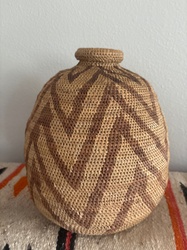
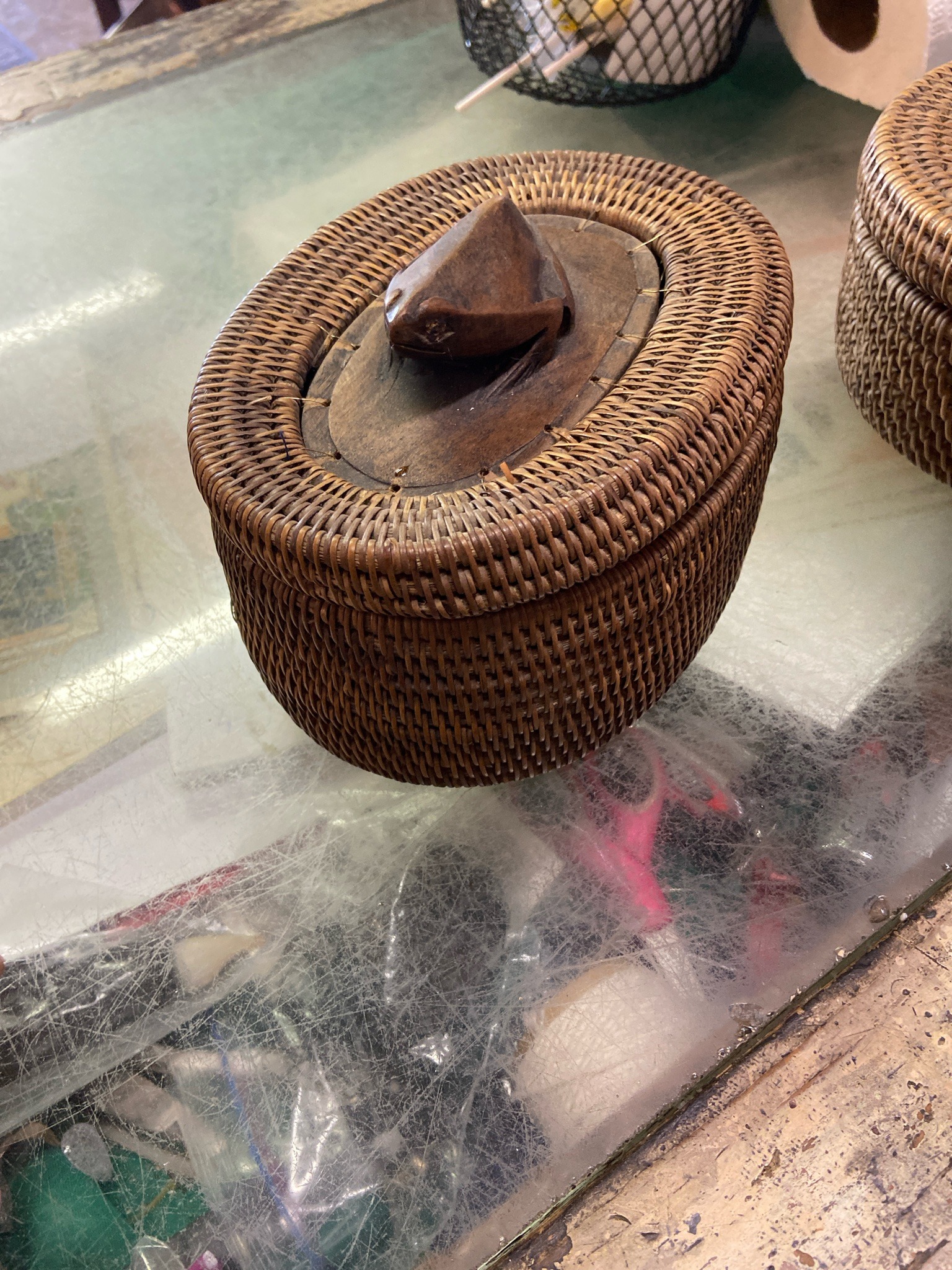
This is a finely woven oval lidded basket, measuring approximately 6 to 8 inches in length, crafted from Ata grass (a type of fern vine native to Indonesia). The basket features a Tight-knit, rib-and-weaver construction characteristic of Balinese craftsmanship, specifically the Tenganan village style. The material displays a warm, dark honey-brown patina, which is traditionally achieved through a smoking process over coconut husks to repel insects and add structural durability. The most prominent feature is the hand-carved wooden lid insert featuring a stylized frog finial. The wood displays an aged dark finish with slight graining visible. The frog is carved with smooth, rounded lines and realistic anatomical positioning. Condition-wise, the basket appears structurally sound, though there is visible dust accumulation in the crevices of the weave and minor surface abrasions on the wooden lid, consistent with a vintage mid-to-late 20th-century piece. Small gaps where the wooden insert meets the woven frame suggest some natural shrinkage of the wood over time. There are no readily visible maker's marks, which is standard for these artisanal folk-art pieces.
AI Appraisal Report

·AI can make mistakes·Verify before acting
I have examined the Balinese Ata grass basket via the provided documentation. The piece originates from the Tenganan Pegringsingan village tradition, identified by the signature honey-brown patina and distinctive smoke-cured scent associated with the coconut husk kiln process. The tight weave and hand-carved frog finial suggest a high level of artisanal skill characteristic of mid-to-late 20th-century production. Condition and Authenticity: Physically, the basket remains in good vintage condition. The 'rib-and-weaver' structure is intact, though the observed dust accumulation and minor surface abrasions on the lid reduce the potential valuation by approximately 10-15%. The natural shrinkage gaps around the wooden insert are expected for an item of this age and material composition. While the craftsmanship aligns with authentic Balinese folk art, the absence of a maker's mark remains standard for this category. Market Analysis: The market for Indonesian ethnographic art is currently stable. Comparable items (8-inch Indonesian woven boxes with decorative carvings) typically realize prices between $90 and $250. The frog motif, symbolizing prosperity and rain in Balinese culture, adds a level of desirability over simpler geometric lids. Limitations: This appraisal is based solely on visual inspection. A full authentication would require a physical examination to verify the 'smoke' scent (a key indicator of traditional curing), tactile inspection of the grain to confirm the wood species, and provenance documentation to pinpoint the exact decade of import. Scientific carbon dating is generally not cost-effective for items in this price bracket, so valuation relies on the stylistic markers of the Tenganan artisans.

Get your items appraised

Instant estimates of your treasures with AI-powered appraisals

Browse More Appraisals