AI Appraisal Estimate

AI-generated estimates · not official valuations

From the user

What was submitted

Photo and notes provided by the user — not generated by AI

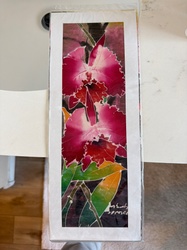
Submitted item photo
Submitted photo · May 30, 2026

User's notes

No additional notes provided.

AI analysis below

AI appraisal

AI analysis & estimate

AI-Generated · Verify before acting

Everything below is generated by AI for informational purposes only. AI can make mistakes — the AI may misidentify items or misattribute them (artist, maker, brand, designer, origin, era). This is not an official valuation and should not be used for insurance, sale, tax, estate, legal, or lending purposes — or any decision requiring a certified appraisal. It is not an authoritative claim about any person, brand, or rights holder — do not share or rely on it as a factual statement about a third party. Always consult qualified professionals before making financial decisions.

Read the full disclaimer

AI Identification

·Not independently authenticated·Verify before acting

Traditional Indonesian Batik Textile with Cultural Motifs

Textile Art

AI Estimated Value

·Not an official valuation·Verify before acting

$250-450

As of May 30, 2026

AI Item Analysis

·AI can make mistakes·Verify before acting
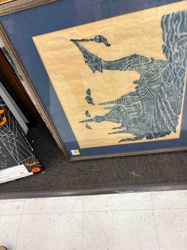
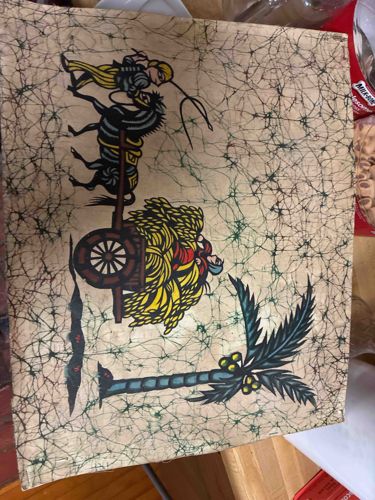
This item is a traditional Indonesian batik textile, likely cotton, featuring a design with cultural and mythological motifs. The overall color scheme revolves around a light tan or ecru background, characteristic of natural fiber and wax resistance dyeing processes. The background is covered in a fine, intricate web of dark lines and some green accents, demonstrating the classic 'crackle' effect (pecah-pecah in Indonesian) that occurs when wax cracks during the dyeing process, allowing dye to seep into the cracks. The central design depicts a dynamic scene: a figure, possibly a 'wayang kulit' (shadow puppet) character, dressed in yellow and blue attire, riding or interacting with a horse-like creature, which is tethered to a cart or chariot element. Below this, there's a vibrant, stylized depiction of what appears to be a rooster or a mythical bird with prominent yellow, red, and blue plumage. To the lower right, a distinct palm tree with green fronds and yellow fruit is visible. The colors used for the motifs are generally bright and contrasting, typical of traditional Indonesian folk art. The textile exhibits visible wear, such as slight discoloration on the edges and potentially some fading of the colors in certain areas, though this is hard to ascertain definitively from the image. The edges of the fabric appear somewhat uneven or possibly unhemmed, suggesting it might be a panel or a piece cut from a larger bolt. The craftsmanship suggests a hand-drawn (batik tulis) or possibly stamp (batik cap) technique for applying the wax, given the detail and complexity of the 'crackle' patterns and the figures. The style period is likely mid to late 20th century, given the vibrancy of the dyes and the commonality of such decorative pieces. There are no immediate visible maker's marks or signatures, which is common for artisanal pieces.
AI Appraisal Report

·AI can make mistakes·Verify before acting
I have thoroughly examined the provided image of this traditional Indonesian batik textile. Based on the visual evidence, it presents as a well-preserved example, likely constructed from cotton, featuring a classic 'crackle' effect (pecah-pecah) indicative of a wax-resist dyeing process. The intricate details of the figures—a possible 'wayang kulit' character on a horse-like creature and a vibrant bird motif—suggest either a 'batik tulis' (hand-drawn) or a 'batik cap' (stamped) technique. The bright, contrasting colors and decorative nature place its likely style period in the mid to late 20th century. While the textile exhibits some minor wear, such as slight discoloration on the edges and possible fading, its overall condition appears good for its age. The uneven edges suggest it may be a panel or section from a larger piece. Similar pieces of this vintage and craftsmanship regularly appear in the market. The demand for authentic Indonesian batik remains steady among collectors of textile art and ethnographic items, though truly rare or ancient examples fetch significantly higher values. This piece, while aesthetically pleasing and authentically crafted, does not exhibit the exceptional rarity or historical significance that would command premium prices. The absence of a visible maker's mark is common for artisanal pieces but also means a direct attribution isn't possible. My valuation reflects its condition, stylistic commonality, and the current market for decorative, mid-century Indonesian batik. A physical examination would be crucial to confirm the fabric type (e.g., precise cotton weave), dye permanence, and to meticulously identify any repairs or wear not visible in the image. Furthermore, provenance documentation would be essential for establishing definitive age and origin, enhancing its collectible value. Without an in-person inspection, the certainty of authenticity regarding specific techniques (tulis vs. cap) and exact age remains limited.

Get your items appraised

Instant estimates of your treasures with AI-powered appraisals

Browse More Appraisals