Studio Pottery Speckled Stoneware Bowl
Ceramics and Pottery

Studio Pottery Speckled Stoneware Bowl

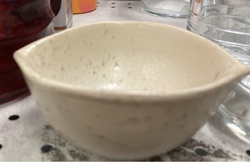
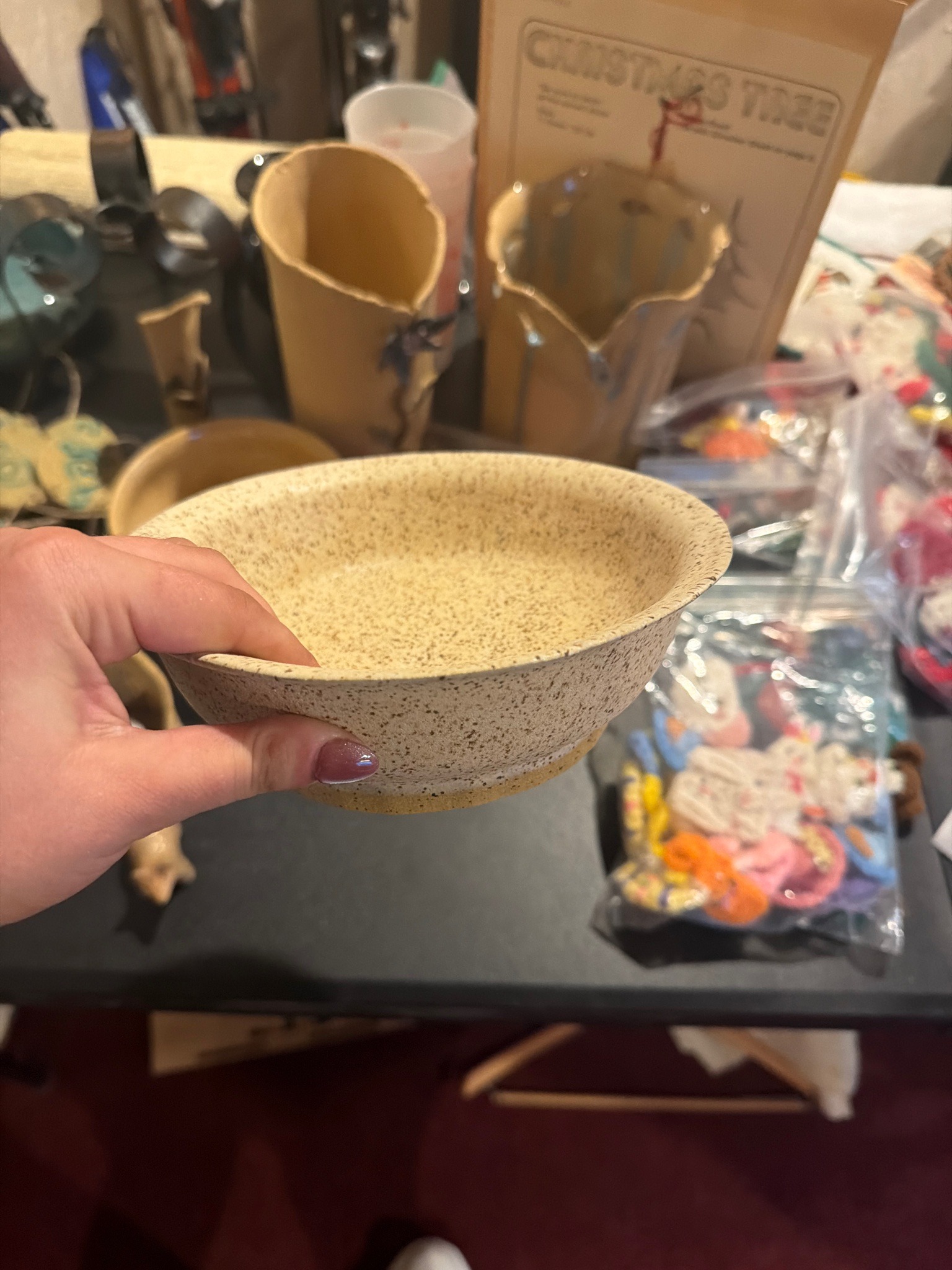
This is a hand-thrown studio pottery bowl characterized by a classic flared rim and a tapered foot. The vessel is crafted from a high-fire stoneware clay body with a distinct speckled aesthetic, often referred to as a 'salt and pepper' or 'toasted oatmeal' finish. The glaze is a matte to semi-matte cream or light tan, heavily saturated with dark iron-rich speckles that appear to be flecks of manganese or ilmenite within the clay body itself. The interior and exterior are uniformly glazed down to a visible unglazed foot ring at the base, which reveals the natural, slightly coarser texture of the raw clay in a buff-orange hue. The bowl's construction is solid with a consistent wall thickness, indicating skilled craftsmanship on a potter's wheel. There are no visible chips, cracks, or crazing, suggesting the piece has been well preserved. Based on the style and glaze technique, this piece likely dates to the late 20th century (circa 1970s-1990s), a period popular for earthy, organic studio ceramics. It lacks apparent maker's marks on the visible surfaces, but its quality suggests a professional studio origin.
Estimated Value

$45–$85

Basic Information

Category

Ceramics and Pottery

Appraised On

May 15, 2026

Estimated Value

$45–$85

Item Description

This is a hand-thrown studio pottery bowl characterized by a classic flared rim and a tapered foot. The vessel is crafted from a high-fire stoneware clay body with a distinct speckled aesthetic, often referred to as a 'salt and pepper' or 'toasted oatmeal' finish. The glaze is a matte to semi-matte cream or light tan, heavily saturated with dark iron-rich speckles that appear to be flecks of manganese or ilmenite within the clay body itself. The interior and exterior are uniformly glazed down to a visible unglazed foot ring at the base, which reveals the natural, slightly coarser texture of the raw clay in a buff-orange hue. The bowl's construction is solid with a consistent wall thickness, indicating skilled craftsmanship on a potter's wheel. There are no visible chips, cracks, or crazing, suggesting the piece has been well preserved. Based on the style and glaze technique, this piece likely dates to the late 20th century (circa 1970s-1990s), a period popular for earthy, organic studio ceramics. It lacks apparent maker's marks on the visible surfaces, but its quality suggests a professional studio origin.
Get Your Items Appraised

Instant estimates of your treasures with AI-powered instant appraisals

Browse More Appraisals