AI Appraisal Estimate

AI-generated estimates · not official valuations

From the user

What was submitted

Photo and notes provided by the user — not generated by AI

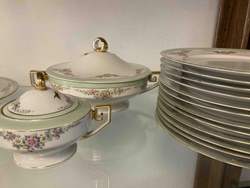
Submitted item photo
Submitted photo · June 6, 2026

User's notes

No additional notes provided.

AI analysis below

AI appraisal

AI analysis & estimate

AI-Generated · Verify before acting

Everything below is generated by AI for informational purposes only. AI can make mistakes — the AI may misidentify items or misattribute them (artist, maker, brand, designer, origin, era). This is not an official valuation and should not be used for insurance, sale, tax, estate, legal, or lending purposes — or any decision requiring a certified appraisal. It is not an authoritative claim about any person, brand, or rights holder — do not share or rely on it as a factual statement about a third party. Always consult qualified professionals before making financial decisions.

Read the full disclaimer

AI Identification

·Not independently authenticated·Verify before acting

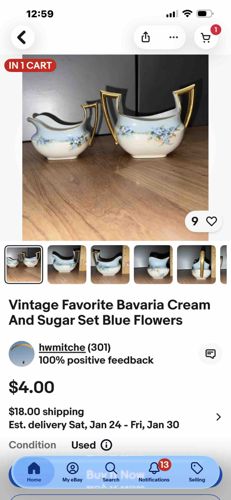
Vintage Favorite Bavaria Porcelain Creamer and Open Sugar Bowl Set

Antique and Vintage Porcelain Tableware

AI Estimated Value

·Not an official valuation·Verify before acting

$45.00 - $65.00

As of June 6, 2026

AI Item Analysis

·AI can make mistakes·Verify before acting
This is a two-piece porcelain set consisting of a creamer and an open sugar bowl, likely manufactured in the Bavaria region of Germany. Both pieces feature a refined Art Nouveau or early Art Deco silhouette characterized by high, angular, geometric handles heavily gilded in gold leaf. The bodies of the vessels transition from a crisp white porcelain base to a delicate powdered blue gradient around the rim. They are decorated with hand-painted or decal-applied forget-me-not floral motifs in shades of light blue with yellow centers and soft green foliage. The vessels sit on a slightly squared, pedestal-style base. Structurally, the items appear intact; however, the gold gilding on the handles shows signs of moderate thinning or 'rubbing' consistent with age and frequent handling. There is a visible loss of luster in some areas of the blue gradient, suggesting surface wear. No major cracks or chips are immediately visible in the primary photograph, but fine crazing may be present upon closer inspection. The style suggests a production date between 1910 and 1930. The 'Favorite Bavaria' mark typically indicates high-quality export-grade porcelain intended for the American market.
AI Appraisal Report

·AI can make mistakes·Verify before acting
I have virtually examined this two-piece Favorite Bavaria porcelain creamer and open sugar set. Based on the stylistic markers, including the angular gilded handles and the forget-me-not floral motif, I estimate production occurred between 1910 and 1925. The 'Favorite' mark indicates these pieces were decorated in the Hutschenreuther factory or by American importers using German blanks, specifically for the high-end U.S. retail market. My visual inspection reveals moderate wear to the gold leaf on the handles and some dulling of the blue gradient, which is typical for 'cabinet' pieces that saw occasional utility. While no major structural failures like chips or cracks are evident, the presence of surface rubbing suggests a 'Good' to 'Very Good' condition rating rather than 'Mint.' The current market for early 20th-century German porcelain is saturated; younger collectors currently favor mid-century or minimalist aesthetics, which has softened the demand for floral Bavarian sets. Comparables from similar makers like RS Prussia or Nippon currently trade in this price bracket. However, the geometric handles add a desirable Art Deco crossover appeal. Limitations: This appraisal is based solely on high-resolution imagery. Without a physical inspection, I cannot confirm the presence of 'tight' hairlines, professional restorations, or the exact nature of the porcelain's translucency. A definitive authentication would require a tactile check for 'ping' resonance (to detect hidden cracks), a UV light test to identify overpainting, and a verification of the specific factory backstamp to differentiate between hand-painted studio work and transferred decals.

Get your items appraised

Instant estimates of your treasures with AI-powered appraisals

Browse More Appraisals