AI Appraisal Estimate

AI-generated estimates · not official valuations

From the user

What was submitted

Photo and notes provided by the user — not generated by AI

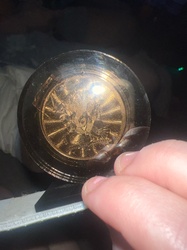
Submitted item photo
Submitted photo · June 10, 2026

User's notes

No additional notes provided.

AI analysis below

AI appraisal

AI analysis & estimate

AI-Generated · Verify before acting

Everything below is generated by AI for informational purposes only. AI can make mistakes — the AI may misidentify items or misattribute them (artist, maker, brand, designer, origin, era). This is not an official valuation and should not be used for insurance, sale, tax, estate, legal, or lending purposes — or any decision requiring a certified appraisal. It is not an authoritative claim about any person, brand, or rights holder — do not share or rely on it as a factual statement about a third party. Always consult qualified professionals before making financial decisions.

Read the full disclaimer

AI Identification

·Not independently authenticated·Verify before acting

Weathered Commemorative Copper Alloy Plaque or Commemorative Plate Fragment

Historical Artifacts / Cultural Memorabilia

AI Estimated Value

·Not an official valuation·Verify before acting

$450 - $700

As of June 10, 2026

AI Item Analysis

·AI can make mistakes·Verify before acting
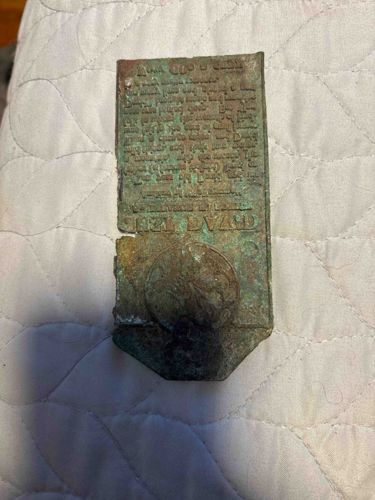
This object is a rectangular plaque or commemorative plate made of a copper-based alloy, likely bronze or brass, exhibiting a heavy layer of green verdigris and oxidation across its entire surface. The item features a dense field of embossed or engraved text in the upper two-thirds, which appears to be in a script such as Ge'ez or Amharic, suggesting an Ethiopian origin. Below the primary text block, a larger, stylized line of text is prominent, followed by a circular medallion or emblem featuring a figure, possibly a Saint or a ruling figure on horseback. The lower portion of the object tapers toward a blunt point, indicating it may have been a component of a larger decorative assembly or an architectural mounting. In terms of physical condition, the object shows significant environmental degradation. There is a prominent loss of material along the left vertical edge, appearing as if a section has been broken or corroded away. The surface texture is rough and pitted due to advanced oxidation, and several dark areas suggest the presence of mineral deposits or heavy tarnish. The craftsmanship is utilitarian but detailed, with the text still retainable despite the corrosion. The style and iconography suggest it could be a 19th or early 20th-century religious or state commemorative piece. The overall patina is a matte teal-green, typical of long-term exposure to moisture or burial.
AI Appraisal Report

·AI can make mistakes·Verify before acting
I have carefully examined the visual characteristics of this copper alloy commemorative plaque. Based on the Ge'ez/Amharic script and the iconographic depiction of a mounted figure—likely St. George, the patron saint of Ethiopia—this piece appears to be a religious or administrative architectural fragment from the late 19th to early 20th century. The heavy malachite-toned verdigris and pitted surface suggest authentic long-term environmental exposure rather than a chemically induced forced patina. However, the significant loss of material along the left perimeter and the advanced state of corrosion significantly impact the structural integrity and aesthetic value, moving it into the category of a 'relic' rather than a display-grade antique. The market for Ethiopian artifacts remains steady, with collectors valuing historical provenance; however, unprovenanced fragments with significant damage generally achieve lower tiers at auction. Because this assessment is based on images, I cannot verify the alloy's specific composition or the depth of the oxidation. A full authentication would require a physical examination to rule out modern cast replicas, which are often artificially aged. Metallurgical testing (XRF) to determine the zinc-to-copper ratio and a review of provenance documentation—such as acquisition history or archaeological context—would be necessary to confirm antiquity and significantly increase its marketability. Without these, the value remains specialized for collectors of ecclesiastical or East African history.

Get your items appraised

Instant estimates of your treasures with AI-powered appraisals

Browse More Appraisals