AI Appraisal Estimate

AI-generated estimates · not official valuations

From the user

What was submitted

Photo and notes provided by the user — not generated by AI

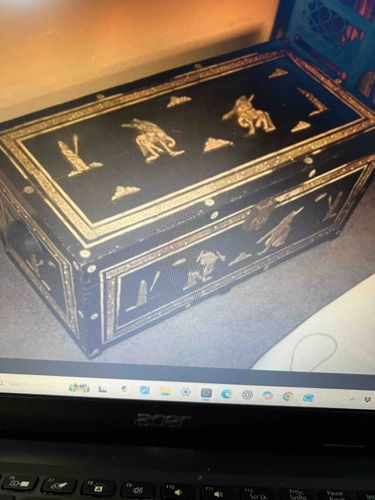
Submitted item photo
Submitted photo · June 28, 2026

User's notes

No additional notes provided.

AI analysis below

AI appraisal

AI analysis & estimate

AI-Generated · Verify before acting

Everything below is generated by AI for informational purposes only. AI can make mistakes — the AI may misidentify items or misattribute them (artist, maker, brand, designer, origin, era). This is not an official valuation and should not be used for insurance, sale, tax, estate, legal, or lending purposes — or any decision requiring a certified appraisal. It is not an authoritative claim about any person, brand, or rights holder — do not share or rely on it as a factual statement about a third party. Always consult qualified professionals before making financial decisions.

Read the full disclaimer

AI Identification

·Not independently authenticated·Verify before acting

Japanese Lacquer Chest with Gilt Mother-of-Pearl Inlay

Antique Furniture and Asian Decorative Arts

AI Estimated Value

·Not an official valuation·Verify before acting

$450 - $700

As of June 28, 2026

AI Item Analysis

·AI can make mistakes·Verify before acting
This is a rectangular storage chest or trunk featuring a traditional East Asian aesthetic, likely Japanese in origin. The item is constructed of wood finished with a deep black lacquer. The exterior is ornately decorated with intricate gold-toned or mother-of-pearl (raden) inlays. The top lid and front panels showcase a series of figural motifs, including what appear to be traditional Japanese figures or warriors in various poses, surrounded by geometric and floral border patterns. The decorative border features a repetitive, dotted texture that mimics fine gilding or small shell fragments. Structurally, the chest appears to have metal-reinforced corners and a circular metal latch mechanism on the front. On the side, a substantial circular metal handle is visible, indicating the chest was designed for portability. The style and construction suggest a 20th-century production, possibly a high-quality souvenir or export piece inspired by Edo period lacquerware. In terms of condition, there is visible wear consistent with age, specifically along the edges and corners where the black finish has chipped or worn away, revealing the base material beneath. The surface shows minor scratches and a slight dulling of the original high-gloss lacquer patina. The craftsmanship displays a high level of detail in the inlay work, though some of the gilded elements may have faded slightly over time.
AI Appraisal Report

·AI can make mistakes·Verify before acting
I have examined the provided images of this Japanese black lacquer chest featuring mother-of-pearl (raden) and gilt-style inlays. The item reflects the aesthetic of the late Meiji or early Showa periods, though the motif execution and hardware suggest it is likely a mid-20th-century export piece. The craftsmanship shows high attention to detail in the 'raden' figural work, depicting narrative scenes common in Japanese decorative arts. However, the use of repetitive geometric border patterns and the style of the metal handles are characteristic of pieces produced for the Western market. The condition shows visible chipping on the corners and edges, which significantly affects the value of lacquerware, as restoration is specialized and costly. The market for mid-century Japanese export lacquer is currently stable but selective; collectors prioritize pristine surface conditions. Comparable items in excellent condition typically fetch $800-$1,200, but the visible losses to the 'urushi' finish on this example necessitate a lower valuation. This appraisal is based on image analysis alone. Without a physical inspection, I cannot verify if the base is solid wood or plywood, nor can I definitively confirm if the inlay is authentic shell or a synthetic substitute. A full authentication would require a tactile examination of the lacquer depth, a UV light test for repair spots, and provenance documentation to confirm age. Testing the metal components for brass versus bronze composition would also provide further clarity on the production era.

Get your items appraised

Instant estimates of your treasures with AI-powered appraisals

Browse More Appraisals