AI estimate as of October 29, 2025 · verify with a professional before acting
AI-Generated · Verify before acting
Everything on this page is generated by AI for informational purposes only. AI can make mistakes — the AI may misidentify items or misattribute them (artist, maker, brand, designer, origin, era). This is not an official valuation and should not be used for insurance, sale, tax, estate, legal, or lending purposes — or any decision requiring a certified appraisal. It is not an authoritative claim about any person, brand, or rights holder — do not share or rely on it as a factual statement about a third party. Always consult qualified professionals before making financial decisions.
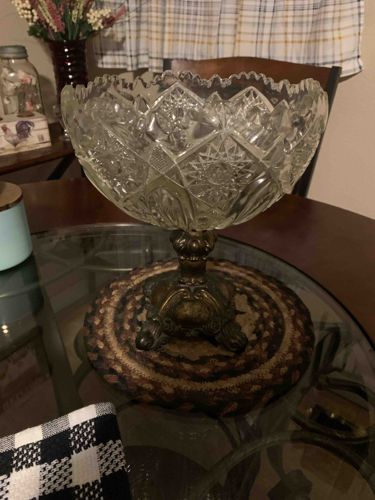
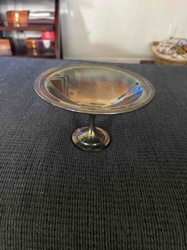
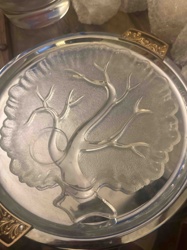
This item is a decorative compote, consisting of a pressed glass bowl mounted on an ornate, possibly bronze or brass, metal base. The bowl is made from clear, colorless pressed glass, featuring an intricate pattern of diamond-shaped facets alternating with starburst or hobstar motifs. The rim of the bowl is scalloped or sawtooth-edged, indicating a decorative finish typical of pressed glass from the late 19th or early 20th century. The glass exhibits good clarity, suggesting it is well-made for its type, though some minor imperfections such as mold lines or small air bubbles might be present, which are characteristic of the pressed glass manufacturing process and not necessarily flaws. The metal base has a dark, aged patina, suggesting it could be antique or vintage. It features highly decorative elements, including what appear to be claw feet or intricate scrolled supports. The base attaches to the center of the glass bowl, providing stability and elevating the piece. The overall condition appears to be good with visible patina on the metal base, which is expected for an item of this age. No significant chips, cracks, or repairs are immediately evident on the glass portion from the provided image, though a closer inspection would be required to confirm. The style suggests it could be from the Victorian, Edwardian, or early 20th-century periods, often used for serving sweets, fruits, or as a decorative centerpiece.
AI Appraisal Report
Based on my visual examination of the provided image, this decorative compote presents as a charming example of late 19th or early 20th-century craftsmanship. The pressed glass bowl, with its clear, colorless nature and intricate diamond and starburst facets, is consistent with patterns popular during the Victorian or Edwardian eras. The scalloped rim further supports this dating. The glass appears to be in good condition, showing typical clarity for its type. I note the potential for minor mold lines or small air bubbles, which are inherent to the pressed glass manufacturing process and not considered significant flaws. The ornate metal base, likely bronze or brass given the dark, aged patina, is a strong feature, elevating the piece and providing decorative flair with its claw feet or scrolled supports. The patina on the metal is attractive and expected for an antique item. From the image, I detect no significant chips, cracks, or repairs to the glass, nor any apparent damage to the metal base beyond expected age-related wear.
Authenticity for this type of item is largely determined by manufacturing characteristics. While the style strongly suggests an antique origin, definite dating without physical inspection is challenging. Factors impacting value include its good overall condition, decorative appeal, and the combination of pressed glass with an ornate metal base. These pieces were mass-produced but still hold decorative value today. Comparables in the current market, often found in antique shops or online, suggest prices in the lower to mid-range for decorative serveware of this type. Demand is steady among collectors of antique glassware and decorative home accent pieces.
To fully authenticate and confirm the absence of subtle damages, an in-person examination would be crucial. This would allow for a tactile inspection of the glass for faint nicks, internal bruising, or repairs not visible in the image, and a closer inspection of the metal's composition and attachment method. Provenance documentation, if available, would further solidify its history and origin.