AI estimate as of October 1, 2025 · verify with a professional before acting
AI-Generated · Verify before acting
Everything on this page is generated by AI for informational purposes only. AI can make mistakes — the AI may misidentify items or misattribute them (artist, maker, brand, designer, origin, era). This is not an official valuation and should not be used for insurance, sale, tax, estate, legal, or lending purposes — or any decision requiring a certified appraisal. It is not an authoritative claim about any person, brand, or rights holder — do not share or rely on it as a factual statement about a third party. Always consult qualified professionals before making financial decisions.
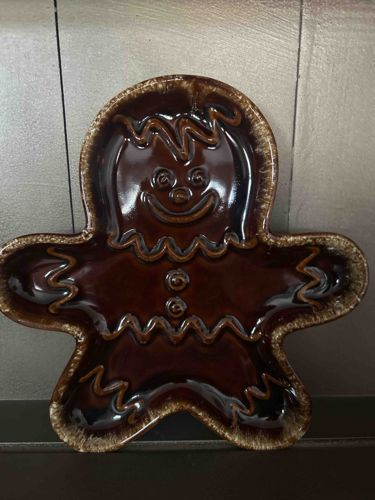
This item is a ceramic serving tray or decorative dish shaped like a gingerbread man. It features a rich, glossy dark brown glaze which mimics the color of baked gingerbread. The edges of the tray, as well as the 'icing' details, are rendered in a slightly lighter, mottled brown and beige tone, creating a rustic, burnt sugar effect. The gingerbread man's face includes raised, rounded features for the eyes, a smiling mouth, and textured hair represented by wavy lines. The body is adorned with three small, circular 'buttons' down the center and wavy lines suggesting icing on the arms and legs. The overall construction appears to be molded ceramic with a solid, substantial feel. The glossy finish reflects light, highlighting the sculpted details. There are no immediately visible chips, cracks, or significant wear, suggesting it is in good to excellent condition. The glazing technique, particularly the mottled edge, suggests a vintage or artisanal manufacturing style, possibly from the mid-20th century onwards, often associated with holiday decor or country kitchen aesthetics. The lack of visible maker's marks or signatures prevents definitive identification of the manufacturer or precise age, but its playful design suggests it was likely intended for serving cookies, candies, or as a festive decorative piece, particularly during the holiday season. The craftsmanship is consistent with mass-produced decorative ceramics of reasonable quality.
AI Appraisal Report
I have examined the provided image of this ceramic gingerbread man tray/dish. Visually, the piece appears to be in good to excellent condition with no immediately visible chips, cracks, or significant wear. The glossy dark brown glaze and the lighter, mottled 'icing' details are well-preserved. Authenticity as a mass-produced decorative ceramic from the mid-20th century onwards is plausible given the style and craftsmanship. This item likely served as a festive serving piece or holiday decor.
Market conditions for such decorative serveware are generally modest. Comparable items, typically unbranded vintage holiday ceramics, often retail in the $15-$30 range. Demand for general holiday-themed ceramics is consistent but not high, and the item's lack of known manufacturer or significant age prevents it from entering a collectibles market with higher valuations. Rarity is low; numerous similar ceramic holiday items were produced. Factors impacting value are primarily its decorative appeal and condition. Without a maker's mark or specific historical provenance, its value remains limited to its aesthetic and functional purpose.
Limitations in authenticity verification are significant based solely on images. Full authentication would require a physical inspection to check for hidden damage, assess the ceramic body's quality, identify any faint maker's marks or signatures, and potentially conduct specific gravity tests or thermoluminescence dating for precise age determination if a premium vintage claim were made. Provenance documentation, such as original sales receipts or family history, could also establish a more definitive timeline and origin.