AI Appraisal Estimate

AI-generated estimates · not official valuations

From the user

What was submitted

Photo and notes provided by the user — not generated by AI

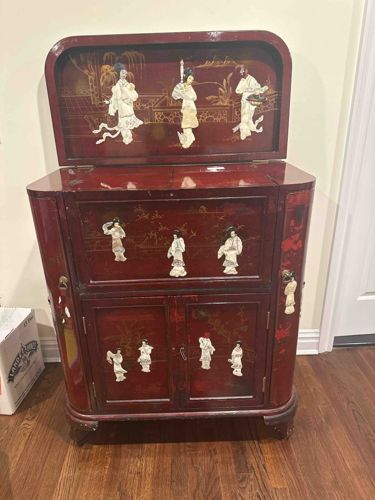
Submitted item photo
Submitted photo · June 17, 2026

User's notes

No additional notes provided.

AI analysis below

AI appraisal

AI analysis & estimate

AI-Generated · Verify before acting

Everything below is generated by AI for informational purposes only. AI can make mistakes — the AI may misidentify items or misattribute them (artist, maker, brand, designer, origin, era). This is not an official valuation and should not be used for insurance, sale, tax, estate, legal, or lending purposes — or any decision requiring a certified appraisal. It is not an authoritative claim about any person, brand, or rights holder — do not share or rely on it as a factual statement about a third party. Always consult qualified professionals before making financial decisions.

Read the full disclaimer

AI Identification

·Not independently authenticated·Verify before acting

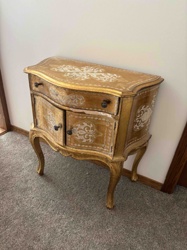
Chinese Red Cinnabar Lacquer Chinoiserie Bar Cabinet with Mother-of-Pearl Inlay

Antique/Vintage Furniture

AI Estimated Value

·Not an official valuation·Verify before acting

$450 - $700

As of June 17, 2026

AI Item Analysis

·AI can make mistakes·Verify before acting
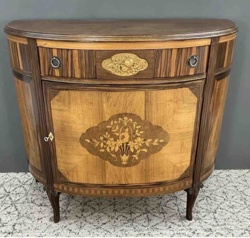
This is a vintage mid-20th century Chinoiserie-style flip-top bar cabinet (cellarette) featuring a deep red oxblood cinnabar lacquer finish. The cabinet is constructed with a rounded rectangular form, featuring a hinged top lid that opens to reveal a mirrored or decorated backboard, a drop-front secretary-style door for a serving surface, and a lower double-door storage compartment. The piece is heavily ornamented with hand-painted gold gilt landscapes and intricate high-relief appliqués of soapstone or mother-of-pearl (Nacre) depicting traditional Chinese court ladies (Meiren) in garden settings. The figures are expertly carved with fine details in their robes and hair. Physically, the cabinet displays significant signs of age and wear; there is noticeable lacquer loss, scuffing, and chipping along the top edges and base plinth. The red finish shows a natural crazing and patina consistent with mid-century production. The craftsmanship indicates a decorative export piece, likely from the 1940s-1960s. Metal hardware includes traditional brass ring pulls and hinges. Size appears to be standard mid-height, approximately 36 to 42 inches tall. There are visible white surface marks and abrasions on the top lid and drop-front panel that suggest the need for professional restoration to stabilize the lacquer finish.
AI Appraisal Report

·AI can make mistakes·Verify before acting
I have completed my visual assessment of the mid-20th-century Chinese Chinoiserie flip-top bar cabinet. This piece is a classic example of export-ware produced between 1940 and 1960. While it mimics the aesthetic of high-period Qing cinnabar, the construction utilizes a 'cinnabar lacquer' finish—likely a pigmented resin or lacquer-coated wood rather than traditional layered sap. The high-relief soapstone and mother-of-pearl (Nacre) inlays are characteristic of the 'Meiren' motifs popular for Western markets. My examination reveals significant condition issues: the lacquer exhibits notable chipping, scuffing, and white abrasive marks on the lid and drop-front panel. The base plinth and edges show substantial wear, indicating heavy use and lack of environmental control. These defects detract approximately 40-50% from the value of a pristine version of this model. The market for mid-century Chinoiserie remains steady for interior designers, but collectors shy away from items requiring intensive professional restoration. Comparables in restored condition typically fetch $1,200-$1,500, but in its current state, the valuation reflects the cost of necessary conservation. Limitations: My assessment is based solely on digital images. A physical inspection is required to determine if the base structure is solid wood or plywood and to check for hidden structural damage or previous amateur repairs. Formal authentication would require provenance documentation or a microscopic examination of the lacquer layers to confirm the specific chemical composition and age of the pigments. Until such verification is provided, this should be treated as a decorative mid-century export piece.

Get your items appraised

Instant estimates of your treasures with AI-powered appraisals

Browse More Appraisals