Tudor Revival Style Carved Oak Buffet
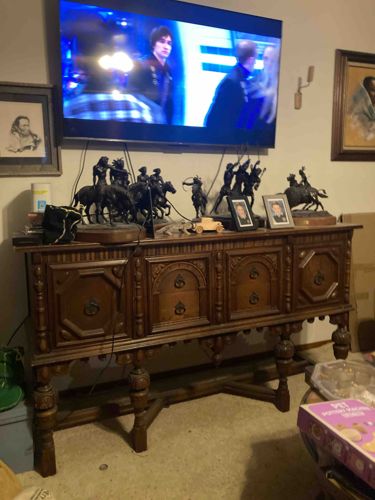
This is a substantial Tudor Revival style buffet crafted from oak, likely dating to the early-to-mid 20th century. The piece features a four-panel frontal configuration with a medium-to-dark oak finish. The design is characterized by heavy architectural ornamentation, including recessed panels with geometric moldings, arched carved motifs on the central cupboard door, and stylized floral or foliate relief carvings on the stiles. Each of the four sections is fitted with circular metal drop-pull handles. The buffet is supported by six prominent bulbous turned legs, often called 'melon' legs, which are interconnected by a low H-stretcher for structural stability. The base of the cabinet portion is further decorated with a crenelated or scrolled apron with drop finial accents. While the surface is currently cluttered with decorative objects, the underlying craftsmanship appears of high quality with robust joinery. The finish displays a consistent patina throughout, suggesting well-maintained condition with only minor age-appropriate wear such as surface scuffs. The scale and ornate detailing are typical of the Jacobean and Tudor revivals popular in formal dining room furniture.
AI-Generated Appraisal Disclaimer
Estimated Value
$1,200 - $1,800
Basic Information
Category
Antique/Vintage Furniture
Appraised On
February 9, 2026
Estimated Value
$1,200 - $1,800
Additional Details Provided By Owner
User Provided Information
Oak, good condition, buffe
Item Description
This is a substantial Tudor Revival style buffet crafted from oak, likely dating to the early-to-mid 20th century. The piece features a four-panel frontal configuration with a medium-to-dark oak finish. The design is characterized by heavy architectural ornamentation, including recessed panels with geometric moldings, arched carved motifs on the central cupboard door, and stylized floral or foliate relief carvings on the stiles. Each of the four sections is fitted with circular metal drop-pull handles. The buffet is supported by six prominent bulbous turned legs, often called 'melon' legs, which are interconnected by a low H-stretcher for structural stability. The base of the cabinet portion is further decorated with a crenelated or scrolled apron with drop finial accents. While the surface is currently cluttered with decorative objects, the underlying craftsmanship appears of high quality with robust joinery. The finish displays a consistent patina throughout, suggesting well-maintained condition with only minor age-appropriate wear such as surface scuffs. The scale and ornate detailing are typical of the Jacobean and Tudor revivals popular in formal dining room furniture.
Get Your Items Appraised
Instant estimates of your treasures with AI-powered instant appraisals