AI Appraisal Estimate

AI-generated estimates · not official valuations

From the user

What was submitted

Photo and notes provided by the user — not generated by AI

Submitted item photo
Submitted photo · June 15, 2026

User's notes

No additional notes provided.

AI analysis below

AI appraisal

AI analysis & estimate

AI-Generated · Verify before acting

Everything below is generated by AI for informational purposes only. AI can make mistakes — the AI may misidentify items or misattribute them (artist, maker, brand, designer, origin, era). This is not an official valuation and should not be used for insurance, sale, tax, estate, legal, or lending purposes — or any decision requiring a certified appraisal. It is not an authoritative claim about any person, brand, or rights holder — do not share or rely on it as a factual statement about a third party. Always consult qualified professionals before making financial decisions.

Read the full disclaimer

AI Identification

·Not independently authenticated·Verify before acting

1943-D Lincoln Cent (Wheat Penny)

Coin - Numismatic

AI Estimated Value

·Not an official valuation·Verify before acting

$0.50 - $1.50

As of June 15, 2026

AI Item Analysis

·AI can make mistakes·Verify before acting
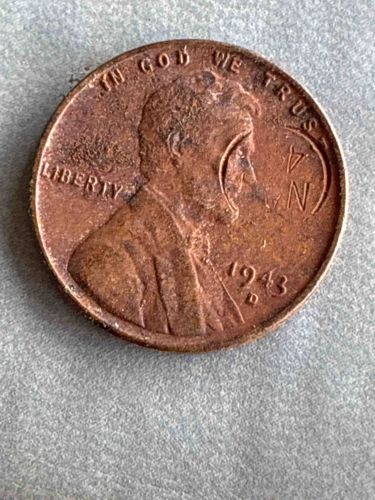
This item is a 1943-D Lincoln Cent, commonly known as a 'Wheat Penny' due to the wheat stalks depicted on the reverse (not visible in the provided image). The obverse features a right-facing bust of Abraham Lincoln, surrounded by the inscriptions 'IN GOD WE TRUST' at the top, 'LIBERTY' to the left, and the date '1943' with a 'D' mint mark beneath it to the right. The coin appears to be made of a reddish-brown metallic material, characteristic of copper-coated steel pennies from that year. During 1943, due to copper shortages during World War II, most pennies were minted from zinc-coated steel, which are typically silver-colored. The reddish-brown color suggests this particular coin may be either a steel cent that has acquired a copper-like patina over time or, less likely but significantly more valuable, one of the exceptionally rare 1943 copper pennies. However, without further examination or a reverse image, it's impossible to confirm the latter. The surface shows considerable wear, particularly on Lincoln's profile and hair, and significant pitting or environmental damage, indicating prolonged circulation and exposure. There are also darker areas of tarnish and corrosion, which could be natural patina or dirt accumulation. The rim is still largely intact but shows signs of uneven wear. The overall condition suggests a 'Good' to 'Very Good' grade by numismatic standards, significantly impacted by the surface imperfections and loss of detail. There are no visible major gashes or bends, but the overall presentation is rough. The coin's diameter is approximately that of a standard US penny (19.05 mm or 0.75 inches), though precise measurement is not possible from the image.
AI Appraisal Report

·AI can make mistakes·Verify before acting
Based on my visual examination of the provided image, this 1943-D Lincoln Cent exhibits significant wear and environmental damage. The obverse details, particularly Lincoln's profile and hair, are heavily abraded, consistent with a 'Good' to 'Very Good' numismatic grade. The reddish-brown coloration is a critical factor. While 1943 pennies are predominantly zinc-coated steel (silver-colored), a few scarce copper cents were mistakenly produced. However, the pitting, tarnish, and overall rough surface condition of this coin strongly suggest that it is a standard steel cent with a heavy copper-like patina or corrosion, rather than one of the exceedingly rare copper examples. An actual 1943 copper cent would be one of the most valuable circulation-strike U.S. coins, but the visual evidence here does not support such a conclusion; genuine copper cents from this year typically do not present with this level of surface degradation while retaining a copper hue. Market demand for common 1943-D steel cents in this condition is low. Comparables for a well-circulated 1943-D steel cent typically range from fifty cents to a few dollars, depending on the exact condition and eye appeal. The extensive surface imperfections and likely corrosion severely limit its numismatic value. For definitive authentication regarding its metallic composition (copper vs. steel with patina), an in-person examination, specific gravity testing, or X-ray fluorescence (XRF) analysis would be absolutely necessary. Without such testing, and given the visual characteristics, I appraise this coin as a common 1943-D steel cent with significant environmental damage.

Get your items appraised

Instant estimates of your treasures with AI-powered appraisals

Browse More Appraisals