AI identification & appraisal estimate

Irish Éire Stamp

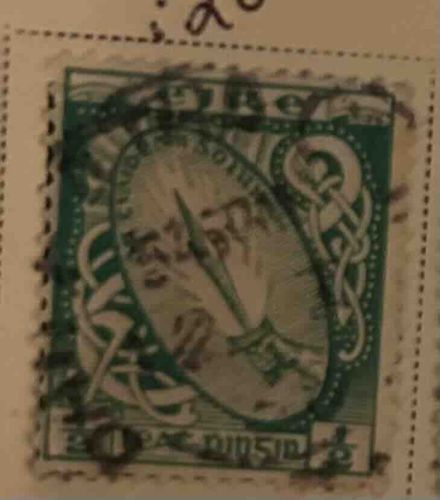
Submitted photo of Irish Éire Stamp
Photo submitted by the user — not generated by AI

User's notes

Stamp

These notes were written by the person who submitted this item. Appraiser.AI has not verified them, and the AI's identification and estimate may rely on them.

AI Estimated Value

Not an official valuation

$5 - $15

AI estimate as of November 10, 2025 · verify with a professional before acting

AI-Generated · Verify before acting

Everything on this page is generated by AI for informational purposes only. AI can make mistakes — the AI may misidentify items or misattribute them (artist, maker, brand, designer, origin, era). This is not an official valuation and should not be used for insurance, sale, tax, estate, legal, or lending purposes — or any decision requiring a certified appraisal. It is not an authoritative claim about any person, brand, or rights holder — do not share or rely on it as a factual statement about a third party. Always consult qualified professionals before making financial decisions.

This analysis also relies on unverified notes provided by the user, which may be incomplete or inaccurate and could affect the result.

Read the full disclaimer

AI Item Analysis

This item is an Irish postage stamp, characterized by its prominent green and white color scheme. The stamp features a central oval motif with what appears to be a compass needle pointing upwards, surrounded by intricate Celtic knotwork designs. The word "ÉIRE" is visible at the top of the stamp, identifying its country of origin. The bottom of the stamp shows text that reads "AG DINSIU" and a denomination that is partially obscured but appears to be '1/2d' based on similar historical Irish stamps. The stamp has perforated edges, which are characteristic of postage stamps, suggesting it was once part of a larger sheet. The overall condition shows signs of use, with a postmark or cancellation mark heavily obscuring parts of the central design and the top left corner, indicating it has been used for postage. Some minor wear and slight discoloration are also apparent on the paper itself. The Celtic knotwork suggests a design style popular during the early to mid-20th century in Ireland, likely dating from the period following Ireland's independence when national symbols were heavily incorporated into official designs. The quality of printing appears standard for a postage stamp of its era, with clear lines despite the postmark. The green ink is quite vibrant.

AI Appraisal Report

I have examined the provided image of the Irish 'ÉIRE' postage stamp. Visually, the stamp appears to be an authentic Irish issue, likely from the early to mid-20th century, given the 'ÉIRE' designation and Celtic knotwork typical of the period. The green and white color scheme, perforation, and overall design are consistent with known Irish stamps. The partial denomination '1/2d' further points to an issue from when pre-decimal currency was in use. The condition is a primary factor impacting its value. The stamp shows clear signs of having been used for postage, evidenced by a heavy cancellation mark that significantly obscures the central design and denomination. There are also visible wear and slight discoloration. While used stamps typically trade at lower values than unused examples, some heavily canceled stamps can lose much of their aesthetic appeal and monetary value. Market conditions for common Irish pre-decimal stamps, even those with attractive designs, are generally stable but not highly speculative. This particular stamp, due to its commonality and heavily canceled state, would likely fall into the lower end of the market. Comparables for heavily used common Irish stamps of this era typically range from a few dollars to modest sums. Its rarity is low; this general type of stamp was produced in large quantities. Key limitations: Without physical examination, I cannot definitively verify the paper type, watermarks, exact perforation count, or confirm any printing errors or varieties that could significantly alter its value. A precise assessment of the postmark (e.g., date, city) could offer additional context but is unlikely to dramatically increase the value unless it represents a rare cancellation. I would advise an in-person examination by a philatelic expert to authenticate its exact issue and condition nuances fully. The current appraisal is based solely on the visual information available through the image.

Keep exploring

More stamp appraisals

Get your items appraised

Instant AI-powered appraisal estimates from a photo

Browse More Appraisals