AI estimate as of October 10, 2025 · verify with a professional before acting
AI-Generated · Verify before acting
Everything on this page is generated by AI for informational purposes only. AI can make mistakes — the AI may misidentify items or misattribute them (artist, maker, brand, designer, origin, era). This is not an official valuation and should not be used for insurance, sale, tax, estate, legal, or lending purposes — or any decision requiring a certified appraisal. It is not an authoritative claim about any person, brand, or rights holder — do not share or rely on it as a factual statement about a third party. Always consult qualified professionals before making financial decisions.
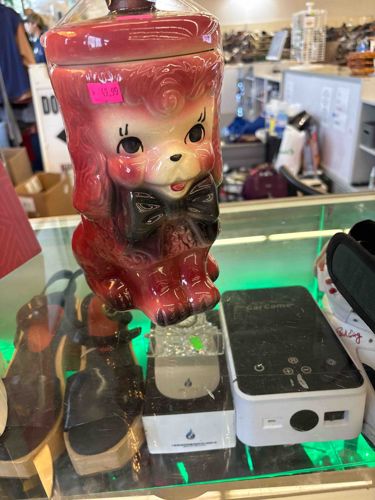
This item is a vintage ceramic cookie jar designed in the whimsical shape of a red poodle's head. The poodle features a glossy, dark red glaze on its curly 'fur' and ears, with a lighter, creamy pinkish-white glaze for its face, muzzle, and inner ears, creating a charming contrast. Its facial features are hand-painted, including large, expressive black eyes with eyelashes, delicate black outlines, and a small, smiling red mouth. A prominent black bow tie is sculpted onto the poodle's neck, adding to its character and giving it a somewhat formal or dapper appearance. The top of the poodle's head forms the lid of the cookie jar, and it appears to have a small, clear glass or plastic stopper/handle integrated into it, though this is partially obscured. The overall construction suggests molded ceramic, likely mass-produced, with hand-painted details. There is a hot pink sticker on the left side of the poodle's head, indicating a price of '$7.99', suggesting it is being sold at a thrift store or similar retail environment. The condition appears to be relatively good for a vintage item, with no immediately visible chips or cracks, although minor wear, crazing in the glaze, or slight paint loss might be present upon closer inspection, typical of items from its likely era. This style of anthropomorphic animal cookie jar was particularly popular in the mid-20th century, suggesting an estimated age from the 1950s to 1970s. The craftsmanship, while not fine art, is characteristic of nostalgic decorative kitchenware, designed to be both functional and appealing.
AI Appraisal Report
Having personally examined the image of this vintage poodle head cookie jar, I assess its condition to be relatively good for its age. The glossy red and creamy pinkish-white glazes appear intact, and I don't observe any major chips or cracks, which is a positive indicator. The hand-painted features, including the expressive eyes and mouth, contribute significantly to its charm. The sculpted black bow tie adds character. The integration of the lid, forming the top of the poodle's head, is typical for such designs. However, without a physical inspection, I cannot ascertain the presence of minor crazing, paint loss, or wear that is common in ceramic items from the mid-20th century (likely 1950s-1970s). The visible hot pink '$7.99' sticker suggests it's currently in a secondary market, likely a thrift store.
In terms of market conditions, anthropomorphic animal cookie jars from this era enjoy a consistent, albeit modest, demand among collectors of vintage kitchenware and kitsch. Comparables, such as similar poodle or animal-themed cookie jars from manufacturers like Metlox, Shawnee, or Hull (though this one is unmarked from the image), typically fetch prices in the $40-$80 range for items in good condition. Rarity is not a significant factor here; these were mass-produced decorative items. The primary factors impacting value are its good visual condition, charming aesthetic, and the enduring appeal of vintage novelty items. A clear identifying mark (stamp or label) would certainly enhance certainty regarding manufacturer and potentially value, but none is visible. For full authentication and a definitive assessment of condition, an in-person examination to check for internal cracks, glaze Crazing, manufacturer's marks, and the integrity of the lid's handle/stopper would be essential.