AI Appraisal Estimate

AI-generated estimates · not official valuations

From the user

What was submitted

Photo and notes provided by the user — not generated by AI

Submitted item photo
Submitted photo · June 30, 2026

User's notes

Cookie jar

AI analysis below

AI appraisal

AI analysis & estimate

AI-Generated · Verify before acting

Everything below is generated by AI for informational purposes only. AI can make mistakes — the AI may misidentify items or misattribute them (artist, maker, brand, designer, origin, era). This is not an official valuation and should not be used for insurance, sale, tax, estate, legal, or lending purposes — or any decision requiring a certified appraisal. It is not an authoritative claim about any person, brand, or rights holder — do not share or rely on it as a factual statement about a third party. Always consult qualified professionals before making financial decisions.

Note

This analysis also relies on unverified notes provided by the user, which may be incomplete or inaccurate and could affect the result.

Read the full disclaimer

AI Identification

·Not independently authenticated·Verify before acting

Artisan Stoneware Bear-Themed Cookie Jar

Kitchenware & Ceramics

AI Estimated Value

·Not an official valuation·Verify before acting

$45.00 - $65.00

As of June 30, 2026

AI Item Analysis

·AI can make mistakes·Verify before acting
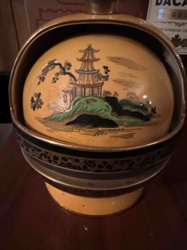
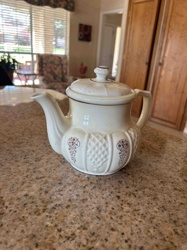
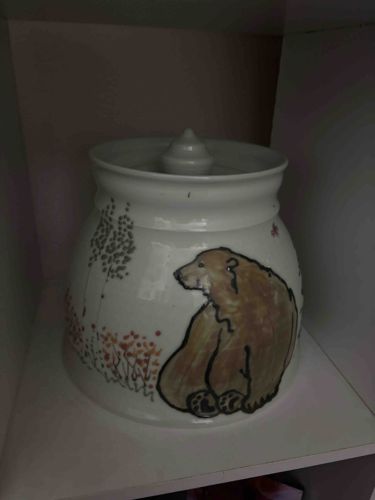
This is a handmade stoneware cookie jar or kitchen canister featuring a bulbous body and a recessed lid with a central finial knob. The vessel is constructed from white or light-colored ceramic clay and finished with a high-gloss transparent glaze. The primary decorative focal point is a large, hand-painted brown bear sitting in profile, rendered with thick, dark slip-trailed or underglaze outlines and watercolor-style brown washes. Beside the bear is a stylized landscape consisting of thin, vertically oriented trees and autumnal red and orange shrubbery, likely applied using a stamping or sponge-painting technique. The jar shows signs of artisan craftsmanship, evidenced by the slightly irregular profile of the turned body and the hand-applied nature of the graphics. Based on the style and glaze quality, it likely dates from the late 20th to early 21st century. The condition appears to be very good with no visible chips, cracks, or heavy crazing, although there are minor manufacturing imperfections in the glaze surface and a small dark mark near the rim. This piece exemplifies functional folk-style pottery with a focus on North American wildlife motifs.
AI Appraisal Report

·AI can make mistakes·Verify before acting
I have conducted a visual examination of the Artisan Stoneware Bear-Themed Cookie Jar. The piece displays hallmarks of late 20th-century studio pottery, characterized by a folk-art aesthetic and hand-applied slip-trailing. The condition appears 'excellent' for a functional ceramic object; while I noted a small dark inclusion near the rim and minor glaze pinholes, these are consistent with studio firing processes rather than post-production damage. The lack of visible crazing suggests a well-fitted glaze and proper storage conditions. The market for contemporary folk-themed stoneware remains stable but localized. While the 'North American Wilderness' motif is popular in rustic and cabin-style decor, the value is restricted by the lack of a visible artist's mark or 'signature' on the underside or body. Comparables for unsigned, contemporary artisan cookie jars typically sell within the $40 to $70 range at estate auctions and online marketplaces. Higher values are generally reserved for known regional potters with established collector bases. Limitations: My assessment is based solely on the provided visual information. A physical inspection is required to determine the presence of 'flea bites' on the lid's interior flange or to identify any professional restorations that may be invisible in photographs. Furthermore, without a visible maker's mark or provenance documentation (such as an original gallery receipt), I cannot attribute this to a specific artist. To fully verify its origins, I recommend checking the base for impressed stamps or signatures and researching local craft guilds from the Pacific Northwest or Appalachian regions, where this style of slip-decoration flourished during the 1990s.

Get your items appraised

Instant estimates of your treasures with AI-powered appraisals

Browse More Appraisals