AI estimate as of November 10, 2025 · verify with a professional before acting
AI-Generated · Verify before acting
Everything on this page is generated by AI for informational purposes only. AI can make mistakes — the AI may misidentify items or misattribute them (artist, maker, brand, designer, origin, era). This is not an official valuation and should not be used for insurance, sale, tax, estate, legal, or lending purposes — or any decision requiring a certified appraisal. It is not an authoritative claim about any person, brand, or rights holder — do not share or rely on it as a factual statement about a third party. Always consult qualified professionals before making financial decisions.
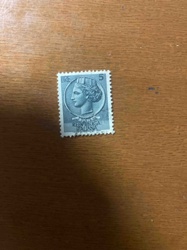
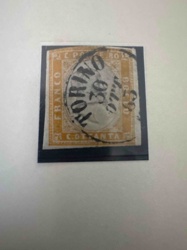
This item is a postage stamp from the German Empire, featuring a "Posthorn" design and a denomination of 30 Mark. The stamp is predominantly brown in color, with intricate details in a darker tone of brown. It is rectangular in shape with perforated edges, typical of postage stamps. The central design element is a stylized posthorn, commonly associated with postal services, encased within an oval or elliptical border composed of swirling lines or rope-like patterns. Surrounding this central motif, in a circular arrangement, are the words 'Deutsches Reich' at the top and '30 Mark' at the bottom. The number '30' is also prominently displayed in each of the four corners of the stamp, signifying its denomination. The overall aesthetic suggests an early 20th-century design style, likely from the period of significant inflation in Germany. Visible condition issues include potential slight fading or discoloration consistent with its age, though the details appear largely intact. The perforations seem to be mostly complete, indicating it has not been roughly handled or torn from a sheet. Wear and tear are minimal based on the image quality, but a proper assessment would require closer examination. There are no discernible maker's marks or explicit manufacturing details visible, typical for a postage stamp of this era, where the issuing authority (Deutsches Reich) and denomination were the primary identifiers. The craftsmanship appears to be of standard philatelic quality for its time, with clear printing and distinct lines in the design.
AI Appraisal Report
Upon visual examination of the provided image of the German Empire 30 Mark Posthorn stamp, I assess its condition as good circulated. The brown coloration appears consistent with issues from this period, though some age-related toning or slight fading is possible. The perforations seem largely intact, and the design details remain clear, suggesting it hasn't been heavily mishandled. There are no overt signs of significant tears, creases, or major thins, but precise assessment of these would require physical inspection. Authenticity, based solely on the image, appears strong given the typical design elements for this era and denomination, but definitive verification would necessitate an in-person expert examination to check for watermarks, paper type, and printing nuances, as well as potential forgeries or reprints.
This particular 30 Mark Posthorn stamp issue from the German Empire (Michel #180, Scott #189) is relatively common for its period, particularly given the inflationary environment it was issued in. While it holds historical interest, its rarity is not exceptionally high unless it possesses specific plate flaws, varieties, or exceptional centering, which cannot be determined from the image. Market demand for common German Empire stamps in good, used condition is modest. Comparables typically range from a few dollars to upwards of $50-$100 for well-centered, neatly canceled examples. Unused examples with original gum command higher prices.
Factors impacting value include its general good appearance, but the absence of a clear cancelation, potential undisclosed flaws, and lack of provenance limit its top-tier value. A physical examination by a philatelic expert is crucial for confirming authenticity, assessing gum condition (if mint), detecting repairs, and identifying precise varieties that could significantly alter the valuation. Without this, and any provenance documentation, the value remains conservative.