AI Appraisal Estimate

AI-generated estimates · not official valuations

From the user

What was submitted

Photo and notes provided by the user — not generated by AI

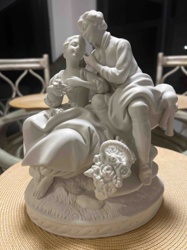
Submitted item photo
Submitted photo · June 18, 2026

User's notes

No additional notes provided.

AI analysis below

AI appraisal

AI analysis & estimate

AI-Generated · Verify before acting

Everything below is generated by AI for informational purposes only. AI can make mistakes — the AI may misidentify items or misattribute them (artist, maker, brand, designer, origin, era). This is not an official valuation and should not be used for insurance, sale, tax, estate, legal, or lending purposes — or any decision requiring a certified appraisal. It is not an authoritative claim about any person, brand, or rights holder — do not share or rely on it as a factual statement about a third party. Always consult qualified professionals before making financial decisions.

Read the full disclaimer

AI Identification

·Not independently authenticated·Verify before acting

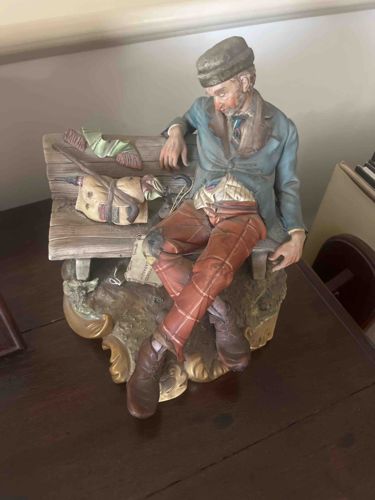
Capodimonte Style Porcelain Figurine of the 'Homeless Man on a Bench'

Decorative Arts - Porcelain Figurines

AI Estimated Value

·Not an official valuation·Verify before acting

$250 - $450

As of June 18, 2026

AI Item Analysis

·AI can make mistakes·Verify before acting
This is a large-scale, hand-painted biscuit porcelain figurine depicting an elderly, disheveled man resting on a park bench, characteristic of the mid-20th-century Italian Capodimonte figurative tradition. The piece is highly narrative, featuring a man with a weary expression, dressed in a muted blue jacket, a tattered waistcoat, and rust-colored plaid trousers. Beside him sits a bindle or bundle wrapped in tan fabric, tied with a dark cord. The sculpture is mounted on an ornate, rococo-style base with gilded scrollwork. The material appears to be a fine-grained, matte-finish porcelain with soft, realistic polychrome glazes. Notable craftsmanship is seen in the textural details of the bench wood-grain and the intricate facial features of the subject. The condition shows significant surface dust and grime, which is expected for its age. There is potential minor paint loss on the man’s knee and around the base, and some of the delicate edges on the bundle may have slight abrasions. Typically, these items are marked on the underside with a 'N' crowned in blue or a specific artist signature such as Cortese or Borsato, though the mark is not visible in the photo. The style suggests an origin from the 1960s to 1980s, a peak period for these sentimental Italian character studies.
AI Appraisal Report

·AI can make mistakes·Verify before acting
I have conducted a visual examination of the 'Homeless Man on a Bench' figurine, a classic example of mid-20th-century Italian biscuit porcelain in the Capodimonte style. The piece demonstrates high-level narrative detail and the 'sentimental realism' popularized by studios like King’s or masters like Luciano Cazzola and Bruno Merli. The textural rendering of the bench and the character’s weary expression are indicative of quality Italian craftsmanship from the 1960s–1980s. Condition-wise, the figurine shows significant dust accumulation and minor paint loss on the knee and base. In the world of fine porcelain, 'as-is' condition significantly hampers value; professional cleaning and a lack of structural chips would be necessary to reach the high end of the valuation. The market for mid-century Italian figurines has softened in recent years, as younger collectors move away from traditional sentimental dust-collectors, though large-scale character studies still command a niche following. Critically, I cannot confirm authenticity or a specific artist (such as Cortese) via image alone. This valuation assumes the presence of a 'Crowned N' or factory mark on the underside. To transition this from a 'style' attribution to a 'certified' work, a physical inspection is required to check for structural repairs under UV light and to verify the hallmark's glaze consistency. Provenance or original gallery receipts would further solidify its market standing. Without a visible signature, the piece is valued primarily as a decorative object of high quality rather than a specific fine-art investment.

Get your items appraised

Instant estimates of your treasures with AI-powered appraisals

Browse More Appraisals