AI Appraisal Estimate

AI-generated estimates · not official valuations

From the user

What was submitted

Photo and notes provided by the user — not generated by AI

Submitted item photo
Submitted photo · June 26, 2026

User's notes

No additional notes provided.

AI analysis below

AI appraisal

AI analysis & estimate

AI-Generated · Verify before acting

Everything below is generated by AI for informational purposes only. AI can make mistakes — the AI may misidentify items or misattribute them (artist, maker, brand, designer, origin, era). This is not an official valuation and should not be used for insurance, sale, tax, estate, legal, or lending purposes — or any decision requiring a certified appraisal. It is not an authoritative claim about any person, brand, or rights holder — do not share or rely on it as a factual statement about a third party. Always consult qualified professionals before making financial decisions.

Read the full disclaimer

AI Identification

·Not independently authenticated·Verify before acting

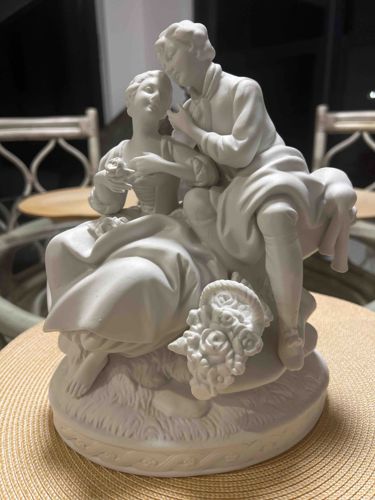
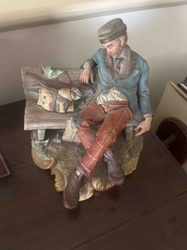
Bisque Porcelain Gallant Couple Figurine

Decorative Arts / Porcelain Figurines

AI Estimated Value

·Not an official valuation·Verify before acting

$250 - $450

As of June 26, 2026

AI Item Analysis

·AI can make mistakes·Verify before acting
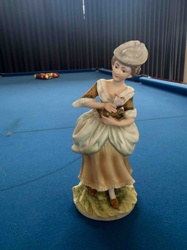
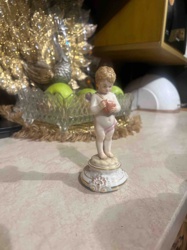
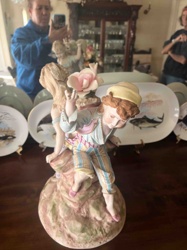
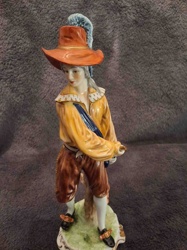
This item is a white bisque (unglazed) porcelain figurine depicting a romantic 'gallant' couple in 18th-century Rococo-style attire. The sculpture features a seated man leaning over a woman who holds a flower, set upon a naturalistic grassy base with an overflowing basket of roses at their feet. The piece is characterized by a matte, satiny finish typical of high-quality bisque ware, which allows for the fine details of the drapery, facial expressions, and delicate floral petals to remain crisp without the softening effect of a thick glaze. The base is circular with a decorative molded border. Structurally, the figurine displays high-level craftsmanship, seen in the dynamic folds of the clothing and the intricate construction of the rose petals. While no specific maker's mark is visible from this angle, the style is reminiscent of European makers like Sèvres, Meissen, or Capodimonte, though many 20th-century reproductions exist. It appears to be in excellent condition with no visible cracks, chips, or major repairs, although the porous nature of bisque porcelain means it is susceptible to dust accumulation and surface marking over time. The piece likely dates from the late 19th century to the mid-20th century as a revivalist decorative object.
AI Appraisal Report

·AI can make mistakes·Verify before acting
I have examined the digital representation of this white bisque porcelain gallant couple. The piece exhibits the hallmark characteristics of late 19th to mid-20th-century Rococo revivalism, featuring the intricate lace-work and floral detailing associated with European porcelain traditions. The matte finish remains crisp, suggesting the piece has been well-maintained and spared from the typical 'graying' or staining seen in porous unglazed wares. The molding of the basket and the depth of the drapery indicate a high-quality production mold, though not necessarily a unique hand-carved artist piece. The market for mid-tier European-style figurines is currently stable but selective. Comparable pieces by known manufacturers like Volkstedt or Sitzendorf often fetch higher premiums, while unmarked 20th-century versions typically fall within the identified range. The value is buoyed by the excellent condition of the delicate rose petals, which are frequently the first elements to sustain damage. However, without a physical inspection, I cannot verify the presence of a maker's mark or 'beehive' stamp on the underside, which could significantly increase the valuation if tied to a specific French or German manufactory. Authentication via images alone is limited; a full appraisal would require tactile inspection to check for professional restorations under UV light and a review of provenance to confirm the date of manufacture. Scientific testing of the porcelain paste would be necessary to distinguish between 19th-century soft-paste and modern hard-paste reproductions.

Get your items appraised

Instant estimates of your treasures with AI-powered appraisals

Browse More Appraisals