AI Appraisal Estimate

AI-generated estimates · not official valuations

From the user

What was submitted

Photo and notes provided by the user — not generated by AI

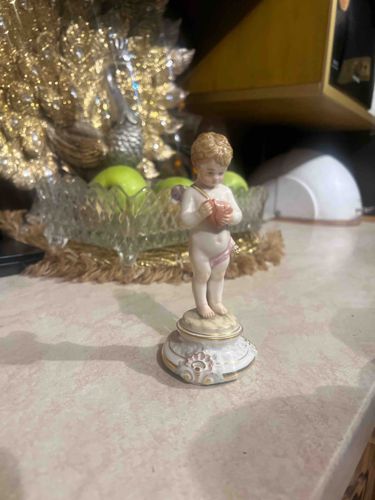
Submitted item photo
Submitted photo · May 19, 2026

User's notes

No additional notes provided.

AI analysis below

AI appraisal

AI analysis & estimate

AI-Generated · Verify before acting

Everything below is generated by AI for informational purposes only. AI can make mistakes — the AI may misidentify items or misattribute them (artist, maker, brand, designer, origin, era). This is not an official valuation and should not be used for insurance, sale, tax, estate, legal, or lending purposes — or any decision requiring a certified appraisal. It is not an authoritative claim about any person, brand, or rights holder — do not share or rely on it as a factual statement about a third party. Always consult qualified professionals before making financial decisions.

Read the full disclaimer

AI Identification

·Not independently authenticated·Verify before acting

Antique Style Bisque Porcelain Cherub Figurine

Decorative Arts / Porcelain Figurines

AI Estimated Value

·Not an official valuation·Verify before acting

$125 - $225

As of May 19, 2026

AI Item Analysis

·AI can make mistakes·Verify before acting
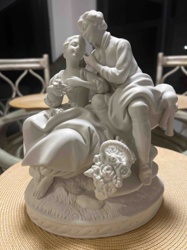
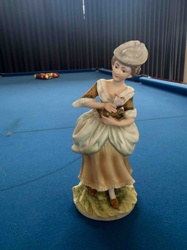
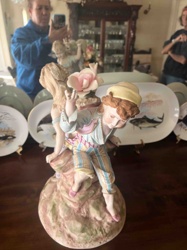
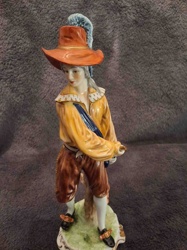
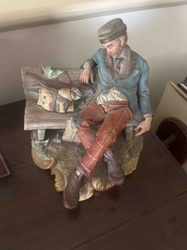
This item is a decorative bisque porcelain figurine depicting a standing cherub or putto. The figure is modeled in a classical style, standing approximately 5 to 7 inches tall on an ornate pedestal base. The cherub possesses soft, hand-painted features with curly blonde hair and highlights of pink in the sash draped across its waist. It appears to be holding a small reddish-pink object, possibly a heart or a musical instrument, near its chest. The figurine is constructed from fine-grained bisque (unglazed) porcelain for the body, while the base features a glazed finish with gilding and shell-like molded motifs. The craftsmanship exhibits delicate modeling in the anatomical details and the decorative flourishes of the base. The style is reminiscent of 19th-century European porcelain, specifically Meissen or Capodimonte, though it may be a later 20th-century revival piece. There are no clearly visible maker's marks from this angle, but the gold trim on the base is intact, suggesting careful preservation. The condition appears sound with a natural patina and no obvious chips or cracks visible in the primary structure, though the surface may require light cleaning to remove dust from the crevices.
AI Appraisal Report

·AI can make mistakes·Verify before acting
I have completed a visual examination of the Bisque Porcelain Cherub Figurine. The piece exhibits characteristics of the late 19th to early 20th-century European revival style, often associated with the 'Neo-Rococo' movement. The juxtaposition of the unglazed bisque body with a glazed, gilded base is a hallmark of high-quality decorative porcelain from regions such as Thuringia or France. The modeling of the musculature and the delicate hand-painted facial features suggest skilled craftsmanship. The condition appears 'Good to Very Good' with no visible losses to the extremities—fingers and toes are particularly vulnerable—though the gilding on the base shows minor shelf wear consistent with age. The current market for decorative porcelain has seen a shift; while masterworks from Meissen or Sèvres maintain high values, unattributed or 'in the style of' pieces have seen a softening in demand. This item is likely a high-quality boutique piece or a minor factory production rather than an ormolu-mounted primary artifact. Comparables for unattributed cherubic porcelain figurines of this scale typically realize between $100 and $300 at specialized estates or antique auctions. Limitation of Remote Appraisal: This valuation is based solely on visual evidence. I cannot verify the presence of a 'blue sword' or 'crowned N' mark under the base, which could significantly increase value. A physical inspection is required to check for invisible professional restorations under UV light and to assess the weight and 'ring' of the porcelain. Definitive authentication would require provenance documentation or comparison of the mold patterns against known factory archives to confirm if this is a period original or a mid-20th-century reproduction.

Get your items appraised

Instant estimates of your treasures with AI-powered appraisals

Browse More Appraisals