AI estimate as of July 20, 2025 · verify with a professional before acting
AI-Generated · Verify before acting
Everything on this page is generated by AI for informational purposes only. AI can make mistakes — the AI may misidentify items or misattribute them (artist, maker, brand, designer, origin, era). This is not an official valuation and should not be used for insurance, sale, tax, estate, legal, or lending purposes — or any decision requiring a certified appraisal. It is not an authoritative claim about any person, brand, or rights holder — do not share or rely on it as a factual statement about a third party. Always consult qualified professionals before making financial decisions.
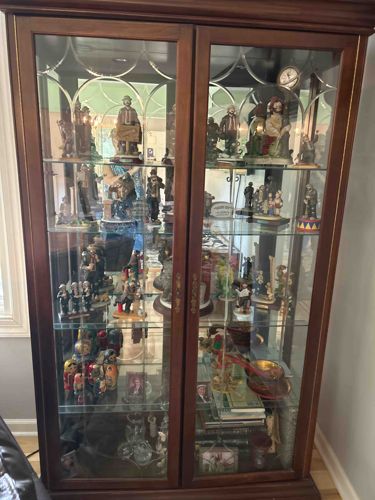
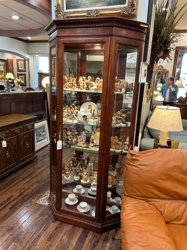
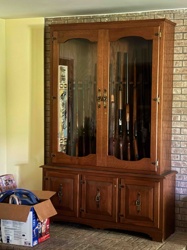
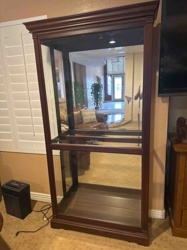
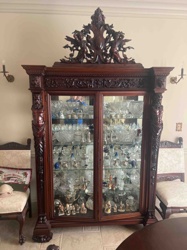
This is a tall, freestanding display cabinet, commonly known as a curio cabinet or china cabinet. It features a rich, dark brown wood finish, likely mahogany, walnut, or a similar stained hardwood, with a visible grain. The cabinet has a double-door design, with each door entirely surfaced with clear glass. The top section of the glass on each door incorporates a decorative, possibly bevelled, design in a repeating arc or scalloped pattern, adding a touch of elegance. The cabinet is illuminated internally, with visible light sources, likely sconces or strip lights, at the top, designed to highlight the displayed contents. The interior features multiple glass shelves, allowing light to pass through and providing ample space for showcasing collectibles. The backing appears to be mirrored or a reflective surface, which enhances the visibility of items from multiple angles and brightens the interior. The hardware, though partially obscured, appears to be brass or bronze-toned, complementing the wood finish. The cabinet is well-constructed, indicative of a quality piece, with no visible signs of significant damage, heavy wear, or repairs, suggesting good maintenance. The overall style points to a traditional or transitional design, likely from the late 20th or early 21st century. It is designed for displaying decorative objects, such as the numerous figurines and trinkets currently housed within.
AI Appraisal Report
Based on my visual examination of the provided image, this Illuminated Double-Door Wood and Glass Display Cabinet is a desirable piece. The rich, dark wood finish, likely a stained hardwood such as mahogany or walnut, along with the clear glass doors featuring decorative scalloped top panels, indicates a traditional or transitional style. The internal illumination, glass shelving, and mirrored backing are key features that enhance its functionality and aesthetic appeal, designed to showcase collectibles effectively. The overall condition appears to be excellent; I observe no significant damage, heavy wear, or signs of repair, suggesting careful maintenance. The hardware, though partially obscured, complements the wood tone.
From a market perspective, illuminated display cabinets are consistently in demand for collectors and homeowners seeking to display decorative items. While not a rare antique, its quality construction sets it apart from lower-end mass-produced options. Comparables in the secondary market for well-maintained, illuminated wood and glass cabinets typically range from \$400 to \$800, depending on manufacturer, wood quality, and specific features. This piece's good condition and desirable features place it towards the higher end of this range. Factors positively impacting its value include its excellent condition, internal lighting, and reflective interior. Its broad appeal ensures steady demand.
My assessment of authenticity and condition is limited by visual inspection alone. While the construction appears solid and consistent with quality furniture, I cannot definitively confirm the wood type or manufacturing origin without an in-person examination. Physical inspection would allow me to assess joinery, internal finishes, and the integrity of the electrical components, which could further impact value. Provenance documentation, if available, would provide definitive authentication. However, based on the visual evidence, it presents as a well-preserved, functional, and aesthetically pleasing display cabinet.