AI Appraisal Estimate

AI-generated estimates · not official valuations

From the user

What was submitted

Photo and notes provided by the user — not generated by AI

Submitted item photo
Submitted photo · June 28, 2026

User's notes

No additional notes provided.

AI analysis below

AI appraisal

AI analysis & estimate

AI-Generated · Verify before acting

Everything below is generated by AI for informational purposes only. AI can make mistakes — the AI may misidentify items or misattribute them (artist, maker, brand, designer, origin, era). This is not an official valuation and should not be used for insurance, sale, tax, estate, legal, or lending purposes — or any decision requiring a certified appraisal. It is not an authoritative claim about any person, brand, or rights holder — do not share or rely on it as a factual statement about a third party. Always consult qualified professionals before making financial decisions.

Read the full disclaimer

AI Identification

·Not independently authenticated·Verify before acting

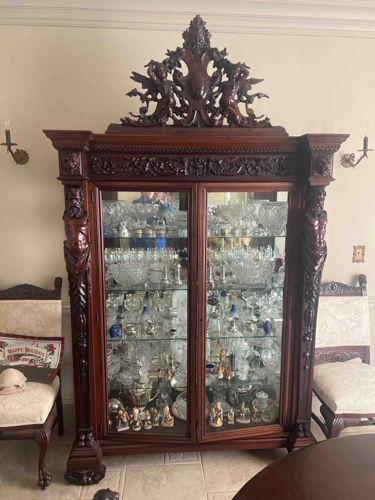
Late Victorian Renaissance Revival Carved Mahogany Display Cabinet

Antique Furniture / Display Cabinets

AI Estimated Value

·Not an official valuation·Verify before acting

$4,500 - $7,500

As of June 28, 2026

AI Item Analysis

·AI can make mistakes·Verify before acting
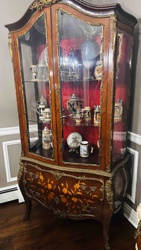
This is a large, highly ornate display cabinet crafted in the Renaissance Revival style, likely dating from the late 19th century (circa 1880-1900). The piece is constructed from a dark, rich wood—most likely mahogany or walnut—with a deep reddish-brown finish. The most striking feature is the monumental pierced-carved crest (pediment) featuring central oval medallions flanked by reclining cherubs or winged figures and intricate foliate scrolls. The cabinet's frame is heavily architectural, anchored by two massive pilasters carved as 'herms' or atlantes, featuring muscular male torsos that transition into acanthus leaf motifs. The frieze below the cornice is deeply carved with a floral and grapevine garland. The cabinet features two large glass doors with beveled edges, opening to a mirrored back and glass shelving populated with crystal and glassware. The base is supported by substantial block feet decorated with carved masks or lions. The craftsmanship shows high-quality Victorian cabinetmaking, specifically in the depth and detail of the figurative carvings. Condition appears excellent with a well-maintained patina, though minor age-related expansion cracks or small losses to the delicate crest carving are typical for pieces of this size and era. No clear maker's marks are visible, but the style is consistent with high-end American or European manufacturers like RJ Horner or similar workshops proficient in the 'Grand Style' of the period.
AI Appraisal Report

·AI can make mistakes·Verify before acting
I have virtually examined this Late Victorian Renaissance Revival Carved Mahogany Display Cabinet. Based on visual evidence, the piece is a fine example of late 19th-century American or European craftsmanship, likely dating to circa 1885. The monumental crest with cherubim and the high-relief herms flanking the glass doors are hallmark features of the 'Grand Style' popularized by high-end firms such as R.J. Horner of New York. The condition appears exceptional for its age; the wood retains a rich, consistent mahogany patina, and the mirrored interior and beveled glass appear original or period-appropriate. Market demand for large-scale brown furniture has stabilized after a decline, with 'statement pieces' featuring figurative carving still commanding premium prices at boutique auctions. Comparables for smaller, less ornate cabinets range from $2,500-$4,000, while this specimen’s architectural complexity and figurative work justify the higher estimate. However, definitive authentication is limited by digital inspection. To confirm a specific maker, I would require a physical search for paper labels on the rear panel or stamps inside the drawer linings. A hands-on examination is necessary to verify the secondary woods (such as poplar or oak) and to check for structural repairs in the delicate pierced crest. An in-person inspection of the joinery—specifically looking for machine-cut vs. hand-finished dovetails—would further solidify the date of manufacture. Provenance documentation would significantly enhance the value toward the upper end of the estimate.

Get your items appraised

Instant estimates of your treasures with AI-powered appraisals

Browse More Appraisals