AI estimate as of July 5, 2025 · verify with a professional before acting
AI-Generated · Verify before acting
Everything on this page is generated by AI for informational purposes only. AI can make mistakes — the AI may misidentify items or misattribute them (artist, maker, brand, designer, origin, era). This is not an official valuation and should not be used for insurance, sale, tax, estate, legal, or lending purposes — or any decision requiring a certified appraisal. It is not an authoritative claim about any person, brand, or rights holder — do not share or rely on it as a factual statement about a third party. Always consult qualified professionals before making financial decisions.
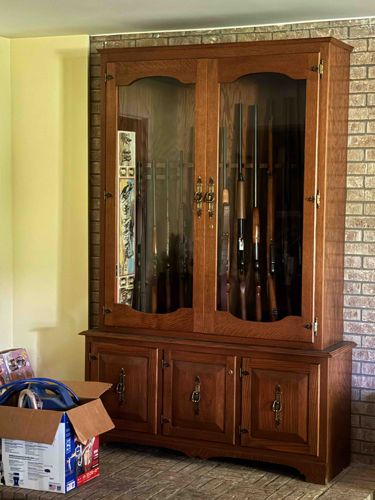
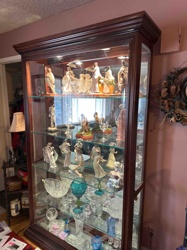
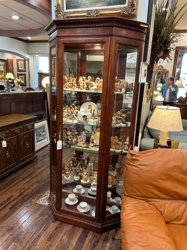
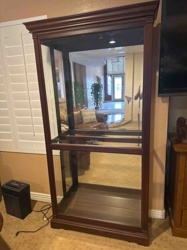
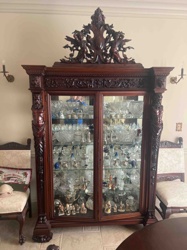
This is a freestanding, two-piece wooden gun cabinet, likely constructed from a hardwood such as oak or maple, given its grain pattern and medium brown stain. The cabinet measures approximately 6 to 7 feet in height and 3 to 4 feet in width, resting on what appears to be a stone or brick hearth. The upper section features a large display area with two arched glass doors, allowing visibility into the interior, which holds multiple long firearms. The glass appears clear with no visible cracks or significant scratches. The doors are secured by brass-toned hardware, including hinges and a central pull handle or lock mechanism. The interior back panel appears dark, possibly mirrored or lined with felt, to highlight the displayed contents. The top of the cabinet has a simple crown molding detail. The lower section consists of a solid wooden base with three paneled doors, each adorned with an ornate, possibly cast-iron or brass, drop pull handle featuring a decorative backplate. These lower compartments likely provide additional storage for ammunition, accessories, or other items. The panels on the lower doors feature a classic recessed or raised design, indicating quality craftsmanship. The overall condition appears good, with a well-maintained finish and no obvious signs of significant damage, deep scratches, or wear. There is no visible manufacturing mark or signature. Based on its style, particularly the arching glass doors and traditional hardware, it appears to be a modern cabinet, likely from the late 20th or early 21st century, designed in a classic or traditional furniture style. The cabinet exhibits good quality construction with clean lines and sturdy appearance, indicating it was designed for practical storage and display.
AI Appraisal Report
Based on my visual examination of the provided image, this two-piece wooden gun cabinet appears to be in good overall condition. The finish seems well-maintained, and I observe no significant damage, deep scratches, or excessive wear. The glass doors are clear and free of visible cracks or major scratches. The brass-toned hardware and decorative handles on the lower section appear intact.
From the image, the construction quality appears good, with clean lines and a sturdy appearance. The style, including the arched glass doors and traditional hardware, suggests a manufacturing period in the late 20th or early 21st century. It is designed in a classic furniture style, not an antique. There are no visible manufacturing marks or signatures to aid in definitive authentication or brand identification from the image alone. This limits my ability to confirm a specific maker or true age.
Market conditions for functional and decorative gun cabinets are generally stable; these items appeal to collectors of firearms or those seeking secure, elegant display options. Comparables in the secondary market for similar modern, quality-built wooden gun cabinets range widely depending on wood type, features, and brand reputation. While not rare, a well-maintained cabinet like this with attractive features will always find demand among a niche market. Factors impacting value include the actual wood species (difficult to confirm definitively from an image), the structural integrity upon physical inspection, and the functionality of all locks if present. The absence of visible damage and its ready-to-use appearance contribute positively to its marketability.
For full authentication, especially regarding wood type, exact age, and confirmation of any potential manufacturer, I would require a physical inspection. This would allow me to examine joinery, assess the internal condition, test hardware, and search for hidden marks or labels. Provenance documentation, if available, would also be invaluable in confirming its history and origin. Without physical examination, the assessment of authenticity is limited to visual cues and stylistic assumptions.