AI Appraisal Estimate

AI-generated estimates · not official valuations

From the user

What was submitted

Photo and notes provided by the user — not generated by AI

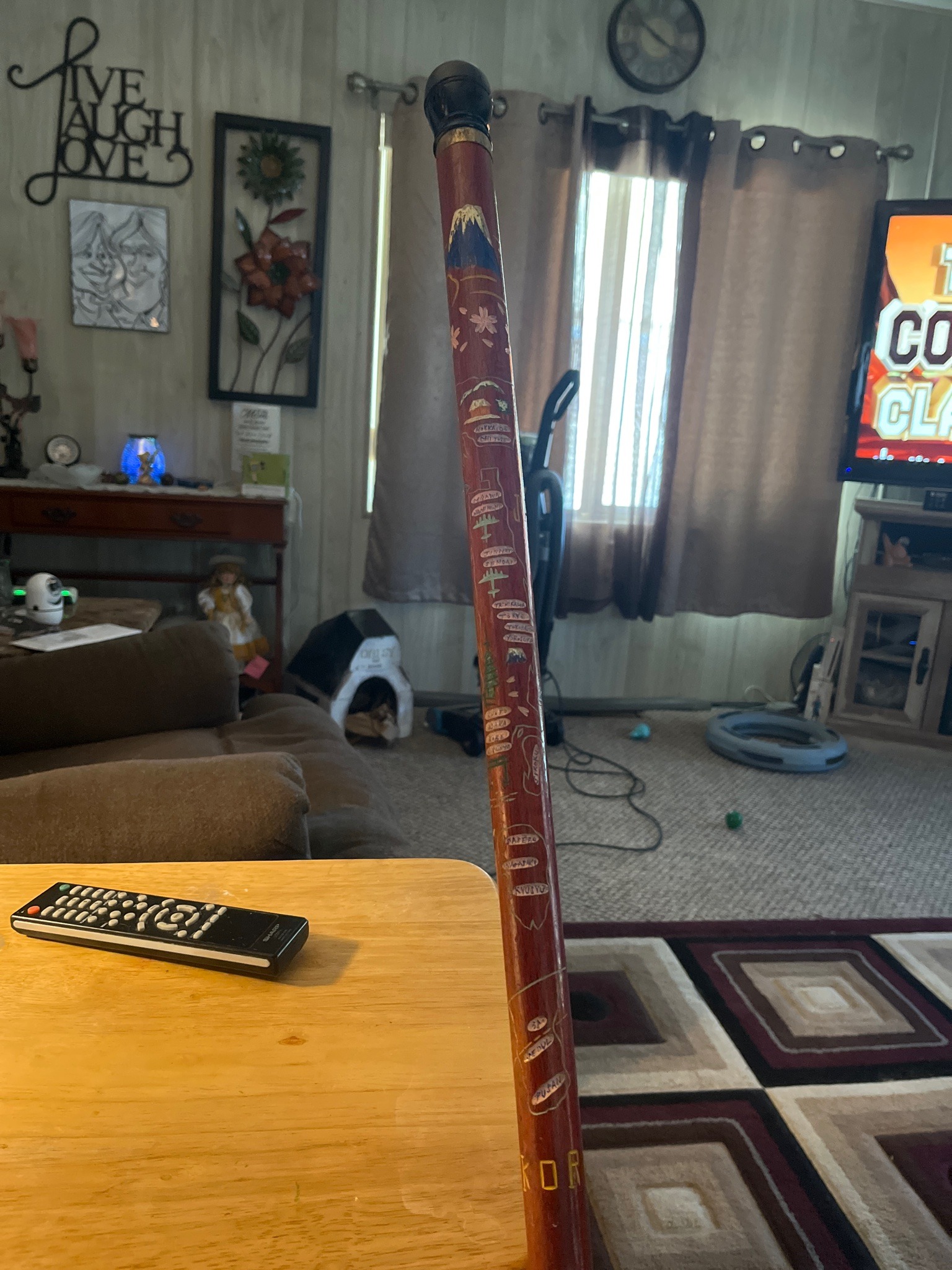
Submitted item photo
Submitted photo · June 26, 2026

User's notes

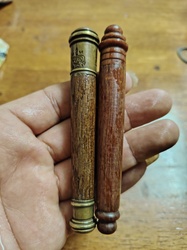
Vintage walking stick/pool cue. From Japan? WWll? Hand carved with names of the different towns in Japan?

AI analysis below

AI appraisal

AI analysis & estimate

AI-Generated · Verify before acting

Everything below is generated by AI for informational purposes only. AI can make mistakes — the AI may misidentify items or misattribute them (artist, maker, brand, designer, origin, era). This is not an official valuation and should not be used for insurance, sale, tax, estate, legal, or lending purposes — or any decision requiring a certified appraisal. It is not an authoritative claim about any person, brand, or rights holder — do not share or rely on it as a factual statement about a third party. Always consult qualified professionals before making financial decisions.

Note

This analysis also relies on unverified notes provided by the user, which may be incomplete or inaccurate and could affect the result.

Read the full disclaimer

AI Identification

·Not independently authenticated·Verify before acting

Inscribed mid-20th-century style wooden walking stick

Cultural Memorabilia

AI Estimated Value

·Not an official valuation·Verify before acting

$150 - $350

As of June 26, 2026

AI Item Analysis

·AI can make mistakes·Verify before acting
This item appears to be a hand-carved and painted wooden walking stick or souvenir cane, featuring a dark reddish-brown finish. The shaft is decorated with various incised and polychrome painted motifs, including topographical features like a mountain peak (consistent with Mount Fuji) and cherry blossoms. It features numerous hand-carved place names within cartouches and alongside small illustrations like airplanes, which are consistent with locations in Japan and Korea, such as 'HOKKAIDO', 'MISAWA', 'SENDAI', 'NAGASAKI', 'KYUSHU', 'SEOUL', and 'PUSAN'. The bottom visible portion appears to bear the partial text 'KOR'. The top is finished with a rounded black knob and a metallic-toned collar. Stylistically, the item is consistent with 'trench art' or commemorative occupational souvenirs from the post-WWII era (late 1940s to 1950s). The user-supplied suggestion that this may be a WWII-era Japanese souvenir is unverified but consistent with the visual evidence of regional place names and vintage construction. Condition appears fair with visible surface abrasions, possible minor paint loss, and general wear consistent with age and occasional use. No official maker's marks are visible; attribution is based solely on the incised geographic text and stylistic elements.

AI Appraisal Report

·AI can make mistakes·Verify before acting
Based on my examination of the provided images, this item appears to be a hand-carved souvenir walking stick likely dating to the mid-20th century. Per user submission, it is suggested to be a WWII-era Japanese artifact. The decorative elements, including the incised depictions of Mount Fuji, cherry blossoms, and specific geographic locations like 'SEOUL' and 'MISAWA', are consistent with the style of commemorative memorabilia produced for military personnel stationed in the Pacific Theater during the post-WWII occupation period (late 1940s–1950s). The inclusion of both Japanese and Korean place names supports a hypothesis of occupation-era 'trench art' or tourist craft. From what I can see, the wood bears a dark patina with surface abrasions and paint wear consistent with expected aging; however, I cannot verify the type of wood or the age of the pigments from a photograph alone. The valuation assumes that the inscriptions are contemporary to the mid-20th century; if these were determined to be modern additions or if the stick is a later mass-produced reproduction, the value would likely fall below $50. Market demand for occupational memorabilia remains steady among militaria collectors, though value is heavily influenced by the specific locations mentioned and the intricacy of the carving. To confirm the origin and historical significance, a physical inspection by a specialist in East Asian militaria would be required to analyze the tool marks and wood grain. Documentation regarding provenance or the original owner's service history would also be necessary to move beyond a stylistic hypothesis. The provided estimate reflects the current market for similar occupational-era folk art in fair condition.

Get your items appraised

Instant estimates of your treasures with AI-powered appraisals

Browse More Appraisals