AI estimate as of October 26, 2025 · verify with a professional before acting
AI-Generated · Verify before acting
Everything on this page is generated by AI for informational purposes only. AI can make mistakes — the AI may misidentify items or misattribute them (artist, maker, brand, designer, origin, era). This is not an official valuation and should not be used for insurance, sale, tax, estate, legal, or lending purposes — or any decision requiring a certified appraisal. It is not an authoritative claim about any person, brand, or rights holder — do not share or rely on it as a factual statement about a third party. Always consult qualified professionals before making financial decisions.
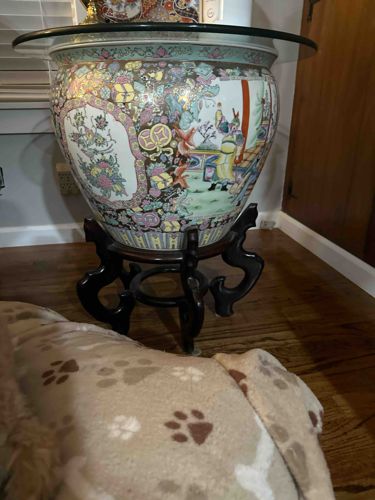
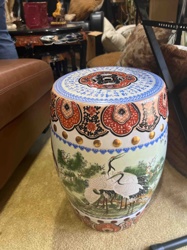
This is a large, ornate Famille Rose porcelain fishbowl, currently repurposed as a table with a circular glass top. The fishbowl itself is a substantial ceramic vessel, likely porcelain due to its fine detail and vibrant colors, featuring a bulbous body that tapers slightly towards a wider rim. The exterior is richly decorated with intricate polychrome enamels in the Famille Rose palette, characterized by soft pinks, blues, greens, yellows, and reds, often with gold accents. The decoration depicts a classical Chinese narrative scene with multiple figures in traditional attire, engaged in various activities within a garden or courtyard setting. There are also detailed floral motifs, birds, butterflies, and auspicious symbols such as coins. The background features a landscape with trees and architectural elements. The rim of the fishbowl has a decorative band with geometric patterns and floral elements, primarily in light green, pink, and blue. The craftsmanship appears to be of good quality, with fine brushstrokes and a glossy finish indicating a well-fired glaze. No visible cracks or major chips are apparent from the provided image, though detailed inspection would be needed to confirm. The fishbowl rests securely on a dark, possibly carved rosewood or hardwood stand with an openwork design, featuring four curved legs providing stability. This type of stand is typical for displaying large Oriental ceramics. A circular pane of clear glass is placed on top of the rim, converting the fishbowl into a functional table. The estimated age for such a piece, given the style, could range from mid-20th century to contemporary, possibly in the antique or vintage reproduction category. The overall presentation suggests a decorative piece intended to be a focal point in a room.
AI Appraisal Report
Based on my visual examination of the provided image, this large Famille Rose porcelain fishbowl, repurposed as a table, presents as a charming decorative item. The porcelain itself appears to be of good quality, with vibrant Famille Rose enamels depicting traditional Chinese narrative scenes, flora, fauna, and auspicious symbols. The fine brushwork and glossy glaze suggest competent craftsmanship. I see no obvious cracks, chips, or repairs from the image, indicating good cosmetic condition for its perceived age. The dark hardwood stand appears sturdy and complements the bowl well, typical of pieces designed for display. The addition of a glass top effectively transforms it into a functional and aesthetically pleasing table.
Authenticity of the porcelain is challenging to verify solely from an image. While it features classic Famille Rose motifs, without examining the paste, firing method, or internal structure, it is difficult to distinguish between an antique original, a high-quality vintage reproduction, or a more contemporary piece. The style suggests it could range from mid-20th century to modern. Market demand for decorative oriental porcelain, especially functional pieces like tables, remains consistent, though prices have moderated for reproductions. Comparables in similar condition and decorative style, often sold by online retailers or secondary markets, typically range from $600 to $1,200, influenced by size, actual age, and provenance.
Factors impacting value significant to this piece include its size, decorative appeal, and the functional repurposing as a table. However, the primary limitation is the inability to ascertain its precise age and origin without in-person inspection. A physical examination for indicators such as footrim wear, glaze consistency, painting technique nuances, and any makers' marks would be crucial for a definitive authentication and valuation. Additionally, provenance documentation would significantly enhance its authenticity and value. Without these, it is valued primarily as an attractive decorative furnishing.