AI estimate as of December 16, 2025 · verify with a professional before acting
AI-Generated · Verify before acting
Everything on this page is generated by AI for informational purposes only. AI can make mistakes — the AI may misidentify items or misattribute them (artist, maker, brand, designer, origin, era). This is not an official valuation and should not be used for insurance, sale, tax, estate, legal, or lending purposes — or any decision requiring a certified appraisal. It is not an authoritative claim about any person, brand, or rights holder — do not share or rely on it as a factual statement about a third party. Always consult qualified professionals before making financial decisions.
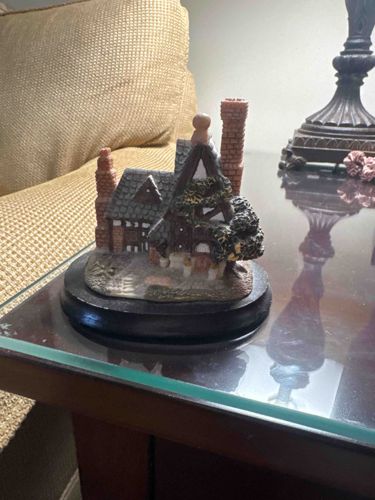
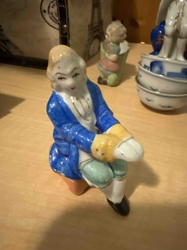
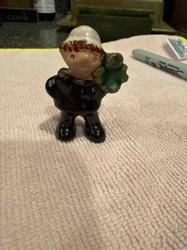
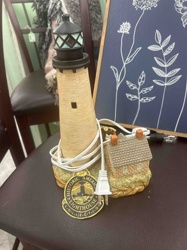
This item is a decorative miniature house figurine, designed in what appears to be a "Tudor style" architectural aesthetic. The structure features prominent dark brown or black gabled roofs, possibly depicting slate or thatched roofing, contrasting with lighter-colored walls that show exposed dark timber framing. Two distinct brick chimneys, rendered in a reddish-brown hue with individual brick details, ascend from the roofline, one on each side of the main structure. A significant feature is the sculpted foliage, likely representing ivy or tree branches, clinging to the front facade and a large, full tree next to the house, both rendered in varying shades of green, yellow, and brown to mimic natural fall or autumn colors. The figurine rests on an oval-shaped base, molded to suggest a patch of ground surrounding the house with some textured green and brown coloration. This base is affixed to a larger, flat, dark brown or black wooden plinth, which appears to be finished with a smooth, possibly lacquered surface. The overall construction suggests it is made from a resin or ceramic material, hand-painted with attention to detail, particularly in the architectural elements and foliage. No obvious marks, signatures, or specific manufacturing details are discernible from the provided image. The style suggests it could be a collectible item, possibly part of a series, and appears to be in good condition with no visible chips, cracks, or significant wear. It likely dates from the late 20th century to early 21st century, common for such decorative miniatures.
AI Appraisal Report
I have visually examined this miniature 'Tudor Style' House Figurine. Based on the provided image, the item appears to be in very good condition with no visible chips, cracks, or significant wear. The hand-painted details, particularly the timber framing, brick chimneys, and autumnal foliage, suggest a commercially produced decorative collectible. The materials appear to be resin or ceramic, mounted on a wooden plinth. Authenticity, in this context, refers primarily to its identity as a decorative collectible rather than a historical artifact; such items are generally mass-produced.
Market conditions for decorative figurines of this style are generally stable but do not command high prices. Comparables include items from popular collectible series like Department 56, Coventry House, or similar 'village' collections. These typically retail new from $30-$80 and often see a depreciation in the secondary market unless they are highly sought-after limited editions or part of a series with strong collector demand. This piece, while aesthetically pleasing, does not present as a rare or exceptionally unique item. Without manufacturer marks or series identification, it's difficult to ascertain specific rarity or strong collector demand.
Demand for generic decorative house figurines is moderate; they are popular as seasonal décor or additions to miniature village displays. However, without a known brand or artist, it primarily appeals to buyers based on aesthetic preference rather than collectible value. Factors limiting higher value include the lack of specific provenance, manufacturer identification, or any indication of artistic significance or limited production.
Limitations in authenticity verification from images alone are significant for potential identification. To fully authenticate its origin (manufacturer, series, exact age) and confirm material composition, an in-person examination would be required. This would allow for inspection of the underside for maker's marks, labels, or inscriptions, and tactile assessment of materials. Provenance documentation, such as original packaging or sales receipts, would also aid in confirming its history and potential collectibility within a specific series.