AI estimate as of November 13, 2025 · verify with a professional before acting
AI-Generated · Verify before acting
Everything on this page is generated by AI for informational purposes only. AI can make mistakes — the AI may misidentify items or misattribute them (artist, maker, brand, designer, origin, era). This is not an official valuation and should not be used for insurance, sale, tax, estate, legal, or lending purposes — or any decision requiring a certified appraisal. It is not an authoritative claim about any person, brand, or rights holder — do not share or rely on it as a factual statement about a third party. Always consult qualified professionals before making financial decisions.
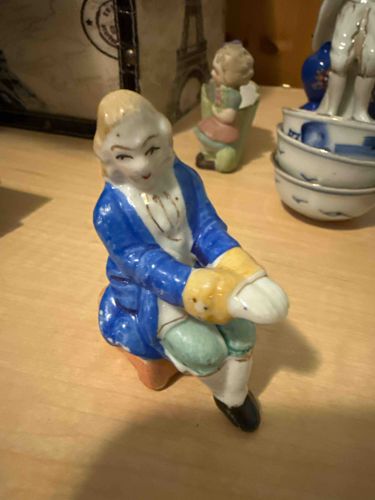
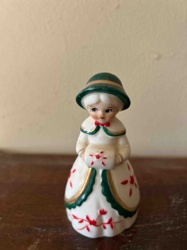
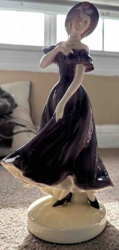
This is a small porcelain figurine depicting a male figure, likely influenced by the Rococo style, given the attire and general aesthetic. The figure is shown seated, with the body slightly leaning forward. He wears a meticulously detailed blue jacket with a white jabot and possibly cuffs, and his breeches appear to be a light green or aqua color. His footwear consists of black shoes with visible buckles. The figure's hair is light-colored, possibly painted yellow or a faded blonde, styled in a manner typical of the 18th century, with a slight side part. His facial features are delicately painted with dark eyebrows, small eyes, and a hint of a smile. The hands are particularly prominent, especially the left hand which seems to be holding an object that is not entirely clear but appears to be white and possibly textured. The figurine exhibits a glossy, glazed finish, suggesting it is made of porcelain or glazed ceramic. The colors are vibrant yet somewhat muted, contributing to an antique appearance. There are no obvious signs of significant damage like chips or cracks on the visible areas, though a full inspection would require examining all sides. The craftsmanship appears to be of a reasonable quality, with attention paid to the details of the clothing and facial expression. The base on which he sits is subtly colored in a reddish-brown tone. The style suggests it could be a collectible decorative item from the mid-20th century or earlier, reproducing a classical 18th-century European aesthetic.
AI Appraisal Report
After a careful visual examination of the provided image of the Porcelain Rococo-Style Male Figurine, I assess its condition to be good, with no immediately visible chips or cracks. The details, such as the clothing and facial features, appear intact and well-preserved. The glossy, glazed finish suggests a porcelain or glazed ceramic composition. Based solely on the image, I cannot definitively confirm its authenticity as an antique; it exhibits characteristics consistent with a 20th-century reproduction of an 18th-century European aesthetic.
Market conditions for decorative porcelain figurines of this type are generally stable but not experiencing high growth. Comparable items often include mid-20th century European or Japanese porcelain figurines in a similar Rococo or Neoclassical style. While a definitive manufacturer cannot be determined visually, pieces from well-known makers would command a higher value. The demand for such decorative collectibles is moderate, appealing primarily to niche collectors of vintage decor. Rarity is a significant factor in value; without maker’s marks or physical inspection, it is difficult to determine if this is a mass-produced item or a more limited edition.
Factors impacting value include its good condition, detailed craftsmanship, and the classic aesthetic which has enduring appeal. However, the lack of clear provenance, manufacturer identification, and potentially being a reproduction rather than an authentic 18th-century piece, significantly limits its value.
It is crucial to note that my authenticity assessment is limited to visual cues from the image. For full authentication, an in-person examination would be necessary to inspect for hidden damage, assess the quality of the porcelain, analyze glaze specifics, and search for any maker's marks or signatures. Provenance documentation (e.g., original sales receipts, certificates of authenticity) and potentially scientific testing (e.g., thermoluminescence dating for age verification) would be essential to ascertain its true age and origin, which could significantly alter the appraisal value.