AI Appraisal Estimate

AI-generated estimates · not official valuations

From the user

What was submitted

Photo and notes provided by the user — not generated by AI

Submitted item photo
Submitted photo · June 9, 2026

User's notes

No additional notes provided.

AI analysis below

AI appraisal

AI analysis & estimate

AI-Generated · Verify before acting

Everything below is generated by AI for informational purposes only. AI can make mistakes — the AI may misidentify items or misattribute them (artist, maker, brand, designer, origin, era). This is not an official valuation and should not be used for insurance, sale, tax, estate, legal, or lending purposes — or any decision requiring a certified appraisal. It is not an authoritative claim about any person, brand, or rights holder — do not share or rely on it as a factual statement about a third party. Always consult qualified professionals before making financial decisions.

Read the full disclaimer

AI Identification

·Not independently authenticated·Verify before acting

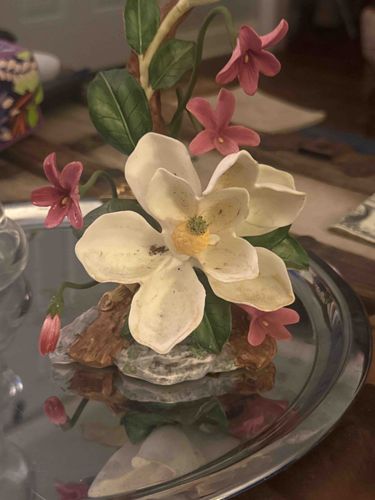
Porcelain Floral Figurine with Magnolia and Pink Flowers

Decorative Collectible Figurine

AI Estimated Value

·Not an official valuation·Verify before acting

$75 - $125

As of June 9, 2026

AI Item Analysis

·AI can make mistakes·Verify before acting
This is a detailed porcelain or ceramic floral figurine, prominently featuring a large, creamy white magnolia bloom with a yellowish-green center. The magnolia appears to be the central element, surrounded by smaller clusters of vibrant pink, bell-shaped flowers, possibly fuchsia or similar delicate blossoms. Interspersed among the flowers are realistic green leaves and brown stems, indicating a naturalistic arrangement. The base of the figurine is sculpted to resemble natural earthy elements, such as rocks and soil, rendered in tones of brown and grey with hints of green moss or foliage, suggesting an outdoor garden setting. The craftsmanship appears to be fine, with delicate molding of the petals and leaves, and hand-painted details contributing to a lifelike appearance. Visible condition issues include some brown discoloration or spotting on the petals of the large magnolia flower, which could be superficial dirt, staining, or possibly intentional distressed detailing; however, without closer inspection, it's hard to distinguish. There are no obvious chips or cracks visible from the provided images, suggesting generally good preservation of its delicate form. The item is displayed on a reflective silver-toned tray, which is not part of the item itself. This type of figurine often dates from the mid to late 20th century, characterized by intricate botanical representations and often associated with brands producing decorative porcelain. The details suggest a focus on natural accuracy and skilled hand-finishing.
AI Appraisal Report

·AI can make mistakes·Verify before acting
Upon visual examination of the provided images, this porcelain floral figurine presents as a finely crafted decorative piece, likely from the mid to late 20th century. My assessment is based on its naturalistic style, intricate modeling of the magnolia and surrounding pink blossoms, and hand-painted details. From the images, the figurine appears to be in good condition, showing no obvious chips or cracks. However, I note some brown spotting on the magnolia petals. This could be superficial dirt, staining from age, or even intentional antiquing, but a definitive determination requires physical inspection. A key factor limiting the value is the absence of a visible maker's mark. Pieces from renowned manufacturers such as Capodimonte, Boehm, or Cybis command significantly higher prices. Without a mark, it is appraised as a high-quality decorative item of unknown origin. The market for such collectibles is currently moderate, with demand favoring signed pieces. Comparable unsigned floral groups of similar size and quality typically sell in the $75 to $125 range at auction and on the secondary market. A higher value would be contingent on identifying a prestigious maker. For full authentication and to rule out a modern reproduction, an in-person examination is essential to inspect for a maker's mark on the underside, to assess the quality of the porcelain body, and to distinguish the nature of the discoloration on the petals. Provenance documentation would also significantly aid in confirming its origin and age.

Get your items appraised

Instant estimates of your treasures with AI-powered appraisals

Browse More Appraisals