AI estimate as of October 6, 2025 · verify with a professional before acting
AI-Generated · Verify before acting
Everything on this page is generated by AI for informational purposes only. AI can make mistakes — the AI may misidentify items or misattribute them (artist, maker, brand, designer, origin, era). This is not an official valuation and should not be used for insurance, sale, tax, estate, legal, or lending purposes — or any decision requiring a certified appraisal. It is not an authoritative claim about any person, brand, or rights holder — do not share or rely on it as a factual statement about a third party. Always consult qualified professionals before making financial decisions.
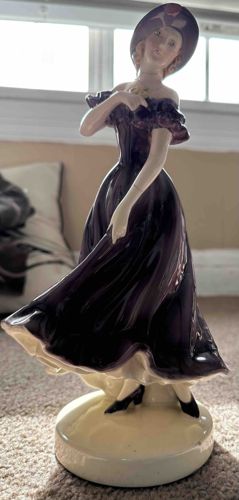
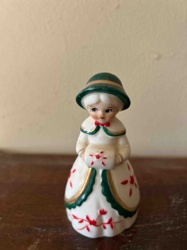
This item is a porcelain figurine depicting a woman in an elegant, flowing gown, striking a graceful pose. The figure is likely crafted from ceramic or porcelain, given its smooth, glossy finish and delicate appearance. The woman is dressed in a deep purple or aubergine colored floor-length gown with an off-the-shoulder ruffled neckline, suggesting an early to mid-20th-century or classical-inspired style. The dress has significant volume and movement, particularly visible in the skirt, which dramatically flares out around her feet, revealing a lighter cream or ivory colored petticoat or lining underneath. She wears a wide-brimmed hat in a similar dark color, adorned with what appears to be a small, lighter colored detail on the brim. Her hair, visible beneath the hat, seems to be a light brown or blonde. Her skin tone is a pale bisque, and her face features delicate, painted details. She is posed with her right arm bent at the elbow, hand near her chest, and her left arm extended downwards, with her hand gently holding the edge of her skirt. The figure stands on a circular, cream-colored base. The base itself appears solid and sturdy, providing stability for the figurine. Visible condition issues include potential minor dust accumulation, but no obvious cracks, chips, or repairs are discernible from the provided images. The glossy glaze throughout the piece indicates good preservation of its original finish. The craftsmanship appears to be of good quality, with attention paid to the drapery of the gown and the delicate features of the woman. Without visible maker's marks or signatures, specific manufacturing details or a precise age are difficult to ascertain, but it likely falls into the category of decorative ceramic figurines popular from the mid-20th century onward.
AI Appraisal Report
I have examined the provided image of this porcelain figurine depicting a woman in a purple gown. Visually, the condition appears good, with the glossy glaze indicating preservation of the original finish. I detect no obvious cracks, chips, or repairs, though a physical inspection would be crucial to confirm this and check for less visible damage or restorations. Authenticity, without maker's marks or provenance, is challenging to definitively confirm from an image alone; however, the style suggests it is a decorative piece from the mid-20th century or later, consistent with common porcelain or ceramic figurines of that period.
Market conditions for such decorative porcelain figurines are currently moderate. While there is a consistent demand for attractive and well-preserved pieces, particularly those with intricate details or from recognized manufacturers, generic or unmarked pieces typically command more modest prices. Comparable items in similar condition from unidentifiable makers often sell in the '$50-150' range. The vibrant purple gown and elegant pose contribute positively to its aesthetic appeal, which can slightly increase its desirability. Rarity is difficult to assess without specific manufacturer information, but mass-produced decorative figurines are generally not rare.
The primary factors impacting its current value negatively are the lack of discernible maker's marks or specific historical provenance, which would elevate its status from a decorative collectible to a more significant antique or art object. For a full authentication, I would require an in-person examination to search for hidden marks, assess the true material and construction quality, and potentially conduct scientific testing to determine exact age and composition if warranted. Without these, the value remains in the decorative collectible range.