AI identification & appraisal estimate

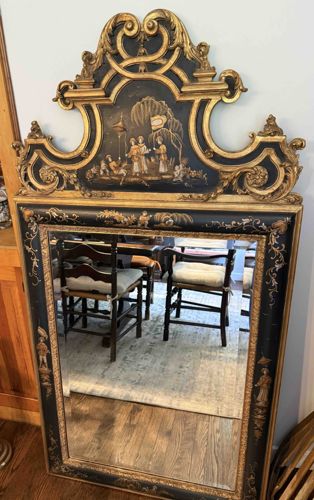
Ornate Black Lacquer Chinoiserie Style Wall Mirror with Gilt Decoration

Submitted photo of Ornate Black Lacquer Chinoiserie Style Wall Mirror with Gilt Decoration
Photo submitted by the user — not generated by AI

User's notes

1920s-1960s hand painted Asian mirror, black lacquer with gilded paint

These notes were written by the person who submitted this item. Appraiser.AI has not verified them, and the AI's identification and estimate may rely on them.

AI Estimated Value

Not an official valuation

$1,200 - $1,800

AI estimate as of August 23, 2025 · verify with a professional before acting

AI-Generated · Verify before acting

Everything on this page is generated by AI for informational purposes only. AI can make mistakes — the AI may misidentify items or misattribute them (artist, maker, brand, designer, origin, era). This is not an official valuation and should not be used for insurance, sale, tax, estate, legal, or lending purposes — or any decision requiring a certified appraisal. It is not an authoritative claim about any person, brand, or rights holder — do not share or rely on it as a factual statement about a third party. Always consult qualified professionals before making financial decisions.

This analysis also relies on unverified notes provided by the user, which may be incomplete or inaccurate and could affect the result.

Read the full disclaimer

AI Item Analysis

This is a large, ornate wall mirror featuring a black lacquer frame with extensive gilded and hand-painted Chinoiserie decoration. The overall construction suggests a substantial piece, likely crafted from wood with a gesso and lacquer finish. The frame is rectangular with an exceptionally elaborate curvilinear pediment at the top. The pediment features a central panel with a hand-painted Asian scene depicting figures engaged in various activities, surrounded by lush foliage and architectural elements. This scene is rendered in muted gold, cream, and brown tones against the black lacquer background, showcasing fine detail in the figures' attire and expressions. The top and side borders of the pediment, as well as the inner and outer edges of the main rectangular frame, are heavily adorned with deeply carved or molded gilt motifs, including scrolls, acanthus leaves, and rococo-inspired flourishes. The main body of the black lacquer frame also features hand-painted gilded designs, primarily depicting individual human figures in traditional Asian dress and delicate scrolling floral patterns. The visible condition appears good overall, with some minor signs of wear consistent with its age, such as slight rubbing or darkening of the gilding in places, and potentially some minor chips or cracks in the lacquer, though none are significantly prominent from the provided image. The mirror glass itself appears clear and intact. No visible maker's marks or signatures are discernible. Based on the style and context provided (1920s-1960s), this mirror embodies elements of Chinoiserie style popular during this period, often reproducing or interpreting 18th-century European designs that were influenced by Asian aesthetics. The quality of the hand-painting and the detailed gilding suggest a piece of good craftsmanship, contributing to its decorative appeal and potential value.


AI Appraisal Report

Upon examining the provided image of this ornate black lacquer Chinoiserie style wall mirror with gilt decoration, I assess its condition as good, consistent with an item from the 1920s-1960s. The hand-painted Asian scenes and gilded scrollwork appear largely intact with minor, expected wear such as slight rubbing to the gilding, which adds to its aged charm rather than detracting significantly from its appeal. Authenticity as a period Chinoiserie-style piece from the stated timeframe seems highly probable given the design elements and construction visible. The quality of the detailed hand-painting and intricate gilding suggests a skilled artisan. Market demand for decorative Chinoiserie pieces remains steady, with well-preserved examples like this attracting interest. Comparables include similar decorative mirrors from the early to mid-20th century, often found in estate sales or antique decorative arts markets. While not exceptionally rare, pieces of this scale and decorative quality are less common than smaller, simpler mirrors. The primary factors impacting value are its size, the intricate hand-painted and gilded decoration, and its overall good condition. Important limitations exist when assessing authenticity solely via images. I cannot definitively verify the authenticity of materials (e.g., wood type, gesso composition, lacquer type) or confirm the painting is genuinely hand-done without in-person examination. Physical inspection would allow me to check for repairs, confirm construction methods, and identify any hidden damage. Provenance documentation, such as original sales receipts or family history, would significantly aid in full authentication and could impact value. Scientific testing, if needed for deeper material analysis, would require physical samples.

Keep exploring

More decorative arts - mirrors appraisals

Get your items appraised

Instant AI-powered appraisal estimates from a photo

Browse More Appraisals