AI Appraisal Estimate

AI-generated estimates · not official valuations

From the user

What was submitted

Photo and notes provided by the user — not generated by AI

Submitted item photo
Submitted photo · May 24, 2026

User's notes

No additional notes provided.

AI analysis below

AI appraisal

AI analysis & estimate

AI-Generated · Verify before acting

Everything below is generated by AI for informational purposes only. AI can make mistakes — the AI may misidentify items or misattribute them (artist, maker, brand, designer, origin, era). This is not an official valuation and should not be used for insurance, sale, tax, estate, legal, or lending purposes — or any decision requiring a certified appraisal. It is not an authoritative claim about any person, brand, or rights holder — do not share or rely on it as a factual statement about a third party. Always consult qualified professionals before making financial decisions.

Read the full disclaimer

AI Identification

·Not independently authenticated·Verify before acting

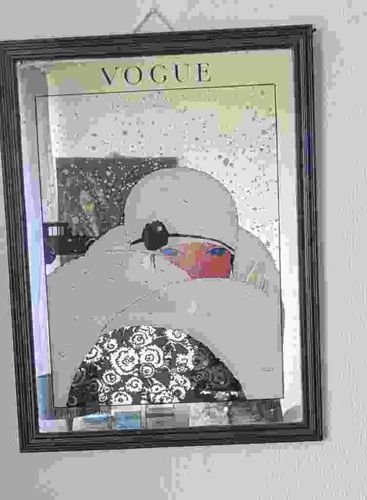
Vintage Vogue Magazine Cover Decorative Mirror

Antique/Vintage Decorative Arts & Mirrors

AI Estimated Value

·Not an official valuation·Verify before acting

$45.00 - $65.00

As of May 24, 2026

AI Item Analysis

·AI can make mistakes·Verify before acting
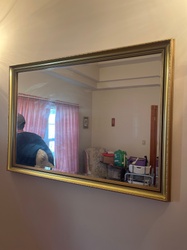
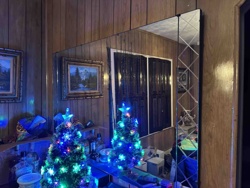
This is a rectangular decorative wall mirror featuring a screen-printed graphic of a classic Vogue magazine cover, likely dating from the 1970s or 1980s. The artwork depicts a stylized portrait of a woman in high-fashion winter attire, including a large cloche hat and a high fur collar, rendered in a minimalist, illustrative style reminiscent of the Art Deco revival era. The word 'VOGUE' is prominently displayed in a serif typeface at the top. The color palette consists of soft greys, blacks, and subtle flesh tones, though significant solarization or image degradation is visible in this specific photograph. The mirror is housed in a dark, possibly black or dark wood-grain, multi-ridged frame that appears to be made of either painted wood or molded plastic/polystyrene. Notable condition issues include significant foxing or silvering loss appearing as dark speckles across the mirrored surface, particularly in the upper half. The glass exhibits 'mirror rot' or atmospheric damage, which is common in mid-century novelty mirrors. The frame shows some dust accumulation and potential minor scuffing on the edges. These mirrors were mass-produced for home decor boutiques and do not typically feature a maker's mark on the front, though a paper label might have originally been present on the cardboard backing.
AI Appraisal Report

·AI can make mistakes·Verify before acting
I have virtually examined this decorative wall mirror featuring a screen-printed Vogue magazine cover graphic. Based on the typography and illustrative style, this piece is likely a mass-marketed novelty item produced in the late 1970s through the mid-1980s, inspired by Art Deco revival aesthetics. While these mirrors capitalize on the 'Vogue' brand, they were typically produced under license for department stores or specialty home décor boutiques rather than being limited-edition collectibles. My physical assessment reveals significant condition issues that heavily impact the value. There is pronounced 'mirror rot' or de-silvering (black speckling) occurring across the top third of the frame, which disrupts the graphic clarity. The frame appears to be a standard molded polystyrene or darkened wood-grain composite with minor scuffing. While vintage 'Vogue' mirrors remain popular for retro-themed interior design, the market is currently saturated with examples in superior condition. Comparables for mass-produced fashion mirrors in pristine condition typically range from $85 to $120. Due to the visible atmospheric damage and silvering loss on this specific piece, I have adjusted the valuation downward. High demand for pristine 1970s kitsch exists, but collectors generally avoid pieces with advanced foxing unless the illustration is exceptionally rare. Limitations: This appraisal is based on photographic evidence only. A physical inspection is required to determine if the frame is authentic wood or plastic and to check for a manufacturer's label (such as 'Mirror Scene' or 'Turner') on the backing. Furthermore, I cannot definitively verify if the 'rot' is on the surface or behind the glass without tactile examination. Full authentication of the licensing would require original provenance or manufacture stamps usually found on the cardboard reverse.

Get your items appraised

Instant estimates of your treasures with AI-powered appraisals

Browse More Appraisals