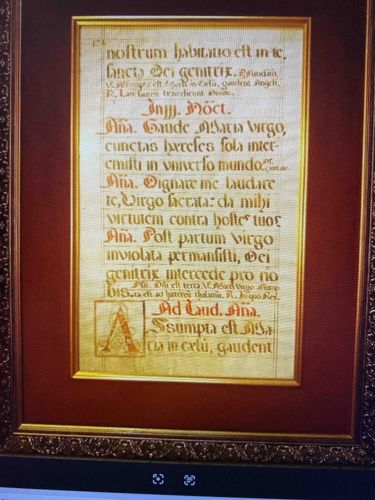
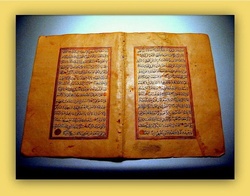
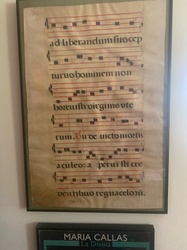
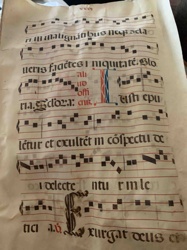
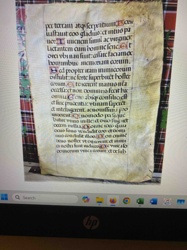
Circa 1400AD Latin parchment prayer sheep skin manuscript. 26” x 34.25”
These notes were written by the person who submitted this item. Appraiser.AI has not verified them, and the AI's identification and estimate may rely on them.
AI Estimated Value
Not an official valuation
$8,000-12,000
AI estimate as of July 18, 2025 · verify with a professional before acting
AI-Generated · Verify before acting
Everything on this page is generated by AI for informational purposes only. AI can make mistakes — the AI may misidentify items or misattribute them (artist, maker, brand, designer, origin, era). This is not an official valuation and should not be used for insurance, sale, tax, estate, legal, or lending purposes — or any decision requiring a certified appraisal. It is not an authoritative claim about any person, brand, or rights holder — do not share or rely on it as a factual statement about a third party. Always consult qualified professionals before making financial decisions.
This analysis also relies on unverified notes provided by the user, which may be incomplete or inaccurate and could affect the result.
This item is a framed Latin parchment prayer sheet, likely sourced from a larger manuscript or codex, and is identified as being made from sheepskin. The overall dimensions are stated as 26 inches by 34.25 inches. The parchment exhibits a light, aged, creamy hue, characteristic of aged animal hide, with a subtle natural texture visible, suggesting its organic material. The text is meticulously hand-scribed in a Gothic script, likely textualis or a similar formal book hand, with exceptional calligraphic precision. The main body of the text is rendered in black or very dark brown ink, showcasing remarkable legibility for its age. Red ink is used for rubrics, major initials, and possibly smaller decorative elements, providing visual hierarchy and emphasis within the prayers. A prominent illuminated initial 'A' is visible in the lower section, rendered in red with delicate gold (or yellow ochre simulating gold) infills or outlines, suggesting a high level of artistic skill and potentially significant devotional purpose. The borders of the parchment show slight discoloration and minor undulations consistent with the natural characteristics of aged animal skin, but no significant tears or large areas of loss are immediately apparent. The parchment is displayed within a multi-layered frame. The inner frame directly bordering the parchment appears to be a thin, gilded or brass-colored fillet, offering a subtle sheen. This is surrounded by a wider, dark reddish-brown, possibly mahogany or a similarly stained wood mat or frame element, which in turn is encased by an outer, ornate frame. The outer frame is gold-toned, featuring intricate carved or molded decorative patterns consistent with a Renaissance or Baroque revival style, though its age would be significantly newer than the parchment itself. The overall condition of the parchment appears to be very good, with minimal visible damage such as tears or significant creasing, indicating careful preservation over centuries. The sharp lines of the script and the vibrant, well-preserved red and gold pigments attest to not only the quality of the original materials but also the efficacy of its historical storage and recent framing. The circa 1400 AD dating, coupled with the Latin text and prayer content, places this squarely within the late medieval to early Renaissance period, reflecting the rich tradition of illuminated manuscripts and devotional practices of the era. The craftsmanship, evident in the precise script, the use of multiple ink colors, and the detailed initial, points to this being a high-quality piece, potentially produced by a skilled ecclesiastical scribe or workshop.
AI Appraisal Report
Upon examining the provided image and detailed description of this framed Latin Parchment Prayer Sheet (Circa 1400 AD), I assess its condition to be excellent for an artifact of its age. The parchment, stated to be sheepskin, exhibits a natural aged patina and texture, with remarkable legibility of the hand-scribed Gothic script in black ink and well-preserved red rubrics. The illuminated initial 'A' with gold (or simulated gold) infill is a significant artistic enhancement. The dimensions of 26 x 34.25 inches are substantial, which is a positive factor. The framing system, though modern, appears to be protective and complementary.
Authenticity: Based on visual characteristics, the item appears consistent with late medieval Latin manuscript fragments. However, verifying authenticity from images alone has limitations. An in-person examination would allow for tactile inspection of the parchment's substance, precise analysis of ink composition, and microscopic examination of the script and illumination for tool marks and material degradation, all crucial for confirming its age and origin. Provenance documentation, if available, linking the fragment to a known manuscript or collection, would significantly bolster authenticity. Scientific testing, such as radiocarbon dating of the parchment or elemental analysis of the inks and pigments, would provide definitive age confirmation.
Market Conditions & Demand: The market for medieval manuscript fragments, especially those with fine calligraphy and illumination, remains strong among private collectors, institutions, and museums. Rarity is high for well-preserved pieces of this quality and size. Comparable sales of similar framed Latin manuscript leaves from the 14th-15th centuries range widely based on content, artistic merit, and condition, typically from a few thousand to tens of thousands of dollars. Pieces with significant illumination or historical context command higher prices.
Factors Impacting Value: The exceptional condition, large size for a fragment, clarity of script, and presence of a well-executed illuminated initial all contribute positively. The specific content of the prayer (if identifiable as particularly rare or historically significant) could further enhance value. Without definitive physical verification and provenance, there is an inherent risk factor for buyers, which is reflected in the upper end of the valuation.
Given these factors, and acknowledging the limitations of a purely visual assessment through an image, I estimate the appraisal value.