AI Appraisal Estimate

AI-generated estimates · not official valuations

From the user

What was submitted

Photo and notes provided by the user — not generated by AI

Submitted item photo
Submitted photo · June 8, 2026

User's notes

No additional notes provided.

AI analysis below

AI appraisal

AI analysis & estimate

AI-Generated · Verify before acting

Everything below is generated by AI for informational purposes only. AI can make mistakes — the AI may misidentify items or misattribute them (artist, maker, brand, designer, origin, era). This is not an official valuation and should not be used for insurance, sale, tax, estate, legal, or lending purposes — or any decision requiring a certified appraisal. It is not an authoritative claim about any person, brand, or rights holder — do not share or rely on it as a factual statement about a third party. Always consult qualified professionals before making financial decisions.

Read the full disclaimer

AI Identification

·Not independently authenticated·Verify before acting

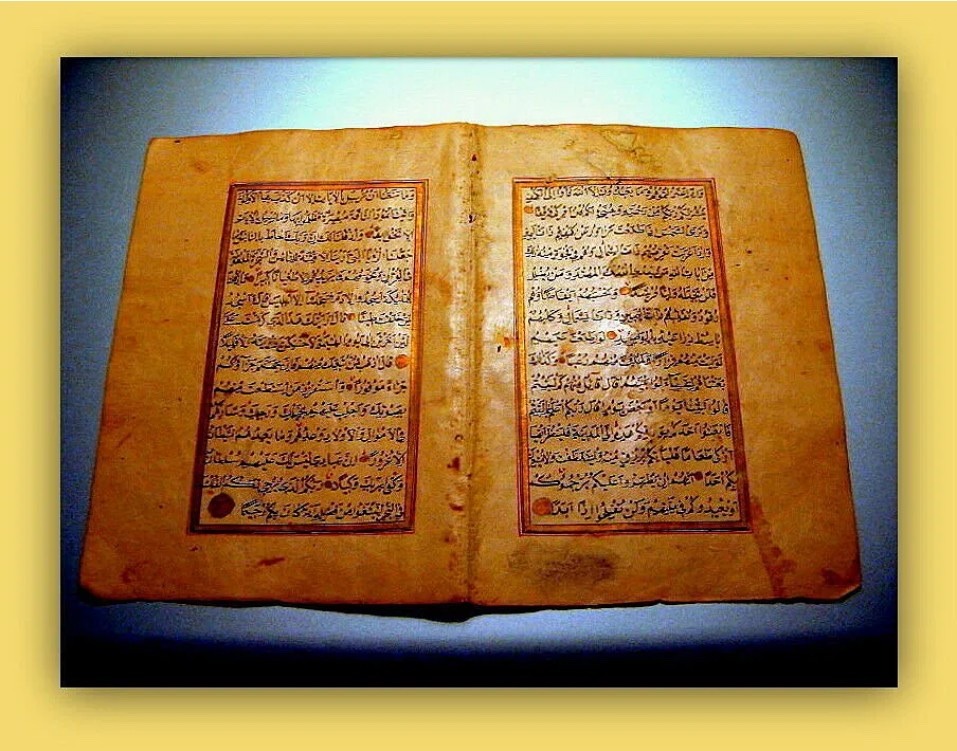
Ancient Illuminated Quranic Manuscript

Antique Manuscripts and Religious Artifacts

AI Estimated Value

·Not an official valuation·Verify before acting

$15,000 - $25,000

As of June 8, 2026

AI Item Analysis

·AI can make mistakes·Verify before acting
This is an exquisite example of an ancient Islamic manuscript, specifically a double-leaf spread from a Quran. The pages are crafted from aged vellum or high-quality polished rag paper, showing a deep ochre and cream patina indicative of significant age. The script is a sophisticated Naskh or Muhaqqaq style, rendered in deep black ink with meticulous precision. Each page features 13 lines of text framed within a multi-layered border of gold leaf, red, and blue ruling. Notable features include gold vocalization marks and verse markers (ayats) rendered as small gold circles. At the bottom of each text block, there is a larger circular gold leaf medallion, likely indicating the end of a specific section or 'Juz'. The condition shows signs of historical use and aging, including minor foxing, slight water staining along the lower margins, and some fraying at the edges of the substrate. The binding is not visible, but the central fold suggests it was once part of a larger codex. The high level of craftsmanship, particularly the use of burnished gold and the uniformity of the calligraphy, suggests a royal or high-status commission from the Mamluk or early Ottoman period, likely dating between the 14th and 16th centuries. The scale appears to be a medium-format library volume.
AI Appraisal Report

·AI can make mistakes·Verify before acting
Based on my visual examination of this double-leaf Quranic manuscript, the piece exhibits the hallmark characteristics of high-status 14th to 16th-century Islamic calligraphy, likely Mamluk or Safavid in influence. The use of Naskh/Muhaqqaq script on high-quality substrate, combined with the extensive use of burnished gold for ayats and the large circular medallions, suggests a commission of significant expense. The patina and oxidation of the pigments are consistent with manuscripts of this era. The condition is fair to good; while the marginal water staining and fraying at the edges are present, the central text block remains legible and the illumination vibrant, preserving the work's aesthetic integrity. The market for Islamic manuscripts remains robust, particularly for items featuring significant illumination and royal-quality calligraphy. Comparables from major auction houses (Sotheby's/Christie's) for similar double-page spreads from the Mamluk period typically fetch within the five-figure range. The rarity of complete bi-folios with intact gold leaf borders significantly bolsters the value. However, there are limitations to this digital appraisal. A physical inspection is mandatory to confirm the substrate (vellum vs. heavy rag paper) and to ensure the gold is traditional gold leaf rather than later metallic paint. I would require a microscopic analysis of the ink's bite into the surface and a review of provenance documentation to trace its history. Radiocarbon dating of the substrate or spectroscopic analysis of the lapis lazuli and gold pigments would be the gold standard for definitive authentication. Without these, this value represents an estimate based on stylistic and visual evidence of a genuine period piece.

Get your items appraised

Instant estimates of your treasures with AI-powered appraisals

Browse More Appraisals