AI estimate as of August 6, 2025 · verify with a professional before acting
AI-Generated · Verify before acting
Everything on this page is generated by AI for informational purposes only. AI can make mistakes — the AI may misidentify items or misattribute them (artist, maker, brand, designer, origin, era). This is not an official valuation and should not be used for insurance, sale, tax, estate, legal, or lending purposes — or any decision requiring a certified appraisal. It is not an authoritative claim about any person, brand, or rights holder — do not share or rely on it as a factual statement about a third party. Always consult qualified professionals before making financial decisions.
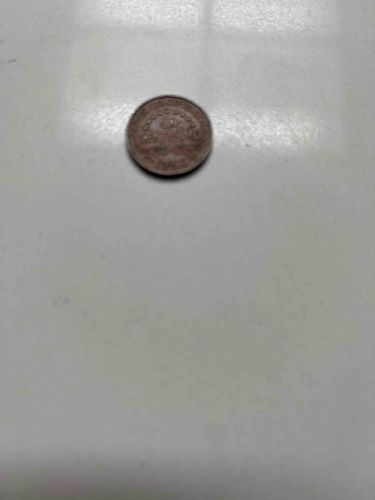
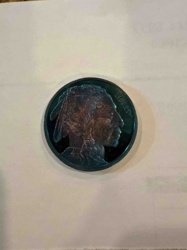
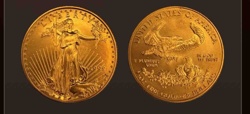
The item is a small, round, metallic object, typical in shape and size of a coin or token. Its color appears to be a reddish-brown or coppery tone, suggesting it is made from a copper-based alloy such as bronze or copper itself, which has developed a natural patina over time. The surface exhibits significant wear and discoloration, indicating it has been in circulation or handled extensively. While specific details are somewhat obscured by the image quality and wear, the obverse (or possibly reverse) clearly shows a circular border of repetitive, small, rounded elements, possibly beads or dots, forming an inner ring. Within this ring, there appears to be a central design, though its exact nature is difficult to discern due to the high degree of wear. It might be an emblem, a coat of arms, or part of a date or denomination. The overall impression is that of an aged circulating currency. There are no visible clear dates or mint marks from the provided image, making precise identification of its manufacturing details challenging. The item's condition shows very little original luster, and its features are dulled, contributing to its aged appearance. Its craftsmanship appears to be standard for a mass-produced item of its type, likely from a mint. Given the visible wear and the style of the partial design elements, it is plausible that this coin dates from the late 19th to mid-20th century, though a more precise age would require clearer imagery or physical inspection.
AI Appraisal Report
Upon visual examination of the Worn Copper Coin, I note its typical numismatic shape and coppery tone, indicative of a copper-based alloy and significant patina. The surface exhibits extensive wear and discoloration, suggesting considerable circulation. While the image quality and wear obscure precise details, a clear circular border of repetitive elements, likely beads, is visible. The central design is illegible due to wear, making identification challenging. The craftsmanship appears standard for a mass-produced coin. The condition is very worn, lacking original luster, which significantly impacts its aesthetic and collectible appeal.
Market conditions for extremely worn common coinage are generally low. Comparables would typically be "junk lots" or bulk copper, unless the coin can be identified as a key date or rare variety, which is impossible from this image. Demand for such a poorly preserved, unidentified piece is minimal among serious collectors. Rarity cannot be assessed without identification.
Factors significantly impacting value are the severe wear obscuring all identifying features. Without clear dates, mint marks, or design elements, it effectively has no numismatic value beyond its intrinsic metal content, if any significant amount.
My primary limitation in verification from images alone is the inability to authenticate its origin, mint, or date, and therefore its specific numismatic identity. An in-person examination would be critical to determine weight, diameter, thickness, and, most importantly, to attempt a visual identification under magnification. Provenance documentation could offer clues to its history. Specific gravity or XRF testing could confirm its metallic composition, but even that would not identify its numismatic information. Full authentication and accurate valuation are impossible without precise identification.