These notes were written by the person who submitted this item. Appraiser.AI has not verified them, and the AI's identification and estimate may rely on them.
AI Estimated Value
Not an official valuation
$10-15
AI estimate as of July 10, 2025 · verify with a professional before acting
AI-Generated · Verify before acting
Everything on this page is generated by AI for informational purposes only. AI can make mistakes — the AI may misidentify items or misattribute them (artist, maker, brand, designer, origin, era). This is not an official valuation and should not be used for insurance, sale, tax, estate, legal, or lending purposes — or any decision requiring a certified appraisal. It is not an authoritative claim about any person, brand, or rights holder — do not share or rely on it as a factual statement about a third party. Always consult qualified professionals before making financial decisions.
This analysis also relies on unverified notes provided by the user, which may be incomplete or inaccurate and could affect the result.
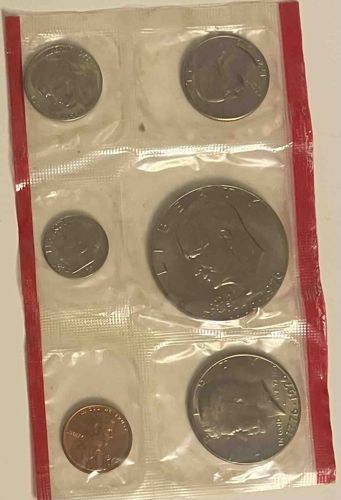
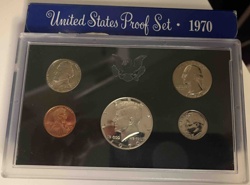
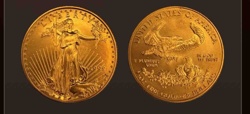
This item is a 1976 United States Proof Set, consisting of several coins enclosed in a sealed, transparent plastic presentation case. The individual coins are housed in separate, square compartments within the plastic, which is then sealed along its edges, likely with heat, and further secured by a red strip along the left and right sides. The coins visible include a penny (copper-toned, likely bronze), a nickel (silver-toned), a dime (silver-toned), a quarter (silver-toned), and a half-dollar (silver-toned). All the silver-toned coins appear to be clad coinage, typical for this period's circulating coinage and proof sets. Given the '1976 proof set' context, the quarter and half-dollar most notably feature the Bicentennial designs with dates '1776-1976'. The coins exhibit the mirror-like fields and frosted devices characteristic of proof coinage, suggesting high quality strike. There are some visible smudges or minor discoloration on the plastic packaging, particularly around the upper left quarter, indicating some wear or environmental exposure. The packaging itself shows signs of age, with slight yellowing and minor creases in the clear plastic. The coins themselves appear to be in excellent condition, protected by the sealed proof set packaging, with no visible scratches or circulation wear. The overall integrity of the packaging seems to be maintained, ensuring the coins remain in their original, uncirculated proof state. The red border provides a decorative and sealing element, though its material cannot be definitively determined from the image, it resembles a plastic or paper strip commonly used in such government-issued coin sets. The craftsmanship of the coins themselves is high, reflecting the meticulous production standards for proof issues.
AI Appraisal Report
I have examined the provided image of the 1976 United States Proof Set. Based on my visual assessment, the set appears to be an authentic U.S. Mint product, consistent with proof sets from that era. The coins exhibit the characteristic mirror-like fields and frosted devices of proof coinage, and the inclusion of the Bicentennial designs on the quarter and half-dollar, dated '1776-1976', aligns perfectly with the 1976 release. The original sealed plastic packaging confirms its proof status and protects the coins. "
Condition-wise, the coins themselves appear to be in excellent, as-issued condition, having been preserved within the sealed packaging. There are no visible signs of circulation wear or significant damage to the coins. However, the packaging itself shows some signs of age, including minor smudges, slight yellowing, and minor creases. While these packaging defects do not diminish the intrinsic value or condition of the coins, they are noted.
In terms of market conditions, 1976 Proof Sets are quite common. The U.S. Mint produced a substantial quantity of these sets (approximately 4.1 million). This high mintage means they are not rare, and demand is generally moderate, primarily from new collectors or those seeking to complete a date-run collection. Therefore, their value typically remains close to their metal content plus a small numismatic premium.
The primary factor impacting the value of this specific set is its commonality. While in excellent coin condition, the slight wear on the packaging is negligible given the overall market. For full authentication and to rule out any potential tampering, a physical examination would be necessary to inspect the seal's integrity closely. While highly unlikely given the item's nature and prevalence, microscopic examination of the coins could confirm their surfaces and strike quality conclusively. Provenance documentation, though rarely available or needed for such common sets, would further solidify authenticity.