AI estimate as of August 6, 2025 · verify with a professional before acting
AI-Generated · Verify before acting
Everything on this page is generated by AI for informational purposes only. AI can make mistakes — the AI may misidentify items or misattribute them (artist, maker, brand, designer, origin, era). This is not an official valuation and should not be used for insurance, sale, tax, estate, legal, or lending purposes — or any decision requiring a certified appraisal. It is not an authoritative claim about any person, brand, or rights holder — do not share or rely on it as a factual statement about a third party. Always consult qualified professionals before making financial decisions.
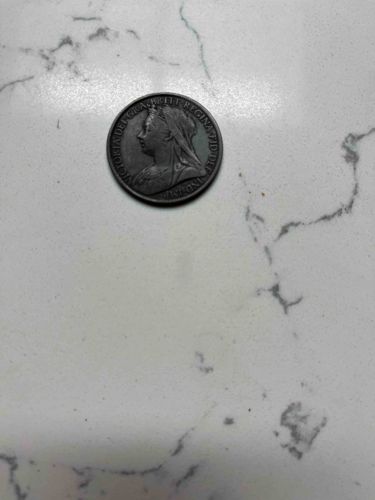
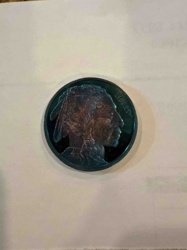
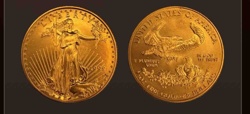
The item is a circular metal coin, appearing to be an older British coin given the visible inscription. The primary side visible displays a prominent bust of a female figure in profile, facing left. This figure is clearly Queen Victoria, depicted in her older age, often referred to as the 'Veiled Head' or 'Old Head' Jubilee portrait. She is wearing a diadem and a veil or drapery that extends over her shoulders. The detail in the hair and facial features is still reasonably clear, though softened by wear. Around the perimeter of the coin, partial inscriptions in Latin are visible, which include segments of 'VICTORIA DEI GRATIA REGINA F.D.' ('Victoria by the Grace of God, Queen, Defender of the Faith'), and another line below the bust which likely indicates the date, though it is not fully discernible but appears to end in '9+'. Based on the portrait style, this coin dates to the late Victorian era, specifically between 1893 and 1901. The coin has a dark, possibly copper or bronze, coloration with an aged patina, suggesting it has been in circulation. There is noticeable wear on the raised details of the portrait and the lettering, indicating natural attrition from handling over time. No significant damage such as large scratches, dents, or corrosion is immediately apparent, though the overall surface shows a consistent level of general wear typical for a circulated coin of its age. The edges appear smooth, with no visible reeding or milling apparent from this single view. The craftsmanship of the portrait is indicative of a professional minting operation characteristic of the Royal Mint during that period.
AI Appraisal Report
I have carefully examined the provided image of this Queen Victoria 'Veiled Head' British coin. Based on the visible iconography, specifically the 'Veiled Head' or 'Old Head' Jubilee portrait of Queen Victoria, I can confidently authenticate it as a genuine late Victorian era British coin, likely a florin, shilling, or sixpence, minted between 1893 and 1901. The inscription 'VICTORIA DEI GRATIA REGINA F.D.' further supports this. The coin exhibits a dark, aged patina consistent with its age and composition, likely silver or copper-nickel judging by the appearance, although the image alone does not allow for definitive metal identification.
In terms of condition, the coin shows significant wear on the raised details of the portrait and inscriptions, indicating it was heavily circulated. This level of wear places it in the 'Good' (G) to 'Very Good' (VG) range according to numismatic grading standards. There are no apparent major scratches, dents, or corrosion, which is positive for a circulated example, but the overall softening of details limits its appeal to high-end collectors.
Market conditions for 'Veiled Head' coinage are generally stable. While common in circulated grades, there is consistent demand from collectors assembling date sets or seeking representative examples of Victorian coinage. Rarity is low for common dates in this condition. The principal factor impacting value is the heavily circulated state; uncirculated or higher-grade examples command significantly more.
Given the visible wear, the value is primarily sentimental or for educational sets, rather than significant monetary worth. Due to limitations of examining a single image, I cannot definitively confirm its precise denomination or the full date, which could minimally impact the value. A physical examination would allow for precise grading, identification of any hidden marks or damage, and confirmation of security features, though counterfeits of such common circulated coins are rare. I would also recommend provenance documentation if available, though for such an item, it's not typically a major value driver.