AI Appraisal Estimate

AI-generated estimates · not official valuations

From the user

What was submitted

Photo and notes provided by the user — not generated by AI

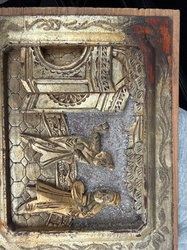
Submitted item photo
Submitted photo · June 13, 2026

User's notes

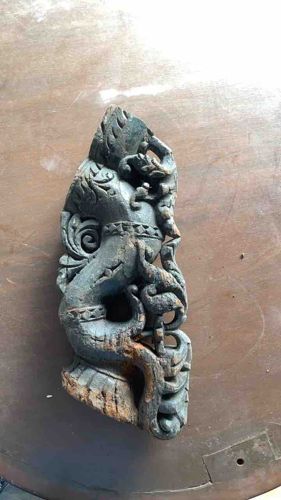
Burma Teak Wood Carving length - 16.5 inches and breadth - 6 inches

AI analysis below

AI appraisal

AI analysis & estimate

AI-Generated · Verify before acting

Everything below is generated by AI for informational purposes only. AI can make mistakes — the AI may misidentify items or misattribute them (artist, maker, brand, designer, origin, era). This is not an official valuation and should not be used for insurance, sale, tax, estate, legal, or lending purposes — or any decision requiring a certified appraisal. It is not an authoritative claim about any person, brand, or rights holder — do not share or rely on it as a factual statement about a third party. Always consult qualified professionals before making financial decisions.

Note

This analysis also relies on unverified notes provided by the user, which may be incomplete or inaccurate and could affect the result.

Read the full disclaimer

AI Identification

·Not independently authenticated·Verify before acting

Antique Burmese Teak Naga or Mythological Creature Carving

Asian Antiques / Wood Carvings

AI Estimated Value

·Not an official valuation·Verify before acting

$450 - $700

As of June 13, 2026

AI Item Analysis

·AI can make mistakes·Verify before acting
This is a hand-carved architectural or decorative ornament crafted from Burma teak wood, measuring approximately 16.5 inches in length and 6 inches in breadth. The carving depicts a stylized mythological creature, likely a Naga or Pyinsarupa, characterized by sinuous, fluid lines and intricate openwork. The piece displays a deep, dark weathered patina with hints of a greyish, aged surface texture consistent with old-growth teak. Detailed scrollwork, floral motifs, and geometric banding are visible throughout the body of the figure. Condition-wise, the item shows significant signs of age including surface erosion, minor losses to the more delicate protrusions, and evidence of historical woodworm or environmental wear on the base. There is a visible fracture or split at the lower extremity where the natural wood grain is exposed, showing a lighter tan color compared to the darkened exterior. The craftsmanship suggests a high level of skill, typical of traditional Burmese woodcarving from the late 19th to early 20th century. While no visible maker's marks are present, the complexity of the pierce-work and the density of the wood indicate it was originally part of a larger structural element, such as a temple pediment or a grand residential gable.
AI Appraisal Report

·AI can make mistakes·Verify before acting
Based on my examination of this Burmese teak carving, I identify it as a fragmentary architectural element, likely a 'le-nyein' or decorative bracket, dating from the late 19th to early 20th century. My visual inspection confirms the use of old-growth Tectona grandis (Burma Teak), evidenced by the dense grain and characteristic 'silvery-grey' oxidation visible in areas of surface erosion. The carving style, featuring the serpentine Naga combined with traditional 'hmaywa' (leafy scrollwork), demonstrates the high-relief openwork typical of the Mandalay period. The condition is consistent with age and exposure; the desiccation cracks and loss of delicate finial tips are expected for outdoor architectural salvage. These losses, while detracting slightly from aesthetic perfection, serve as indicators of authenticity. Market demand for Burmese colonial-era woodcarving remains steady among collectors of Southeast Asian art, though values for fragments are lower than for complete, paired figures. Comparables for individual brackets of this size and complexity typically realize between $400 and $800 at specialized auction houses. Critically, a final determination of value is limited by the digital nature of this inspection. A physical examination is required to verify the depth of the patina and ensure the 'weathering' is not chemically Induced. Full authentication would also benefit from provenance documentation tracing its removal from the original structure. To confirm the age beyond stylistic analysis, carbon dating could be applied, though the cost usually outweighs the item’s market value. The current valuation reflects its status as a genuine period antique with visible environmental wear.

Get your items appraised

Instant estimates of your treasures with AI-powered appraisals

Browse More Appraisals