AI Appraisal Estimate

AI-generated estimates · not official valuations

From the user

What was submitted

Photo and notes provided by the user — not generated by AI

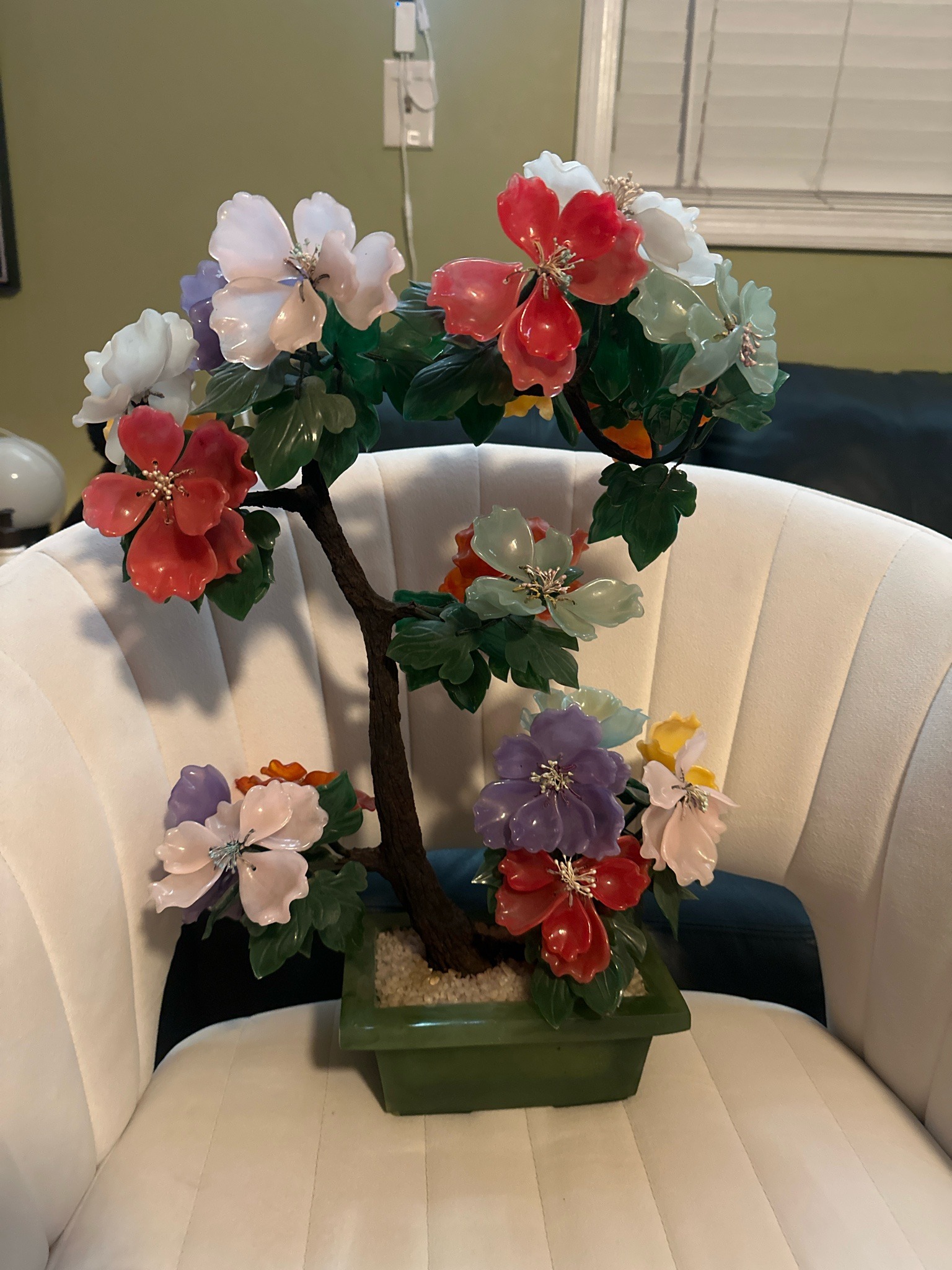
Submitted item photo
Submitted photo · June 27, 2026

User's notes

No additional notes provided.

AI analysis below

AI appraisal

AI analysis & estimate

AI-Generated · Verify before acting

Everything below is generated by AI for informational purposes only. AI can make mistakes — the AI may misidentify items or misattribute them (artist, maker, brand, designer, origin, era). This is not an official valuation and should not be used for insurance, sale, tax, estate, legal, or lending purposes — or any decision requiring a certified appraisal. It is not an authoritative claim about any person, brand, or rights holder — do not share or rely on it as a factual statement about a third party. Always consult qualified professionals before making financial decisions.

Read the full disclaimer

AI Identification

·Not independently authenticated·Verify before acting

Carved stone bonsai tree in the Chinese export style

Decorative Arts

AI Estimated Value

·Not an official valuation·Verify before acting

$150 - $300

As of June 27, 2026

AI Item Analysis

·AI can make mistakes·Verify before acting
This decorative floral sculpture appears to be a mid-to-late 20th-century decorative bonsai tree, a style frequently associated with Chinese export art. The piece features a central brown-toned trunk, which appears to be constructed from silk or wire-wrapped composite material, emerging from a green rectangular ceramic or stone-like basin filled with small pale gravel. The tree is adorned with numerous carved flower blossoms in various colors, including bright red, soft pink, lilac purple, pale celadon green, and white. These petals appear consistent with semi-precious materials such as glass, quartz, jadeite, or nephrite, though material composition cannot be determined without physical testing. Each flower center is accented with thin wire stamens topped with small beads. The leaves are carved from a dark green stone-like material, possibly jade-style hardstone. No visible maker's marks, signatures, or labels can be detected in the image; the identification is based entirely on stylistic features common to mid-century 'jade trees'. The overall craftsmanship shows careful assembly of disparate decorative elements to mimic a flowering cherry or peony tree. Condition appears stable, with typical dust accumulation in the crevices of the carved leaves and petals.
AI Appraisal Report

·AI can make mistakes·Verify before acting
Based on the image provided, I have examined this decorative stone bonsai tree, which exhibits characteristics common to mid-to-late 20th-century Chinese export 'jade trees.' The value estimate assumes the petals and leaves are carved from semi-precious hardstones such as rose quartz, nephrite, or serpentine. However, I cannot verify the material composition from a photograph; if these elements are glass or resin, the value would likely drop below $75. The trunk’s construction, involving wire-wrapped silk, is a traditional assembly method for this style, though its condition appears slightly weathered with visible dust. Market demand for these decorative sculptures remains steady among enthusiasts of Chinoiserie, with value driven by the complexity of the blooms and the quality of the stone carving. I cannot identify a specific maker or origin without a visible mark or signature. The estimate provided reflects a hypothetical value for a mid-century piece in stable condition. Should physical inspection reveal the materials are synthetic rather than mineral, or if the basin is a later plastic replacement rather than ceramic or stone, the market price would be significantly reduced. To establish a more precise value, an in-person examination by a specialist is required to perform hardness tests on the stones and inspect the internal wire structure for signs of earlier or later manufacturing techniques. Documentation of provenance or a confirmed manufacturer’s seal would also be necessary to move beyond this stylistic hypothesis.

Get your items appraised

Instant estimates of your treasures with AI-powered appraisals

Browse More Appraisals