AI Appraisal Estimate

AI-generated estimates · not official valuations

From the user

What was submitted

Photo and notes provided by the user — not generated by AI

Submitted item photo
Submitted photo · June 15, 2026

User's notes

No additional notes provided.

AI analysis below

AI appraisal

AI analysis & estimate

AI-Generated · Verify before acting

Everything below is generated by AI for informational purposes only. AI can make mistakes — the AI may misidentify items or misattribute them (artist, maker, brand, designer, origin, era). This is not an official valuation and should not be used for insurance, sale, tax, estate, legal, or lending purposes — or any decision requiring a certified appraisal. It is not an authoritative claim about any person, brand, or rights holder — do not share or rely on it as a factual statement about a third party. Always consult qualified professionals before making financial decisions.

Read the full disclaimer

AI Identification

·Not independently authenticated·Verify before acting

Carved and Gilded Relief Wood Panel

Antique Asian Decorative Arts / Wood Carvings

AI Estimated Value

·Not an official valuation·Verify before acting

$400 - $650

As of June 15, 2026

AI Item Analysis

·AI can make mistakes·Verify before acting
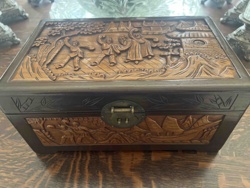
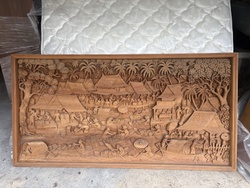
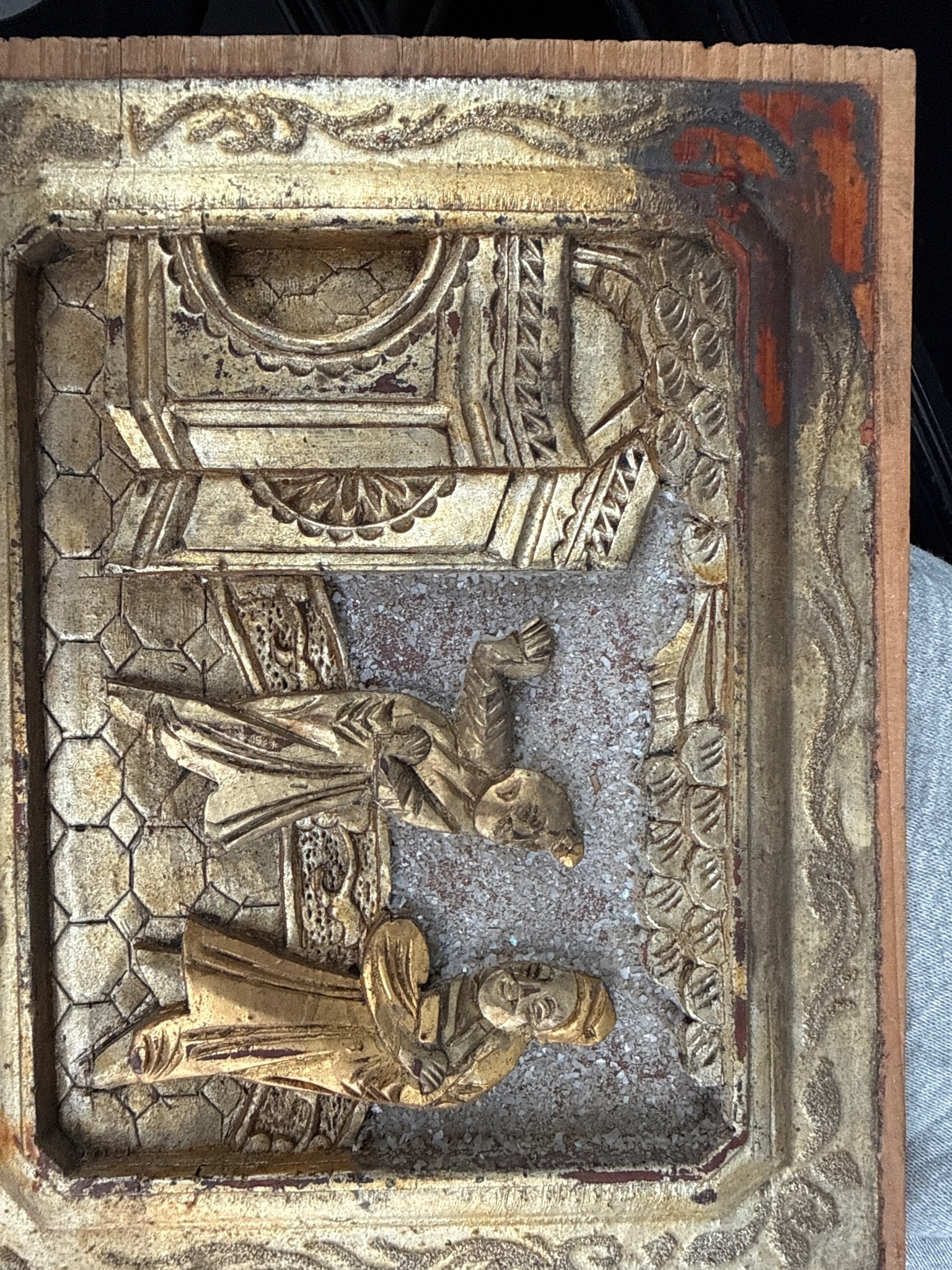
This rectangular wood relief panel features high-relief carvings of two figures, possibly deities or scholars, set within an architectural or ceremonial interior. The panel is constructed from carved wood, heavily gilded with gold leaf over a dark red or ochre primer (bole), characteristic of traditional Asian lacquerware and woodworking techniques. The architectural elements include a scalloped upper border and geometric honeycomb patterns on the floor or background wall. The figures are dressed in flowing, archaic robes with visible pleated details. One figure appears in a dynamic pose, while the other is more static, wearing a traditional capped headpiece. The gilding demonstrates a soft, aged luster with significant areas of craquelure and surface loss, particularly around the edges and on raised surfaces, revealing the underlying red preparation layer and the light-colored wood substrate. A granular, stone-colored textured material fills the negative space around the upper figure, likely a restoration or stabilized backing. The craftsmanship indicates hand-carving with intricate detail in the drapery and facial features, suggesting a late 19th to early 20th-century origin, likely from an altar screen, temple decoration, or marriage bed panel from the Fujian or Guangdong regions of China. Condition is fair to good, with visible pitting, minor chips in the wood, and significant wear to the gilding consistent with age and environmental exposure.

AI Appraisal Report

·AI can make mistakes·Verify before acting
I have examined the digital representation of this carved and gilded wood relief panel. The piece exhibits the hallmarks of late Qing Dynasty to early Republic period (circa 1880-1920) craftsmanship, likely originating from Southern China. The high-relief 'haut-relief' carving demonstrates skilled hand-tooling, particularly in the fluid drapery of the figures. The presence of red bole beneath the gold leaf is consistent with period gilding techniques. In my assessment, the condition is 'fair' due to significant loss of gilding and the presence of granular fill in the negative spaces, which suggests a stabilizer or previous restoration that may affect the purity of the piece. Market demand for such architectural fragments remains steady among provincial Asian art collectors, though value is currently tempered by the condition issues and the lack of a matching pair. Compared to pristine examples from temple altars which can fetch four figures, this individual panel's wear places it in a more accessible decorative price point. Verification from images alone has limitations; I cannot definitively confirm if the wood is camphor or zitan, nor can I verify the chemical composition of the gilding to rule out modern metallic paints without a physical 'rub' test and microscopic inspection. A full authentication would require in-person examination of the joinery at the reverse to check for circular saw marks versus hand-planing, and provenance documentation linking it to a specific architectural site.

Get your items appraised

Instant estimates of your treasures with AI-powered appraisals

Browse More Appraisals