AI Appraisal Estimate

AI-generated estimates · not official valuations

From the user

What was submitted

Photo and notes provided by the user — not generated by AI

Submitted item photo
Submitted photo · June 15, 2026

User's notes

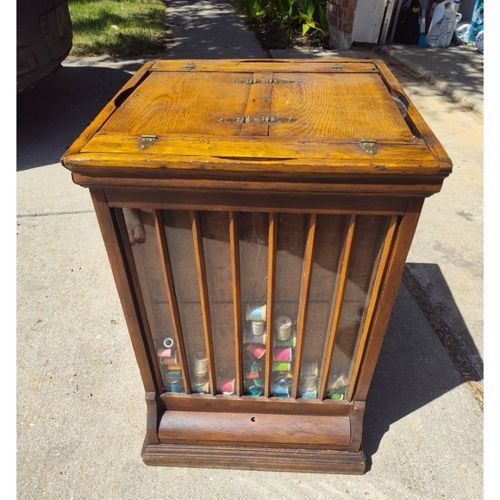
store display for sewing thread sales

AI analysis below

AI appraisal

AI analysis & estimate

AI-Generated · Verify before acting

Everything below is generated by AI for informational purposes only. AI can make mistakes — the AI may misidentify items or misattribute them (artist, maker, brand, designer, origin, era). This is not an official valuation and should not be used for insurance, sale, tax, estate, legal, or lending purposes — or any decision requiring a certified appraisal. It is not an authoritative claim about any person, brand, or rights holder — do not share or rely on it as a factual statement about a third party. Always consult qualified professionals before making financial decisions.

Note

This analysis also relies on unverified notes provided by the user, which may be incomplete or inaccurate and could affect the result.

Read the full disclaimer

AI Identification

·Not independently authenticated·Verify before acting

Antique Oak Country Store Spool Thread Cabinet Display

Antique Furniture / Mercantile Fixtures

AI Estimated Value

·Not an official valuation·Verify before acting

$450 - $650

As of June 15, 2026

AI Item Analysis

·AI can make mistakes·Verify before acting
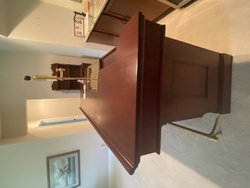
This is a quintessential late 19th to early 20th-century American country store spool cabinet, used for the retail display and organization of sewing thread. The cabinet is constructed primarily of quarter-sawn oak with a rich, amber-toned honey finish. It features a unique glass-fronted vertical divider system, allowing customers to view various thread colors through narrow vertical glass panes. The top of the unit is designed with a multi-hinged, bi-fold lid system secured by small brass butterfly hinges, intended for restocking and easy access from above. The base is finished with a molded decorative footer and what appears to be a dispensing tray at the bottom with a small finger hole for extraction. Inside, several vintage wooden and plastic spools of thread remain visible, adding to its historical narrative. Physically, the piece shows significant signs of age and utilitarian use: there is notable wear and thinning of the finish on the top surface, scattered abrasions, and several small chips along the wood edges and moldings. The patina is consistent with an authentic turn-of-the-century piece that has seen decades of commercial use. The craftsmanship is high-quality, typical of professional merchant fixtures, featuring stable joinery and original hardware meant to withstand the high-traffic environment of a general store.
AI Appraisal Report

·AI can make mistakes·Verify before acting
I have conducted a visual inspection of this antique quarter-sawn oak country store spool cabinet. Based on the construction methods, specifically the use of honey-toned tiger oak and brass butterfly hinges, this piece authentically dates to the late 19th or early 20th century. The vertical glass divider configuration is less common than the standard multi-drawer Merrick or J. & P. Coats cabinets, providing higher display visibility for collectors. The condition is consistent with high-traffic mercantile use; the thinning finish and superficial abrasions on the top lid are typical for its age. While these signs of use reduce the 'mint' value, they reinforce its pedigree as a functional general store fixture. The market for small-scale country store fixtures remains steady among Americana enthusiasts, with oak pieces commanding a premium over pine or poplar. Comparables for vertical-display thread cabinets in good original condition typically range from $400 to $700. The primary factors suppressing value here are the wear on the top surface and the lack of a prominent manufacturer’s decal (e.g., Corticelli or Brainerd & Armstrong), which often act as a catalyst for higher bids. While the piece appears authentic, this appraisal is limited by the lack of physical inspection. A definitive authentication would require an in-person examination of the joinery beneath the base, checking for circular saw marks or modern fasteners, and a UV-light test to determine if the finish is an original shellac or a later polyurethane restoration. Provenance regarding the specific store of origin would further enhance its marketability.

Get your items appraised

Instant estimates of your treasures with AI-powered appraisals

Browse More Appraisals