AI identification & appraisal estimate

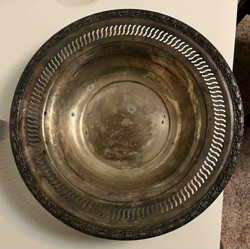
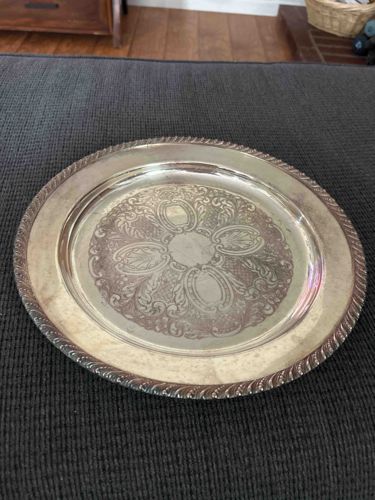
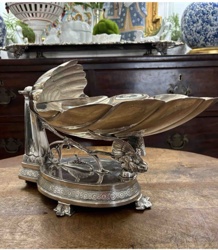
Ornate Silver-Plated Serving Tray with Rope-Twist Rim

This name is the AI's identification of the item — it may be incorrect.

Submitted photo of Ornate Silver-Plated Serving Tray with Rope-Twist Rim
Photo submitted by the user — not generated by AI

AI Estimated Value

Not an official valuation

$75 - $125

AI estimate as of September 3, 2025 · verify with a professional before acting

AI-Generated · Verify before acting

Everything on this page is generated by AI for informational purposes only. AI can make mistakes — the AI may misidentify items or misattribute them (artist, maker, brand, designer, origin, era). This is not an official valuation and should not be used for insurance, sale, tax, estate, legal, or lending purposes — or any decision requiring a certified appraisal. It is not an authoritative claim about any person, brand, or rights holder — do not share or rely on it as a factual statement about a third party. Always consult qualified professionals before making financial decisions.

Read the full disclaimer

AI Item Analysis

This is a circular, shallow serving tray likely made of silver-plated metal, given its characteristic luster and visible areas of tarnish. The tray features an ornate embossed or engraved central design, which appears to be a symmetrical pattern of scrolling acanthus leaves, floral motifs, and possibly cartouches, radiating from a central point. The overall design suggests a classical or Baroque influence, common in Victorian or early 20th-century silverplate production. The rim of the tray is finished with a distinct rope-twist border, adding to its decorative appeal. The surface exhibits a noticeable patina, with darker areas of tarnish, particularly in the recessed parts of the engraved design and along the rim, which is characteristic of aged silver or silver plate that has not been recently polished. There are no immediately visible signs of significant damage such as dents or deep scratches, but general surface wear and light scuffs are likely present consistent with age and use. No manufacturer's marks or signatures are discernible from the provided image, which would typically be on the underside. The craftsmanship appears to be of good quality, with well-defined decorative elements, indicating it was intended as a functional yet ornamental piece for serving or display.
AI Appraisal Report

Based on my visual examination of the Ornate Silver-Plated Serving Tray with Rope-Twist Rim, I assess its condition as good, consistent with age. The characteristic luster and tarnish suggest silver-plated metal. The ornate embossed or engraved central design with acanthus leaves and floral motifs points to a classical or Baroque influence, likely from the Victorian or early 20th century. The distinct rope-twist border is a nice decorative touch. The noticeable patina and darker tarnish in recessed areas are expected for aged silverplate that hasn't been recently polished. While no significant dents or deep scratches are visible, I anticipate general surface wear and light scuffs typical of use. Market conditions for antique silver-plated serving trays are generally stable but not experiencing high demand unless they are exceptional pieces by renowned makers or made of sterling silver. Comparables for similar ornate silver-plated trays without discernible maker's marks typically fall within this range. The authenticity as silverplate from the described period seems plausible based on the aesthetic and apparent construction, but without manufacturer's marks, full authentication is limited. The lack of visible maker's marks is a detractor for higher value, as is the nature of silverplate versus solid sterling silver. Factors impacting value include the material (silverplate), absence of maker's marks, and general wear. Demand is moderate for decorative, functional pieces of this type. To definitively verify authenticity and potentially enhance value, an in-person examination would be crucial to look for hallmarks, assess the quality of the plating more closely, and confirm the base metal. Provenance documentation could also shed light on its history. Spectroscopic testing could confirm the metal composition without damage.

Keep exploring

More decorative arts/tableware appraisals

Get your items appraised

Instant AI-powered appraisal estimates from a photo

Browse More Appraisals