AI identification & appraisal estimate

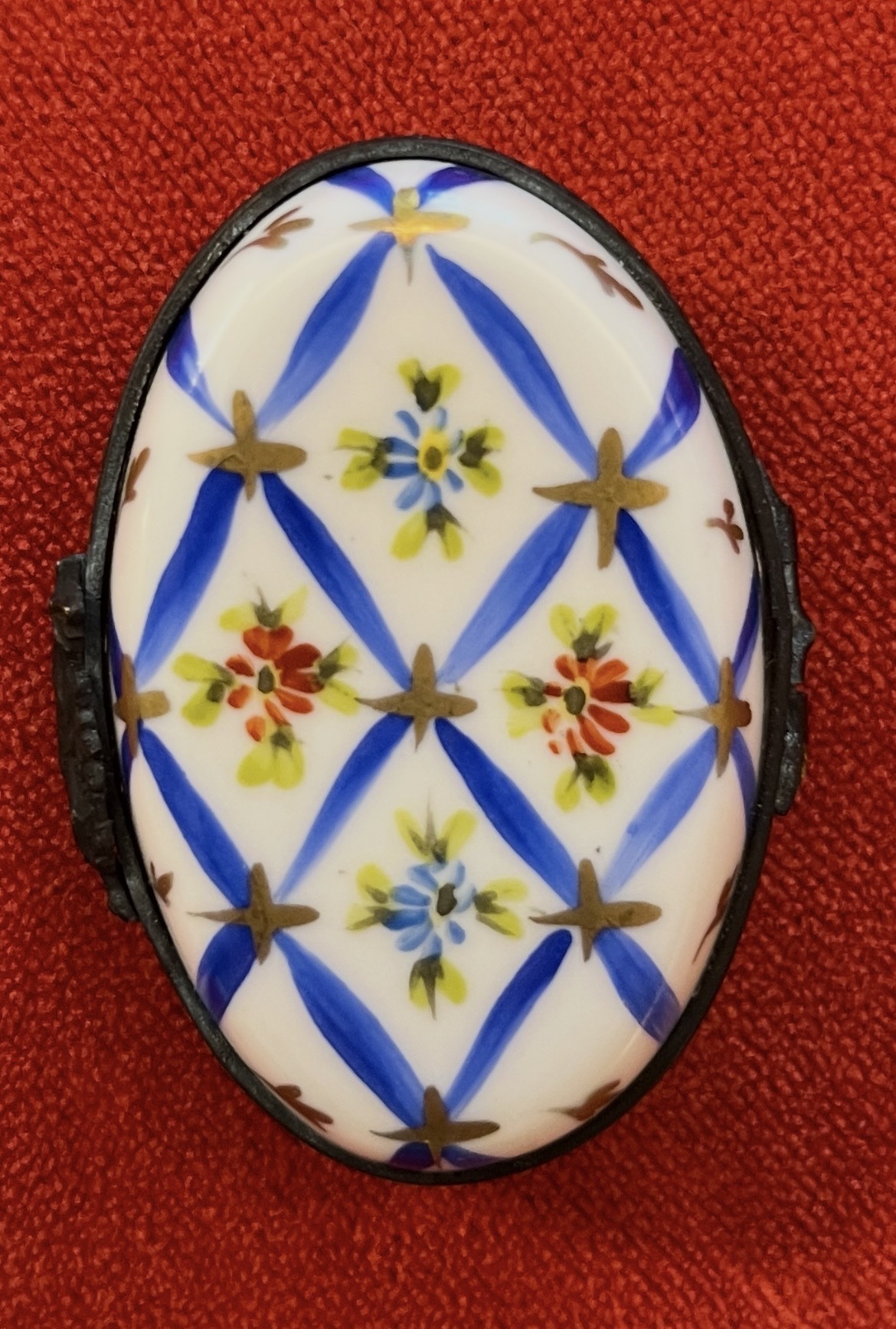
French Porcelain Hand-Painted Pill or Trinket Box

Submitted photo of French Porcelain Hand-Painted Pill or Trinket Box
Photo submitted by the user — not generated by AI

User's notes

Bought in FRANCE: Bordeaux French Porcelain container (pill or trinket), hand painted floral with crisscross design. L 6cm W 4.2cm Weight 33gms Paid 70€ = $112AUD

These notes were written by the person who submitted this item. Appraiser.AI has not verified them, and the AI's identification and estimate may rely on them.

AI Estimated Value

Not an official valuation

$100.00 - $150.00 USD

AI estimate as of May 10, 2026 · verify with a professional before acting

AI-Generated · Verify before acting

Everything on this page is generated by AI for informational purposes only. AI can make mistakes — the AI may misidentify items or misattribute them (artist, maker, brand, designer, origin, era). This is not an official valuation and should not be used for insurance, sale, tax, estate, legal, or lending purposes — or any decision requiring a certified appraisal. It is not an authoritative claim about any person, brand, or rights holder — do not share or rely on it as a factual statement about a third party. Always consult qualified professionals before making financial decisions.

This analysis also relies on unverified notes provided by the user, which may be incomplete or inaccurate and could affect the result.

Read the full disclaimer

AI Item Analysis

This is a small, oval-shaped porcelain trinket box featuring an elegant hand-painted design. The piece measures 6cm in length and 4.2cm in width, weighing 33 grams. The decorative top is of fine white porcelain, showcasing a cobalt blue trellis or crisscross motif that spans the entire domed lid. Within each diamond-shaped lattice section, there are delicate, hand-painted floral sprigs in shades of primary yellow, burnt orange, and cornflower blue, accented with chartreuse green leaves. At each intersection of the blue trellis, there is a small four-pointed gold-gilt star or cross, which appears slightly worn, consistent with age. Many of the paint strokes exhibit textural variance, indicating a hand-applied technique rather than a transfer print. The lid is encased in a dark, patinated metal frame—likely brass or copper alloy—which has oxidized to a deep, casi-black hue. The visible hinge and thumbpiece suggest a sturdy construction popular in 19th-century or early 20th-century French provincial decorative arts. The overall condition appears excellent for its age, with no visible cracks or chips in the porcelain, though the metal mounting shows a heavy, authentic patina. The craftsmanship reflects the classic Limoges style of miniature porcelain goods intended for Victorian or Edwardian vanity tables.
AI Appraisal Report

Based on my examination of this French porcelain trinket box, the piece is a fine representation of the traditional Limoges style common in late 19th and early 20th-century vanity items. The cobalt trellis and hand-painted floral sprigs demonstrate a quality of craftsmanship consistent with provincial French workshops. The textural variance in the enamel and the slight wear on the gilt star intersections are hallmark indicators of hand-application rather than modern transfer techniques. The patination on the brass frame suggests a genuine age (circa 1890–1920), as the oxidation is deep and non-uniform. The current market for Limoges miniatures remains stable, though prices fluctuate based on the intricacy of the metalwork and the presence of specific maker's marks, such as 'Limoges, France' or 'Peint Main.' While the purchase price of €70 is a fair retail acquisition cost for the Bordeaux region, the secondary market valuation typically ranges between $100 and $150 USD. The absence of a signature or specific manufacture mark limits it from reaching the higher tiers of collectible porcelain. Limitations: This appraisal is based on visual data only. A definitive valuation would require an in-person inspection to check for hidden hairlines under the metal rim and to verify the hinge stability. Full authentication would necessitate scientific testing of the metal alloy and a microscopic review of the gilding to distinguish between original mercury gilding and modern replacements. Provenance documentation regarding the specific shop or previous ownership in France would further solidify its historical context.

Keep exploring

More antique porcelain and decorative arts appraisals

Get your items appraised

Instant AI-powered appraisal estimates from a photo

Browse More Appraisals