AI Appraisal Estimate

AI-generated estimates · not official valuations

From the user

What was submitted

Photo and notes provided by the user — not generated by AI

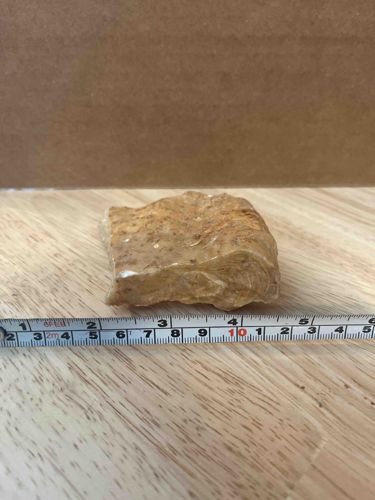
Submitted item photo
Submitted photo · May 28, 2026

User's notes

Cave onyx

AI analysis below

AI appraisal

AI analysis & estimate

AI-Generated · Verify before acting

Everything below is generated by AI for informational purposes only. AI can make mistakes — the AI may misidentify items or misattribute them (artist, maker, brand, designer, origin, era). This is not an official valuation and should not be used for insurance, sale, tax, estate, legal, or lending purposes — or any decision requiring a certified appraisal. It is not an authoritative claim about any person, brand, or rights holder — do not share or rely on it as a factual statement about a third party. Always consult qualified professionals before making financial decisions.

Note

This analysis also relies on unverified notes provided by the user, which may be incomplete or inaccurate and could affect the result.

Read the full disclaimer

AI Identification

·Not independently authenticated·Verify before acting

Cave Onyx Specimen

Geological Specimen

AI Estimated Value

·Not an official valuation·Verify before acting

$15-30

As of May 28, 2026

AI Item Analysis

·AI can make mistakes·Verify before acting
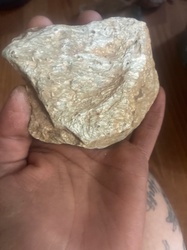
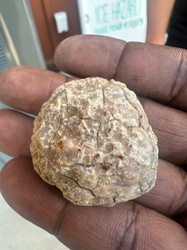
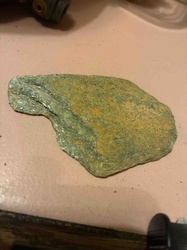
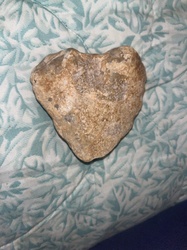
The item presented is a raw, unpolished specimen of what is identified as Cave Onyx, also known as banded calcite or flowstone. Physically, it is an irregularly shaped piece of rock, exhibiting a natural fracture. Its dimensions can be estimated by the visible measuring tape, appearing to be approximately 10 centimeters (or 4 inches) in its longest dimension. The material displays a predominant color palette ranging from light tan to a deeper reddish-brown, with visible variations in hue across its surface. There are lighter, almost white, areas suggesting distinct mineral layers or inclusions. The surface texture appears somewhat rough and porous in places, consistent with a naturally formed mineral specimen that has not undergone significant finishing. While no distinct manufacturing details, maker's marks, or signatures are visible, its very nature as a cave onyx specimen implies a natural formation process over geological time. The banded appearance, though subtle in this raw form, is a characteristic feature of speleothems like flowstone. The visible condition shows no apparent damage or repairs, rather it displays its natural state, complete with a natural patina from its formation environment. The quality of the specimen appears to be raw, indicative of a collectible piece for geological study or display rather than a finished product. Its unique aspects lie in its natural formation and potential to reveal more intricate banding or translucency if cut and polished.

AI Appraisal Report

·AI can make mistakes·Verify before acting
I have examined the provided images of this raw geological specimen, identified as Cave Onyx, also known as banded calcite. The piece measures approximately 10 cm in its longest dimension and presents in a completely natural, unpolished state. The coloration ranges from light tan to reddish-brown, with some lighter banding visible, which is characteristic of this type of flowstone formation. Based on the visual evidence, the item appears to be an authentic specimen of banded calcite, exhibiting natural fracture patterns and surface texture consistent with its claimed identity. There are no signs of artificial treatment or repair. The market value for raw, unprocessed mineral specimens like this is primarily driven by specimen size, crystal quality, color vibrancy, and the intricacy of the banding. This piece is of a modest, collectible size. While it shows potential, its value in this raw state is limited. Similar-sized, unpolished Cave Onyx or banded calcite specimens are relatively common and readily available on the market, typically sold for decorative or lapidary purposes. Comparable raw specimens of this size and quality generally sell in the lower price range. A significant factor impacting its value is its raw condition. Polishing would likely enhance its visual appeal and reveal more intricate patterns, potentially increasing its value, but as is, it remains a standard collector's piece. For full authentication, physical examination would be necessary to confirm mineral hardness and composition (differentiating calcite from aragonite or true onyx, a form of chalcedony). However, based on the typical use of the trade name 'Cave Onyx,' the visual assessment aligns with market examples.

Get your items appraised

Instant estimates of your treasures with AI-powered appraisals

Browse More Appraisals