AI Appraisal Estimate

AI-generated estimates · not official valuations

From the user

What was submitted

Photo and notes provided by the user — not generated by AI

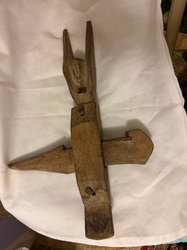
Submitted item photo
Submitted photo · May 26, 2026

User's notes

No additional notes provided.

AI analysis below

AI appraisal

AI analysis & estimate

AI-Generated · Verify before acting

Everything below is generated by AI for informational purposes only. AI can make mistakes — the AI may misidentify items or misattribute them (artist, maker, brand, designer, origin, era). This is not an official valuation and should not be used for insurance, sale, tax, estate, legal, or lending purposes — or any decision requiring a certified appraisal. It is not an authoritative claim about any person, brand, or rights holder — do not share or rely on it as a factual statement about a third party. Always consult qualified professionals before making financial decisions.

Read the full disclaimer

AI Identification

·Not independently authenticated·Verify before acting

Carved Wood Polynesian-Style Figural Sculpture

Folk Art / Ethnographic Wood Carving

AI Estimated Value

·Not an official valuation·Verify before acting

$45-75

As of May 26, 2026

AI Item Analysis

·AI can make mistakes·Verify before acting
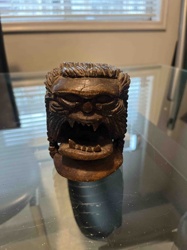
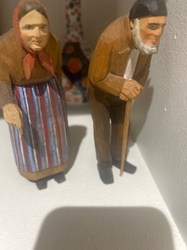
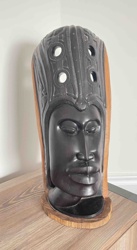
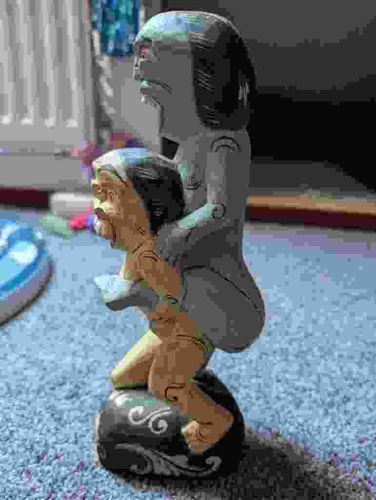
This is a hand-carved wooden sculpture featuring two vertically stacked figures in a style reminiscent of Polynesian or Tiki folk art. The piece is constructed from a light-toned wood, possibly hibicus or a similar tropical hardwood, and stands approximately 8 to 10 inches tall. The primary figure at the base is in a crouched or seated position, supporting a second figure on its shoulders. Both figures exhibit stylized facial features, including wide eyes, flared noses, and open mouths revealing teeth. The carving details include intricate line work on the limbs and torsos, suggesting traditional tattoos or decorative markings. The color palette is natural wood with dark staining or paint used for the hair and the decorated base, which features white curvilinear scroll motifs. The craftsmanship displays a vernacular or 'souvenir art' quality, likely dating from the mid-to-late 20th century. Condition-wise, the piece shows a matte patina with some minor scuffing and dust accumulation in the recessed carved areas, but no major structural cracks or chips are visible. There are no clear maker's marks visible in the image, suggesting it may be a hand-crafted tourist item or a piece of domestic folk art.
AI Appraisal Report

·AI can make mistakes·Verify before acting
I have examined the provided imagery of the hand-carved Polynesian-style figural sculpture. The piece appears to be a mid-to-late 20th-century souvenir or 'airport art' carving, likely originating from the Marquesas Islands or a similar tourist-oriented region. The wood displays a characteristic light tone typical of tropical softwoods like hibiscus (fau), while the use of dark staining for the hair and a painted base with white scrollwork (patautiki) points toward commercial production for the gift market rather than ceremonial use. The condition is fair to good, with visible dust accumulation and minor surface abrasions consistent with age. Structurally, the piece remains intact. The craftsmanship is competent but lacks the deep undercutting and refined symmetrical precision found in high-end Master Carver works. Commercially produced carvings of this scale are common; therefore, rarity is low. Similar items frequently appear on the secondary market, with demand primarily driven by Tiki culture enthusiasts or collectors of mid-century decor. Factors limiting the value include the lack of a known artist's signature and the small scale. Authenticity as a 'traditional' artifact is dismissed based on the modern paints and decorative base treatment. Please note that this appraisal is based solely on digital images. A physical inspection is required to determine the exact wood species, identify any hidden structural repairs, or locate faint maker's marks. To verify a more specific origin, provenance documentation or purchase receipts from the mid-20th century would be necessary. Scientific testing is not recommended as the cost of such procedures would far exceed the market value of the object.

Get your items appraised

Instant estimates of your treasures with AI-powered appraisals

Browse More Appraisals