AI Appraisal Estimate

AI-generated estimates · not official valuations

From the user

What was submitted

Photo and notes provided by the user — not generated by AI

Submitted item photo
Submitted photo · June 23, 2026

User's notes

No additional notes provided.

AI analysis below

AI appraisal

AI analysis & estimate

AI-Generated · Verify before acting

Everything below is generated by AI for informational purposes only. AI can make mistakes — the AI may misidentify items or misattribute them (artist, maker, brand, designer, origin, era). This is not an official valuation and should not be used for insurance, sale, tax, estate, legal, or lending purposes — or any decision requiring a certified appraisal. It is not an authoritative claim about any person, brand, or rights holder — do not share or rely on it as a factual statement about a third party. Always consult qualified professionals before making financial decisions.

Read the full disclaimer

AI Identification

·Not independently authenticated·Verify before acting

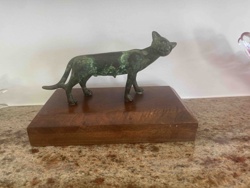
Egyptian Bastet Style Bronze Cat Figurine

Decorative Arts / Bronze Sculpture

AI Estimated Value

·Not an official valuation·Verify before acting

$150 - $300

As of June 23, 2026

AI Item Analysis

·AI can make mistakes·Verify before acting
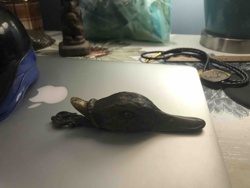
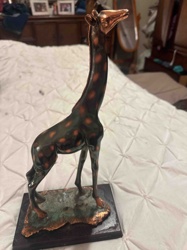
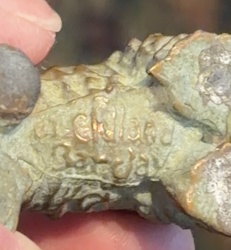
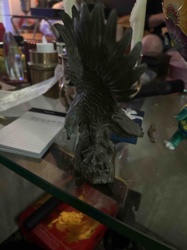
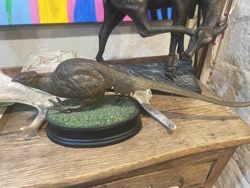
This item is a cast bronze figurine of a seated cat, modeled in the classic Egyptian Late Period style (specifically evocative of the goddess Bastet). The cat is depicted in a formal, upright seated position with its tail curled around its paws to the right side. The piece appears to be made of a heavy metal alloy, likely bronze or brass, which has developed a significant and aged patina. Specifically, the surface shows a heavy buildup of dark brown oxidation and varied spots of green malachite-like corrosion (verdigris), which suggests a considerable age or exposure to moisture. The cat features an ornate, wide beaded collar or aegis around its neck, rendered with recessed geometric patterns. The eyes are deeply recessed and hollowed, indicative of cast metalwork. The ears are alert with faint interior striations. Regarding condition, the surface is heavily weathered with a rough, pitted texture and some visible loss of detail due to oxidation and corrosion. There are no immediate maker's marks visible on the exterior; however, the style is a 20th-century revival of ancient Egyptian aesthetics. The craftsmanship shows a moderate level of detail in the casting of the jewelry but less refinement in the anatomical smoothing, leaning toward a decorative reproduction rather than a true ancient artifact.
AI Appraisal Report

·AI can make mistakes·Verify before acting
I have conducted a visual analysis of the cast bronze figurine of a seated cat, modeled in the 26th Dynasty Egyptian style. Based on my examination, the object is a 20th-century decorative revival piece rather than an ancient artifact. While the heavy oxidation and verdigris suggest age, the pitting and surface textures are characteristic of mid-century casting techniques used for museum reproductions or 'Grand Tour' style souvenirs. The execution of the wide beaded collar shows moderate detail, but the lack of refinement in the anatomical smoothing and the specific pattern of surface degradation point toward a copper-alloy reproduction produced for the decorative arts market. The current market for Egyptian revival bronzes remains steady, with demand driven by interior design trends rather than archaeological rarity. Comparables for mid-20th-century bronze Bastet figures of this size and craftsmanship typically realize prices between $150 and $300 at auction. Factors limiting the value include the rough surface texture, which obscures finer details, and the lack of a verifiable maker's mark or artist signature. Note: This appraisal is based strictly on visual photographic evidence. A definitive determination of age and authenticity is limited without physical inspection. To confirm these findings and rule out an ancient origin, an in-person examination by a specialist in Egyptian antiquities, a core-sample analysis for casting remnants, and potentially thermoluminescence (TL) testing of any remaining ceramic core would be required. Furthermore, provenance documentation detailing the item's history prior to 1970 (UNESCO Convention) would be necessary to establish legal title for high-value antiquity trade.

Get your items appraised

Instant estimates of your treasures with AI-powered appraisals

Browse More Appraisals