AI estimate as of August 16, 2025 · verify with a professional before acting
AI-Generated · Verify before acting
Everything on this page is generated by AI for informational purposes only. AI can make mistakes — the AI may misidentify items or misattribute them (artist, maker, brand, designer, origin, era). This is not an official valuation and should not be used for insurance, sale, tax, estate, legal, or lending purposes — or any decision requiring a certified appraisal. It is not an authoritative claim about any person, brand, or rights holder — do not share or rely on it as a factual statement about a third party. Always consult qualified professionals before making financial decisions.
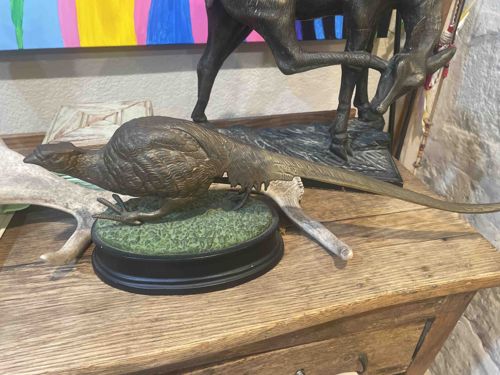
This is a detailed bronze sculpture of a pheasant, likely depicted in a crouching or ready-to-take-flight pose, characteristic of game bird artistry. The sculpture exhibits a dark, patinated bronze finish, providing a rich, aged appearance that highlights the intricate feathering and anatomical details of the bird. The texture of the feathers is finely rendered, giving the impression of realism and depth. The pheasant is mounted on a circular base which appears to be crafted from a darker material, possibly ebonized wood or resin, with a green, textured top surface designed to mimic grass or natural foliage. The base provides stability for the elongated form of the bird, particularly its long tail. Visible condition appears good with a consistent patina, suggesting either intentional aging or natural oxidation over time. There are no obvious signs of significant damage, cracks, or repairs. The craftsmanship indicates a quality piece, likely produced in the late 19th or early 20th century, or a more contemporary reproduction in a classic style. The sculpture’s depiction of wildlife, specifically game birds, aligns with themes popular in sporting art and natural history decorative objects. The overall design suggests it could have been part of a larger collection of game bird sculptures or a standalone desk or mantelpiece ornament. The proportions are lifelike, indicating the artist's attention to detail and understanding of avian anatomy.
AI Appraisal Report
Upon visual examination of the provided image, this bronze pheasant sculpture presents as a quality decorative arts piece. The dark, aged patina appears consistent and well-preserved, suggesting either intentional antiquing or careful maintenance over time. I observe no obvious signs of significant damage such as cracks, breaks, or repairs, which speaks well to its current condition. The detailed rendering of the feathers and lifelike pose indicate a skilled hand in its creation. The circular base, mimicking natural ground, provides a stable and aesthetically appropriate foundation.
Authenticity of age, particularly whether it is late 19th/early 20th century as suggested or a more contemporary reproduction, is difficult to ascertain solely from images. While the style aligns with classic sporting art, definitive age and foundry attribution would require an in-person examination for closer inspection of casting details, evidence of tooling marks, and the precise nature of the patina (natural oxidation versus applied finish). Provenance documentation, such as original sales receipts or exhibition records, would be invaluable for confirming authenticity and origin.
In terms of market conditions, bronze wildlife sculptures, especially game birds, maintain a steady demand among collectors of decorative arts, sporting art, and natural history enthusiasts. Pieces with fine detail and good condition generally command better prices. Rarity would largely depend on the artist and foundry, which cannot be determined from this image alone. Factors significantly impacting value include the artist's reputation (if identifiable), the foundry's prestige, and the method of casting (e.g., lost-wax vs. sand casting). Without a signature or foundry mark, it falls into the decorative category rather than fine art sculpture by a renowned artist, which inherently limits its upper valuation. Comparables would include similar unsigned bronze animaliers from the 20th century.
My assessment is based purely on the visual information available. A hands-on inspection would allow for micro-examination of surface details, weight, material composition, and the presence of any marks that would confirm authorship or historical period.