AI Appraisal Estimate

AI-generated estimates · not official valuations

From the user

What was submitted

Photo and notes provided by the user — not generated by AI

Submitted item photo
Submitted photo · June 26, 2026

User's notes

No additional notes provided.

AI analysis below

AI appraisal

AI analysis & estimate

AI-Generated · Verify before acting

Everything below is generated by AI for informational purposes only. AI can make mistakes — the AI may misidentify items or misattribute them (artist, maker, brand, designer, origin, era). This is not an official valuation and should not be used for insurance, sale, tax, estate, legal, or lending purposes — or any decision requiring a certified appraisal. It is not an authoritative claim about any person, brand, or rights holder — do not share or rely on it as a factual statement about a third party. Always consult qualified professionals before making financial decisions.

Read the full disclaimer

AI Identification

·Not independently authenticated·Verify before acting

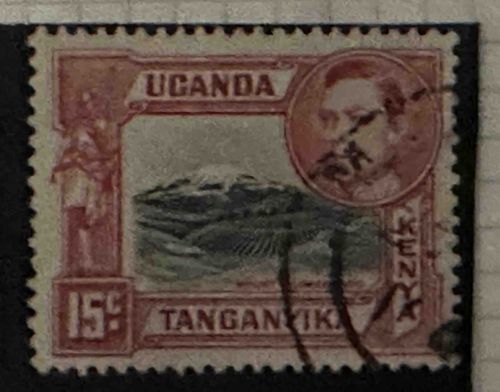
1938-1952 Kenya, Uganda, and Tanganyika 15c Mount Kilimanjaro Postage Stamp (King George VI)

Philately / Postage Stamps

AI Estimated Value

·Not an official valuation·Verify before acting

$0.50 - $2.50

As of June 26, 2026

AI Item Analysis

·AI can make mistakes·Verify before acting
This is a used British colonial postage stamp issued for the joint postal administration of Kenya, Uganda, and Tanganyika. The stamp features a bicolored design: a central vignette of Mount Kilimanjaro in a dark slate-green or blackish-green hue, surrounded by a carmine-red or reddish-brown ornate frame. In the upper right corner is a circular portrait of King George VI, indicating a manufacturing date between 1938 and 1952. The stamp has a face value of 15 cents, and it bears the horizontal inscription 'UGANDA' at the top and 'TANGANYIKA' at the bottom, with 'KENYA' written vertically on the right side. The printing is a fine-line intaglio or recess print, showcasing high-quality craftsmanship typical of the De La Rue or Bradbury Wilkinson printing firms of that era. Physically, the stamp exhibits standard perforations around all four edges, though some teeth appear slightly uneven. A visible black circular date stamp (CDS) or handstamp cancellation is present, crossing over the King's portrait and the mountain scene, which confirms its post-usage status. There is minor evidence of handling, including slight surface wear and possible light aging of the paper stock, but the colors remain relatively vibrant for its age. The centering is slightly off toward the top-right corner. This series is well-documented in philatelic catalogs and represents a period of unified colonial administration in East Africa.

AI Appraisal Report

·AI can make mistakes·Verify before acting
I have examined the digital representation of the 1938-1952 Kenya, Uganda, and Tanganyika 15c Mount Kilimanjaro stamp. Based on my visual analysis, the stamp is a genuine used specimen from the King George VI era. The bicolored intaglio printing remains crisp, and the carmine frame retains good color saturation. The cancellation is a standard circular date stamp, which is common for this issue. This specific 15c denomination (Scott #69 or Stanley Gibbons #135) was produced in massive quantities for the joint postal administration of British East Africa to meet the basic inland letter rate. While it is an aesthetically pleasing example of colonial design, it is not considered rare. The current market is saturated with used examples of this series; high-grade specimens typically sell for nominal amounts in philatelic 'packet' trades or low-end auctions. The value is negatively impacted by the centering, which is noticeably shifted toward the top-right, and the uneven perforations on the vertical edges. In-person examination would be required to rule out hinge remnants, thin spots, or paper toning on the reverse side which further reduce value. Authenticity is verified by the specific engraving style of De La Rue, but definitive chemical analysis of the ink or paper fibers would require physical inspection. For a stamp of this commonality, the cost of professional certification would exceed the market value of the item itself.

Get your items appraised

Instant estimates of your treasures with AI-powered appraisals

Browse More Appraisals