AI Appraisal Estimate

AI-generated estimates · not official valuations

From the user

What was submitted

Photo and notes provided by the user — not generated by AI

Submitted item photo
Submitted photo · June 18, 2026

User's notes

No additional notes provided.

AI analysis below

AI appraisal

AI analysis & estimate

AI-Generated · Verify before acting

Everything below is generated by AI for informational purposes only. AI can make mistakes — the AI may misidentify items or misattribute them (artist, maker, brand, designer, origin, era). This is not an official valuation and should not be used for insurance, sale, tax, estate, legal, or lending purposes — or any decision requiring a certified appraisal. It is not an authoritative claim about any person, brand, or rights holder — do not share or rely on it as a factual statement about a third party. Always consult qualified professionals before making financial decisions.

Read the full disclaimer

AI Identification

·Not independently authenticated·Verify before acting

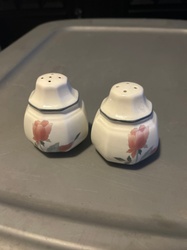
Vintage Hand-Painted Floral Japanese Ceramic Salt and Pepper Shakers

Kitchenware / Collectible Ceramics

AI Estimated Value

·Not an official valuation·Verify before acting

$10-20

As of June 18, 2026

AI Item Analysis

·AI can make mistakes·Verify before acting
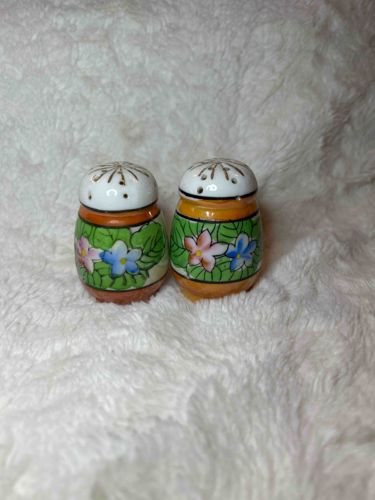
This is a pair of vintage barrel-shaped salt and pepper shakers, likely originating from Japan during the mid-20th century (Occupied Japan or post-war export era). These items are crafted from white ceramic or porcelain with a glossy glaze. Each shaker features an intricate hand-painted design consisting of a vibrant green band of leaves encircling the middle, punctuated by small blue and pink floral blossoms. The upper and lower sections are finished with a warm ochre or reddish-brown glaze. The white domed tops are decorated with a gold-tone starburst or radiating line pattern and characteristic dispensing holes. The craftsmanship shows typical period indicators such as slightly uneven paint application and some visible black outlines indicative of underglaze transfer or hand-detailing. In terms of condition, there is evidence of light vintage wear and surface patina. The left shaker displays some darker staining or residue near its base, while both pieces show minor fading of the gold gilt on the tops. No major cracks are visible, though some crazing may be present upon closer inspection. These pieces represent a classic example of collectible kitchy ceramic kitchenware popular for export during the 1940s-1950s.
AI Appraisal Report

·AI can make mistakes·Verify before acting
Based on my visual examination of these vintage barrel-shaped salt and pepper shakers, I identify them as characteristic examples of Japanese export ceramics, likely dating to the mid-20th century (circa 1940s-1950s). The hand-painted green foliage band, dotted with blue and pink blossoms, combined with the reddish-brown banding and gold-gilt starburst tops, points strongly to the 'Made in Japan' or 'Occupied Japan' era of kitschy kitchenware. Authenticity is supported by the typical production quality—slightly uneven glaze application and transfer-style outlining—which aligns with mass-market exports of that period. Condition is the primary limiting factor for value here. While I observe no catastrophic structural damage like large chips, there is significant surface wear. The left shaker exhibits notable staining or residue near the base, and there is visible rubbing to the gold accents on the tops, consistent with frequent handling. The glaze shows signs of age-related dulling and potential crazing, which is common but detracts from collector appeal. Market demand for this category of ceramic kitchenware remains steady but rarely commands high prices unless the pattern is rare or the specific maker (e.g., Lefton, Napco) is highly sought-after; these appear to be more generic export ware. Similar sets generally sell in the $10 to $20 range in online marketplaces and antique malls. For a definitive valuation, an in-person inspection would be required to verify the maker's mark on the underside (often a stamp or foil sticker) and to check for hairline fractures or restoration that photos might conceal.

Get your items appraised

Instant estimates of your treasures with AI-powered appraisals

Browse More Appraisals