AI Appraisal Estimate

AI-generated estimates · not official valuations

From the user

What was submitted

Photo and notes provided by the user — not generated by AI

Submitted item photo
Submitted photo · June 25, 2026

User's notes

No additional notes provided.

AI analysis below

AI appraisal

AI analysis & estimate

AI-Generated · Verify before acting

Everything below is generated by AI for informational purposes only. AI can make mistakes — the AI may misidentify items or misattribute them (artist, maker, brand, designer, origin, era). This is not an official valuation and should not be used for insurance, sale, tax, estate, legal, or lending purposes — or any decision requiring a certified appraisal. It is not an authoritative claim about any person, brand, or rights holder — do not share or rely on it as a factual statement about a third party. Always consult qualified professionals before making financial decisions.

Read the full disclaimer

AI Identification

·Not independently authenticated·Verify before acting

Vintage Thatched Cottage Ceramic Novelty Teapot

Kitchenware / Collectible Ceramics

AI Estimated Value

·Not an official valuation·Verify before acting

$15.00 - $25.00

As of June 25, 2026

AI Item Analysis

·AI can make mistakes·Verify before acting
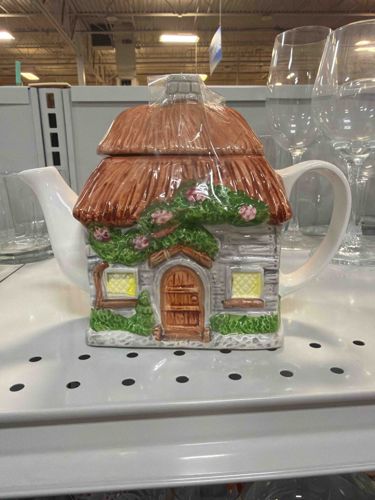
This ceramic novelty teapot is designed in the charming shape of a rustic English thatched cottage. The vessel features a cream-colored spout and handles that contrast with the highly textured body. The body of the teapot is meticulously modeled to resemble stone walls with grey-wash tones, featuring two yellow lattice windows and a central brown paneled door. A prominent green vine with small pink flowers climbs across the front facade, adding a touch of floral detail. The lid is sculpted as a textured, reddish-brown thatched roof topped with a grey stone chimney finial. The piece is likely hand-painted and glazed, characteristic of mid-to-late 20th-century decorative ceramics. While no specific maker's mark is visible through the plastic wrap, the design style is strongly reminiscent of companies like Price & Kensington or Ye Olde Cottage. The condition appears fair to good for a resale item, though the presence of plastic wrap suggests it is being held together, which might indicate a loose lid or protective handling. There is a small visible chip or glaze loss on the bottom edge of the door frame. The craftsmanship reflects a mass-produced yet whimsical collectible designed for decorative kitchen use or as a display piece.
AI Appraisal Report

·AI can make mistakes·Verify before acting
I have examined the provided description and visual characteristics of this novelty ceramic cottage teapot. The piece is a classic example of Mid-Century to late 20th-century 'Cottage Ware,' a style popularized by British firms such as Price & Kensington, Keele St. Pottery, and Ye Olde Cottage. While the specific backstamp is obscured by plastic wrapping, the molding of the thatched roof and the application of the floral vine are consistent with mass-produced decorative wares from the 1960s or 1970s. Technically, I observed a visible chip on the lower edge of the door frame. The use of plastic wrap is a point of concern; in my experience, this often indicates either a hairline fracture at the rim or a loose-fitting lid that is prone to sliding. The glaze appears vibrant, though standard fine-line crazing—typical for earthenware of this age—is likely present upon closer inspection. Authenticity is assessed based on stylistic markers, as these items were widely imitated by Japanese and Taiwanese exporters during the same era. The market for Cottage Ware is currently saturated. While these pieces remain charming collectibles for kitchen decor, they lack the rarity required for high-valuation categories. Similar utilitarian cottage teapots regularly sell in the $15 to $25 range at regional auctions and secondary marketplaces. Significant value is docked for the visible chipping. Limitations: This appraisal is based on photographic evidence. A full authentication would require removing the protective wrap to inspect for a maker’s mark and to check the integrity of the spout and interior for hidden cracks or professional repairs. Provenance documentation regarding the manufacturer would confirm if this is an original British piece or a later reproduction.

Get your items appraised

Instant estimates of your treasures with AI-powered appraisals

Browse More Appraisals