AI Appraisal Estimate

AI-generated estimates · not official valuations

From the user

What was submitted

Photo and notes provided by the user — not generated by AI

Submitted item photo
Submitted photo · June 1, 2026

User's notes

No additional notes provided.

AI analysis below

AI appraisal

AI analysis & estimate

AI-Generated · Verify before acting

Everything below is generated by AI for informational purposes only. AI can make mistakes — the AI may misidentify items or misattribute them (artist, maker, brand, designer, origin, era). This is not an official valuation and should not be used for insurance, sale, tax, estate, legal, or lending purposes — or any decision requiring a certified appraisal. It is not an authoritative claim about any person, brand, or rights holder — do not share or rely on it as a factual statement about a third party. Always consult qualified professionals before making financial decisions.

Read the full disclaimer

AI Identification

·Not independently authenticated·Verify before acting

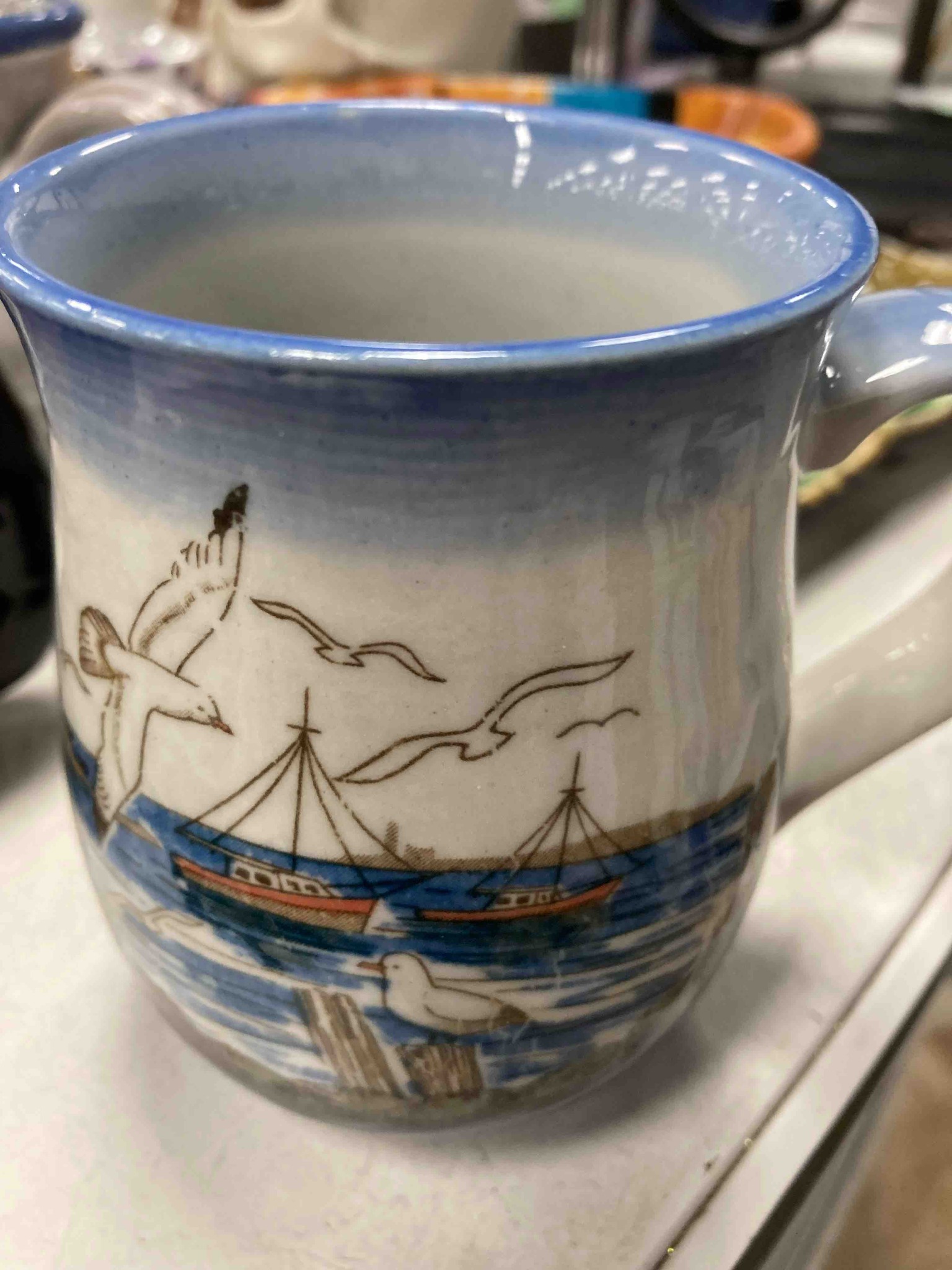
Nautical-Themed Ceramic Mug with Seagulls and Fishing Boats

Kitchenware & Collectible Ceramics

AI Estimated Value

·Not an official valuation·Verify before acting

$5.00 - $12.00

As of June 1, 2026

AI Item Analysis

·AI can make mistakes·Verify before acting
This is a vintage-style ceramic coffee mug featuring a wrap-around nautical motif. The piece is constructed from a heavy stoneware or thick ceramic material, characterized by a rounded, slightly bulbous body that tapers slightly toward the base and expands into a flared rim. The color palette is dominated by a cream-colored glaze background, accented with a periwinkle blue ombré or sponged effect around the top rim. The central decoration depicts a coastal scene with several hand-painted or decal-applied seagulls in flight and resting, alongside two traditional-style fishing boats with orange hulls and brown masts on a blue-streaked ocean. The artwork utilizes thin brown outlines for detailing. The mug features a sturdy, D-shaped handle attached to the side. In terms of condition, there is prominent crazing visible throughout the glaze, particularly near the base and around the seagulls, which suggests significant age or exposure to temperature fluctuations. A notable vertical hairline crack is visible running through the center of the ocean scene near the large seagull, indicating a structural weakness. There are no clearly visible maker's marks or signatures on the front, but the overall folk-art aesthetic and glaze quality suggest it may be a mass-produced souvenir item or mid-20th-century kitchenware, likely dating from the 1970s or 1980s. The craftsmanship is functional rather than fine-art, but the color gradient on the rim shows intentional decorative effort.
AI Appraisal Report

·AI can make mistakes·Verify before acting
I have carefully examined the provided images of this nautical-themed ceramic mug. This piece appears to be a mass-produced souvenir or lifestyle item, likely originating from the late 1970s or 1980s. While it features a charming folk-art aesthetic and a nice periwinkle sponged gradient on the rim, it lacks the indicators of high-end studio pottery. The glaze composition and handle attachment suggest industrial ceramic production common in mid-to-late 20th-century gift shops. The condition of this specific item is the primary factor limiting its value. I observed significant 'crazing' (fine networks of cracks in the glaze), which is common in older stoneware but can harbor bacteria if used for food. More critically, the vertical hairline crack through the main ocean scene constitutes structural damage, rendering the item unsuitable for daily use and relegating it to decorative status only. In the current market for 'shabby chic' or coastal-themed collectibles, undamaged examples of similar mugs sell for under $20. Due to the structural crack and lack of a prestige maker's mark, the value is nominal. My assessment is based solely on visual inspection; a physical examination would be required to determine if the crack is superficial or deep enough to compromise the vessel's integrity. Scientific testing of the glaze would be necessary to confirm lead content, which is often a concern with ceramics of this era. Total authentication of its origin would require a maker’s mark on the underside of the base, which is not visible in these images.

Get your items appraised

Instant estimates of your treasures with AI-powered appraisals

Browse More Appraisals