AI identification & appraisal estimate

Organic Debris or Potential Ambergris Specimen

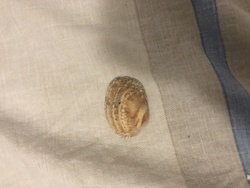
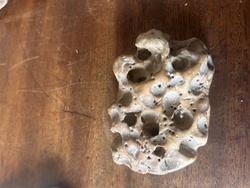
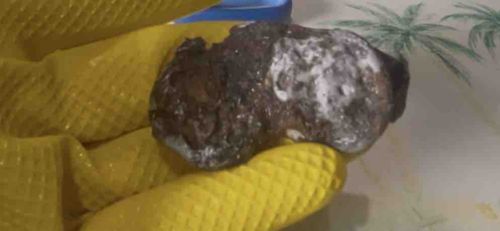
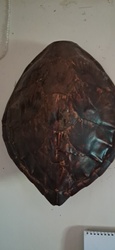
Submitted photo of Organic Debris or Potential Ambergris Specimen
Photo submitted by the user — not generated by AI

AI Estimated Value

Not an official valuation

$50 - $2,500

AI estimate as of February 20, 2026 · verify with a professional before acting

AI-Generated · Verify before acting

Everything on this page is generated by AI for informational purposes only. AI can make mistakes — the AI may misidentify items or misattribute them (artist, maker, brand, designer, origin, era). This is not an official valuation and should not be used for insurance, sale, tax, estate, legal, or lending purposes — or any decision requiring a certified appraisal. It is not an authoritative claim about any person, brand, or rights holder — do not share or rely on it as a factual statement about a third party. Always consult qualified professionals before making financial decisions.

Read the full disclaimer

AI Item Analysis

This item is an irregular, nodular specimen approximately 3 to 5 centimeters in length, held by a person wearing a yellow textured latex glove for scale. The object possesses a highly irregular, rugose exterior with a color palette consisting primarily of dark chocolate browns and earthy blacks, interspersed with significant patches of a white, chalky, or waxy substance. The texture appears heterogeneous, showing a mix of smooth, dense areas and porous, pitted sections suggestive of organic maturation or exposure to environmental elements. It lacks any formal manufacturing marks, stamps, or human-made structural elements, pointing toward a natural or biological origin. The white accumulation could represent oxidation, fungal growth, or the 'white crust' often associated with aged ambergris. Given the context of the protective gloves and the waxy, weathered appearance, this specimen may be a marine-derived organic material. The condition is raw and unrefined, showing significant weathering and no signs of restoration. Without physical testing such as the 'hot needle' test or chemical analysis, its exact composition remains speculative, though it resembles materials recovered from coastal environments that have spent significant time at sea.
AI Appraisal Report

I have conducted a visual inspection of the specimen, measuring approximately 3 to 5 centimeters. The object exhibits classic hallmarks of marine organic maturation, specifically the 'white crust' oxidation and rugose, dark-chocolate-colored interior often indicative of high-quality aged ambergris. The heterogeneous texture and absence of synthetic structural elements confirm a natural origin. If authenticated as high-grade white/grey ambergris, the value sits at the higher end of the range, as this substance is highly sought after by boutique perfumers for its fixative properties and complex scent profile. Demand remains high due to its rarity and the unpredictability of its discovery. However, there is a significant valuation delta due to the inability to distinguish between authentic ambergris and common marine pollutants, such as degraded paraffin wax, vegetable fats (fatbergs), or sea cucumbers, from imagery alone. The lower value reflect its worth as a 'marine curiosity' without chemical verification. Authentic ambergris must pass a 'hot needle' test (yielding a dark, tacky liquid and musky smoke) and ideally a GC-MS (Gas Chromatography-Mass Spectrometry) test to confirm the presence of ambrein. To achieve a definitive appraisal, I would require a physical examination to assess specific gravity and scent, along with laboratory results confirming its chemical composition. Provenance regarding the geographic location of the find would further bolster its marketability.

Keep exploring

More natural history / marine curiosities appraisals

Get your items appraised

Instant AI-powered appraisal estimates from a photo

Browse More Appraisals